



When a Rabies Titer Test for Pet Travel Is Needed
August 1st, 2026 | Uncategorized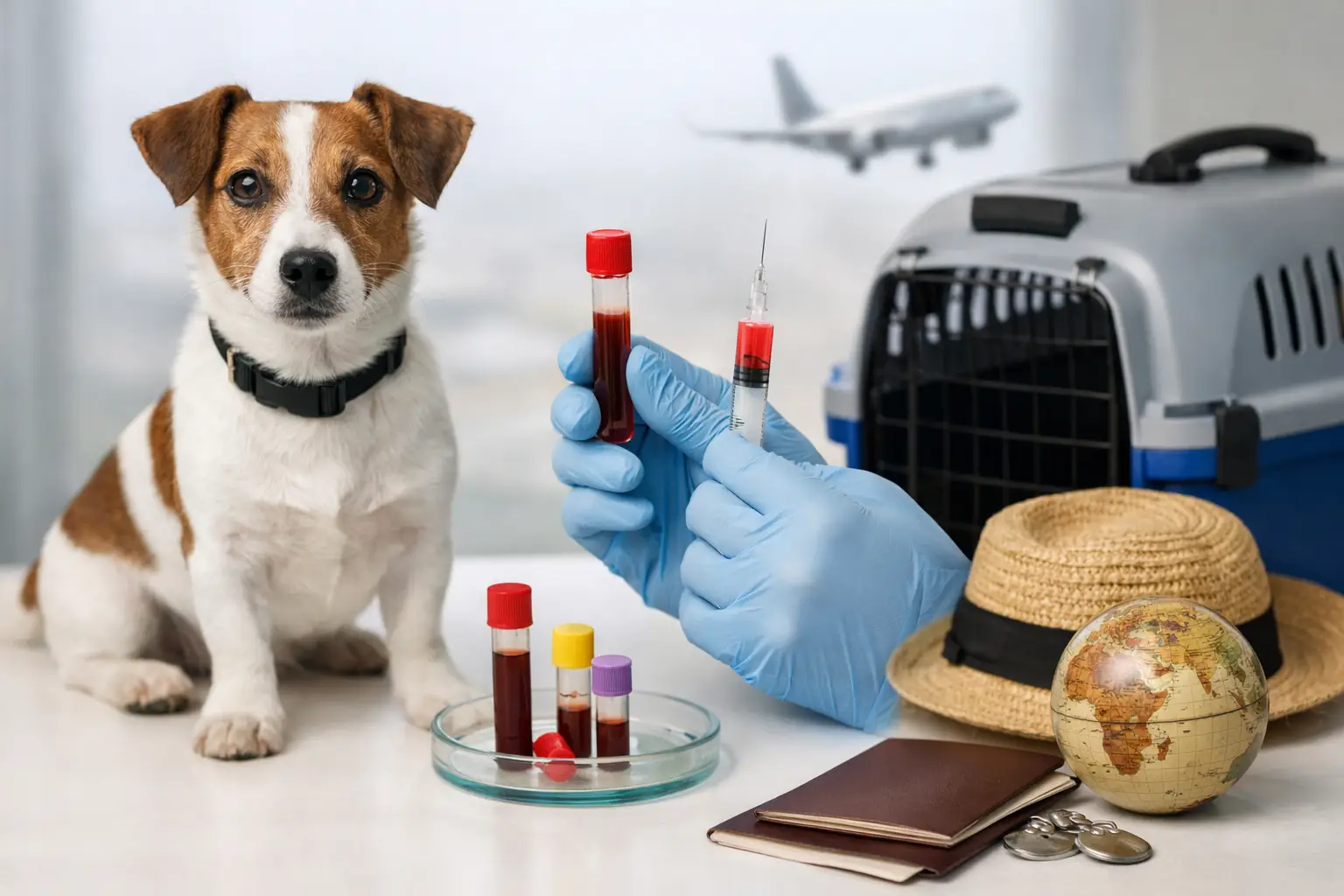
A pet can be healthy, vaccinated, and ready for a flight, yet still be unable to travel on the planned date because one laboratory result is missing. A rabies titer test for pet travel is not required for every destination, but where it is required, it can determine the entire relocation timeline. The test itself is straightforward. The planning around it is where families most often encounter delays.
For pets moving internationally, rabies rules are designed to protect rabies-free or tightly controlled countries from disease introduction. A valid rabies vaccination proves that your pet was vaccinated. A rabies titer result provides evidence that the pet developed a sufficient level of rabies-neutralizing antibodies after that vaccination. Some countries require both.
What a rabies titer test measures
A rabies titer test measures antibodies in a blood sample. For international pet travel, the most commonly requested test is the FAVN test, short for Fluorescent Antibody Virus Neutralization. Some destinations accept other approved rabies neutralizing antibody tests, but the acceptable laboratory, test method, minimum result, and document format are set by the importing country.
Many destinations use a minimum result of 0.5 IU/mL. That number alone does not make a pet travel-ready. Authorities also review the vaccination record, microchip details, blood-draw date, laboratory report, waiting period, health certificate, import permit, and sometimes the country where the pet has been living.
This is why a titer test should never be treated as a last-minute veterinary appointment. It is one timed step within a larger compliance plan.
Which pets need a rabies titer test for pet travel?
The answer depends on the destination, transit points, and your pet’s travel history. Countries with strict rabies-control programs commonly require a titer test from dogs and cats arriving from countries they classify as having a higher rabies risk. The requirement may also apply when a pet is returning after time abroad.
Other destinations accept a current rabies vaccine without a titer. Panama, for example, may have different entry requirements than a final destination farther abroad, so a move that begins or ends in Panama can still require titer planning if another country is involved. Airline routing matters as well. A transit stop does not always create an additional titer requirement, but it can affect documentation, crate handling, airport procedures, and allowable connection times.
Birds, exotic pets, and wildlife follow separate health and permit rules. A rabies titer is generally a dog-and-cat issue, not a universal animal-travel requirement. The correct plan begins with the species, origin, destination, route, and travel date.
The timing rules that cause most delays
The laboratory turnaround is only one part of the schedule. In many cases, the blood sample cannot be collected until a specified period after the rabies vaccination. A common rule is at least 30 days after the vaccine, but country requirements vary and a puppy or newly vaccinated adult may need more time before the sample is eligible.
Then comes the waiting period after the blood draw. Some destinations require several months to pass before entry, even if the lab result is released quickly. This waiting period is tied to the sample collection date, not the date you receive the result. Families who wait for a confirmed flight before beginning the test can find that their preferred travel window has already closed.
A pet with continuously valid rabies boosters may have more flexibility than a pet whose vaccine coverage lapsed. If a booster is given before the prior vaccine expires, some countries allow the existing titer result to remain valid. If the vaccine lapses, the process may reset. Small date gaps, even ones that seem harmless, can change the travel plan.
Start with the microchip and vaccine record
For most international moves, the microchip must be implanted before the rabies vaccination that supports the titer test. The chip number needs to match exactly across the vaccination certificate, lab submission form, import paperwork, and health certificate. A single transposed digit can create a serious problem at document review or border inspection.
Before scheduling the blood draw, review the following records carefully:
- Microchip implantation details and readable chip number
- Current and prior rabies vaccination certificates
- Vaccine manufacturer, product name, and validity dates
- The pet’s date of birth, species, breed, sex, and identifying information
- Any previous titer reports and the destination country’s entry timeline
This review is not paperwork for paperwork’s sake. It identifies whether a prior titer may still be usable, whether a vaccine interval has been broken, and whether the dates align with the intended departure.
How the FAVN process usually works
Once the vaccination timeline is confirmed, a qualified veterinarian draws the blood sample and completes the required laboratory submission documents. The sample is sent to an approved laboratory. Depending on the destination, the laboratory may need specific accreditation or government recognition.
When the result is issued, it should be checked against the destination’s required threshold and against the pet’s identifying information. A passing result is reassuring, but it does not replace the export health certificate or import authorization. Most international moves still require a final veterinary examination close to departure, official endorsements where applicable, and airline-compliant travel arrangements.
If the result does not meet the required level, the next step is not automatically to rebook a flight. A veterinarian may recommend revaccination and retesting, but the appropriate course depends on the pet’s medical history and the destination rule. Pets should not receive vaccines casually or repeatedly without veterinary guidance.
Common mistakes to avoid
The most frequent mistake is counting backward only from the flight date. A workable plan must account for the vaccination date, eligible blood-draw date, lab processing time, post-draw waiting period, document issuance window, and possible government endorsements.
Another common issue is assuming a titer requirement is the same for every country. Requirements can differ based on where the pet has lived, whether the pet is entering directly or after transit, and whether the pet is a first-time traveler or returning resident. Rules also change, so a checklist used for a move several years ago may no longer apply.
Families should also avoid booking nonrefundable flights before the compliance timeline has been confirmed. Airlines may have their own restrictions involving breed, seasonal temperatures, aircraft type, crate dimensions, and cargo availability. The right route is not simply the shortest itinerary. It is the route that keeps the pet safe while allowing every document requirement to be met.
Building a travel plan around your pet, not just the deadline
For a relocation with a titer requirement, begin planning as early as possible – ideally months ahead, and earlier when the destination has a lengthy waiting period. Keep original vaccination certificates in a safe place, request clear digital copies, and make sure every provider uses the same microchip number and pet details.
It also helps to separate medical readiness from travel readiness. Your veterinarian manages your pet’s health and vaccination care. A relocation specialist coordinates how those records fit with import rules, export documents, airline procedures, customs clearance, and destination arrangements. Both roles are essential, and clear coordination reduces avoidable stress.
Panama Pet Relocation supports families through this sequencing process, including rabies FAVN titer testing coordination when it is part of the route. The goal is not to add steps to your move. It is to identify the steps that already apply and place them in the right order.
Your pet does not understand visa dates, airline connections, or laboratory deadlines. They do understand calm handling, familiar reassurance, and arriving safely with their family. Start the titer conversation early, and give the journey the time it needs.