


One family books their own flights, adds the dog a week later, and assumes the hard part is done. Then the airline asks for a specific crate size, the destination requires a timed health certificate, and the transit airport has its own live-animal rules. That is usually when people realize airline pet travel requirements international are not one set of rules. They are several layers of rules that have to work together on the same day.
For pet owners planning an overseas move, that distinction matters. The airline decides whether your pet can fly on a particular route and in what way. The destination country decides whether your pet can enter. Transit airports, seasonal weather limits, breed restrictions, and document timing all sit in between. If one piece is off, even by a little, a pet can be refused at check-in or delayed on arrival.
What airline pet travel requirements international really include
Most people start by asking whether a pet can travel in cabin or as checked baggage. That is only one part of the picture. Airlines usually build their pet acceptance rules around the pet’s species, breed, age, size, route, and crate setup. Then they layer on documentation requirements, cut-off times for booking, airport handling procedures, and embargoes tied to temperature or operational limits.
This is why two flights that look almost identical to a traveler can produce very different outcomes for a pet. A direct route may accept dogs in the hold, while a connecting route may not allow pets through a specific hub. One airline may allow cats in cabin on an international segment, while another may only transport them as manifest cargo. The route matters just as much as the airline.
For families moving internationally, the safest approach is to think in terms of compliance rather than convenience. The question is not just, “Can my pet fly?” It is, “Can my pet fly on this exact route, on this date, with these documents, in this crate, under these weather conditions?”
The biggest factors airlines check before approving a pet
The first is the pet’s travel method. In-cabin travel is generally limited by weight, carrier dimensions, aircraft type, and destination restrictions. It can be a good fit for smaller pets, but availability is often capped per flight, and some countries do not permit pets to arrive that way.
Checked baggage is less common than many people expect on international moves. Some airlines have reduced or eliminated it on certain routes. Others allow it only for military or diplomatic travel, or only on nonstop itineraries. When checked baggage is not available, manifest cargo becomes the required option.
Cargo sounds intimidating to many owners, but it is often the most compliant and controlled method for long-distance or complex international travel. It also allows for larger crates, more flexible routing, and better alignment with import procedures in countries that require formal entry processing.
Breed and body type are another major issue. Snub-nosed dogs and cats may face seasonal restrictions or year-round limitations because of breathing risks. Large breeds may fit only in specific aircraft holds. Puppies and kittens under a certain age may be refused, even if a country would otherwise allow entry.
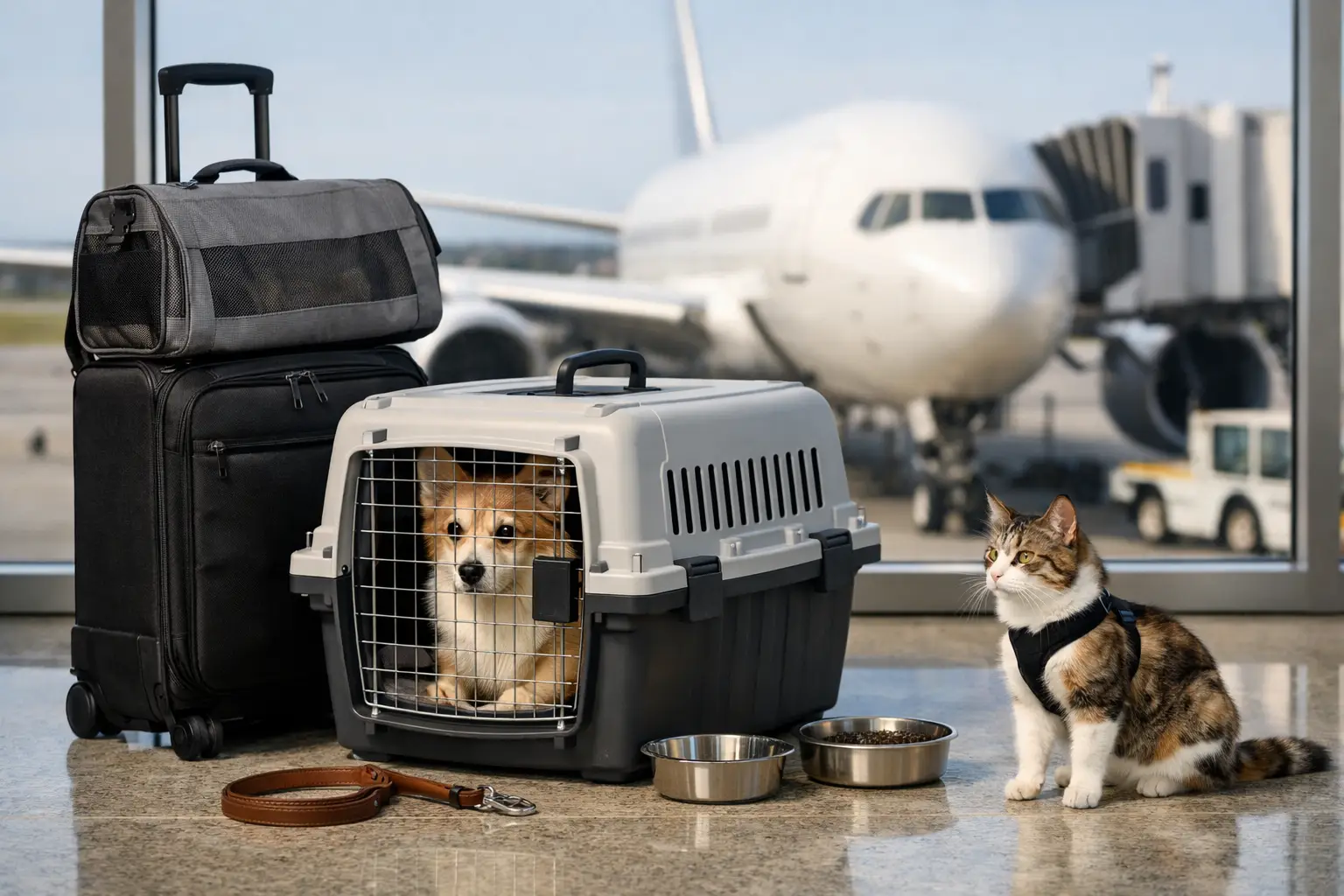
Then there is the crate. Airlines do not just want an approved kennel in a general sense. They want a crate that meets live-animal regulations for size, ventilation, construction, water access, labeling, and absorbent bedding. A crate that is technically sturdy but too short for the pet to stand naturally can cause a same-day refusal.
Why airline rules and country rules often get confused
This is where many international pet moves go wrong. Owners may spend weeks preparing import paperwork and vaccinations, only to find that the airline will not accept the booking because the crate is noncompliant or the breed is embargoed during summer travel.
The reverse also happens. A flight may be approved by the airline, but the destination country may require an import permit, microchip standard, rabies timing, parasite treatments, or endorsed health certificate that has not been arranged correctly. The airline gets the pet there. Immigration and agricultural authorities decide whether the pet can enter.
When pets are moving to or from places with very specific entry procedures, including Panama and several Central American destinations, timing becomes especially important. Veterinary visits, government endorsements, flight bookings, and customs handling often have to line up within narrow windows. That is why experienced planning matters more than speed.
Booking mistakes that cause avoidable delays
A common mistake is booking the owner’s ticket first and assuming the pet can simply be added later. On many international flights, pet space is limited and confirmed separately. If that inventory fills up, the pet may need a different date or route.
Another issue is choosing connections based only on price or total travel time. Some airports are better equipped for live-animal handling than others. Some countries require pets to clear customs at the first point of entry, while others do not. A short connection that works for a suitcase may be far too tight for an animal transfer.
Document timing causes problems too. Health certificates are often valid for a short period, and not always from the date owners expect. Add in weekends, government endorsement processing, and airline cutoffs, and a document that looked fine on paper can become unusable by departure day.
Weather is another factor people underestimate. Heat embargoes, cold restrictions, and tarmac safety rules can affect whether pets are accepted at origin, transit, or destination. Those limits are not always the same in both directions. A route that is fine in January may be restricted in August.
How to prepare for airline pet travel requirements international
Start with the route, not the crate. Before buying equipment or scheduling final veterinary paperwork, confirm which travel method is actually allowed for your pet on your intended itinerary. That means checking species acceptance, breed restrictions, seasonal rules, and whether the destination permits that mode of arrival.
Next, build the paperwork timeline backward from the travel date. International pet moves often require microchip verification, vaccine records, country-specific forms, and a health certificate completed inside a precise window. If a rabies titer test is needed, that can extend the preparation period significantly.
Once the route and timing are clear, focus on the crate as a technical requirement, not an accessory purchase. Measure your pet carefully while standing and lying down. Airlines look for enough height, length, and width for safe posture and comfort. It is also wise to help your pet get used to the crate well before travel day. Familiarity reduces stress and makes the trip easier on everyone.
Finally, leave room for operational changes. Aircraft swaps, schedule changes, and airline policy updates do happen. On an international pet move, backup planning is not overthinking. It is part of responsible preparation.
When professional help makes the biggest difference
Not every trip needs full-service management. A small pet on a simple nonstop route with straightforward entry rules may be manageable for an organized owner. But international relocations become more complex when there are connecting flights, country-specific import permits, larger dogs, snub-nosed breeds, tight move dates, or customs clearance on arrival.
That is also true when families are relocating to or from Panama, where airline coordination and entry compliance need to match exactly. In those situations, professional support can reduce the risk of expensive delays, rejected check-ins, and last-minute rebooking stress. A company like Panama Pet Relocation handles the moving parts together rather than treating the flight, documents, and arrival process as separate tasks.
The real value is not just convenience. It is knowing that someone is watching the timing, crate standards, booking method, veterinary sequence, and destination formalities as one coordinated plan. That is what keeps a pet’s trip safe and predictable.
The best question to ask before you book
Instead of asking, “What does the airline allow?” ask, “What does my pet need for this exact journey to work without problems?” That question leads to better decisions. It accounts for the pet, the route, the season, the destination, and the paperwork window all at once.
International pet travel can be done smoothly, but it rarely rewards assumptions. The more specific the planning, the calmer the journey tends to be. And when a pet is crossing borders with your family, calm is not a luxury. It is part of getting everyone home safely.