



How Long Does a Rabies Titer Test Take for Travel?
August 7th, 2026 | Uncategorized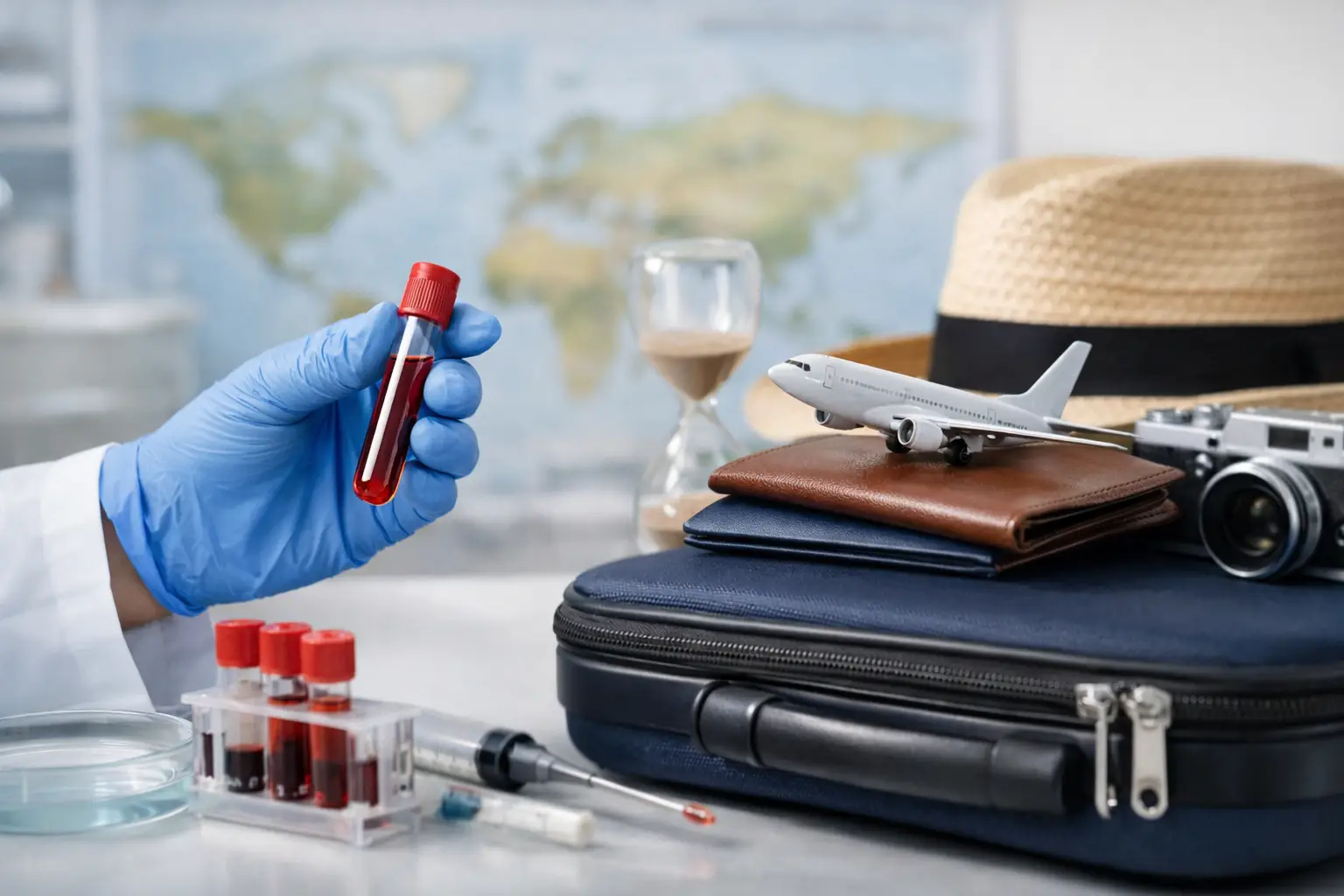
A pet’s rabies titer is often the item that determines whether an international move stays on schedule or needs to be postponed. So, how long does a rabies titer test take? The laboratory portion commonly takes a few weeks, but the full timeline can be much longer once vaccine timing, sample shipping, destination-country waiting periods, and travel paperwork are included.
For families planning an international move, the safest assumption is that a titer test is an early planning requirement, not a last-minute veterinary appointment. The blood draw itself may take only a few minutes. Getting an acceptable result at the right time for the country your pet is entering can take weeks or, in some cases, several months.
How Long Does a Rabies Titer Test Take From Start to Finish?
A rabies titer test measures whether your pet has enough rabies-neutralizing antibodies after vaccination. For travel, the test is commonly referred to as a rabies antibody titer, RNATT, or FAVN test, depending on the laboratory and destination requirements.
Once an approved laboratory receives a properly prepared blood sample, results often take approximately two to four weeks. Some laboratories may return results sooner, while high demand, incomplete submissions, courier delays, or holidays can extend processing time. This lab turnaround is only one part of the schedule.
Before a sample can be submitted, your pet may need a current rabies vaccination that meets the destination’s rules. Many countries require the blood draw to occur at least 30 days after the rabies vaccine. If a country also imposes a waiting period after the blood draw or after the laboratory result, the travel date may need to be set much farther out.
A practical planning range is often two to four months before travel, though some destinations require significantly more lead time. The exact answer depends on where your pet is going, your pet’s vaccine history, the laboratory used, and whether the result meets the required threshold on the first test.
The Timeline Has Four Separate Stages
It helps to think of the rabies titer process as a sequence rather than a single test. Missing one date can affect the validity of everything that follows.
1. Confirming the Rabies Vaccine Record
Your pet must have a valid rabies vaccination before the blood sample is drawn. The required timing varies by country. In many cases, the sample cannot be collected until at least 30 days after vaccination, especially if the pet was newly vaccinated or had a lapse in coverage.
The microchip timing can matter as well. Some destinations require the pet to be microchipped before the rabies vaccine is administered. If the records show the vaccine was given before the microchip was implanted, that vaccination may not count for travel purposes, even if it is medically current.
This is why it is wise to have the records reviewed before booking the blood draw. A date, microchip number, vaccine manufacturer, or veterinarian signature that does not align with destination rules can create a preventable delay.
2. Blood Draw and Sample Preparation
A licensed veterinarian collects the blood sample and completes the paperwork required by the laboratory. The sample must be prepared, labeled, and shipped correctly. International pet travel is detail-sensitive, and a sample sent without the proper documentation may be delayed or rejected.
The veterinarian’s office may send the sample directly, or a relocation team may coordinate the shipment and documentation. Transit time to the laboratory is usually short, but it should still be built into the travel schedule. Weekends, public holidays, and international courier disruptions can add days.
3. Laboratory Processing and Results
The approved laboratory tests the sample for rabies-neutralizing antibodies. A passing result generally means the antibody level meets the threshold specified by the destination country. For many travel programs, the common minimum is 0.5 IU/mL, but pet parents should not rely on one universal standard. The destination’s current requirements always control.
Laboratory processing often takes two to four weeks from receipt. Some results are issued electronically first, while the original certificate may follow later. Keep both the result and the supporting vaccination documents organized. Authorities, airlines, and destination veterinarians may need to see specific originals or certified copies.
4. Mandatory Waiting Period Before Entry
This is the stage that surprises many families. A passing test result does not always mean your pet can travel immediately.
Certain countries require a waiting period that begins on the date of the blood draw. Depending on the destination, that wait may be 30 days, 90 days, or longer. In other locations, a titer test may not be required at all for a pet arriving from a qualifying country with an up-to-date rabies vaccination.
The country of departure can affect the rule, too. A pet traveling from the United States may face different requirements than a pet departing from Panama, Colombia, or another country in Central America. If your itinerary includes a transit country, verify whether the transit is airside only or whether additional entry requirements apply.
What Can Make a Rabies Titer Take Longer?
Even a well-planned titer process has variables. The most common delay is starting after a pet’s rabies vaccination has expired. If the lapse means the pet is treated as newly vaccinated, the owner may need to wait before the blood draw can occur.
A low or non-qualifying titer result can also extend the timeline. This does not necessarily mean there is something wrong with your pet. Antibody response can vary, and a veterinarian may recommend a booster followed by another waiting period and retest. Since a retest can add weeks or months, it is better to begin early whenever a titer is part of the destination’s requirements.
Administrative issues matter just as much as the medical timeline. Incorrect microchip details, incomplete laboratory forms, mismatched names, or a health certificate issued outside the permitted travel window can stop a move that otherwise appears ready. Airline routing changes can also affect required documents, particularly when a new transit point is added.
When Should You Start the Process?
If you know a rabies titer is required, begin planning as soon as your travel country is confirmed. Do not wait until flights are booked or household goods are already in transit. For a straightforward move, starting at least three to four months before departure provides useful breathing room. For destinations with long post-titer waits, uncertain vaccine history, or complicated multi-country routing, six months or more may be appropriate.
This early review also gives you time to coordinate other requirements that may run alongside the titer test, such as import permits, export health certificates, parasite treatments, airline crate preparation, and government endorsements. These documents each have their own validity windows. Completing one document too early can be just as problematic as completing it too late.
A Titer Test Is Not Required for Every International Move
Rabies titer rules are destination-specific. Some countries do not require a titer for dogs and cats arriving from certain origins, while others require one for nearly every eligible pet. Requirements can also differ for service animals, puppies and kittens, pets with expired vaccines, and animals transiting through another country.
For moves into or out of Panama, the titer requirement should be evaluated based on the full route and the final destination, not assumed from a previous trip or a friend’s experience. Regulations can change, and the right answer for one family’s dog may not apply to another family’s cat.
Frequently Asked Questions
Can my pet travel while the rabies titer result is pending?
Usually, not to a destination that requires an approved titer result before entry. Even if airline space is available, border authorities may refuse entry if the required result or waiting period is incomplete. It is safer to make travel arrangements around confirmed compliance dates.
Does a passing titer result expire?
It can. Some countries accept a passing result for the pet’s lifetime if rabies boosters remain continuous and properly documented. Others have different rules or require recent supporting records. A missed booster may interrupt that continuity and trigger a new testing sequence.
Is a rabies titer the same as a health certificate?
No. A titer result shows antibody response to rabies vaccination. A health certificate is a separate veterinary document issued close to travel, confirming your pet meets the destination’s health and identification requirements. Many international moves require both.
The most reassuring way to approach a rabies titer is to treat it as the first fixed date in your pet’s travel plan. Once the vaccine, blood draw, laboratory result, and any required waiting period are mapped correctly, the rest of the relocation can be organized with far more confidence. Panama Pet Relocation helps families coordinate those moving pieces so their pets can travel safely, compliantly, and with the care they deserve.