



When a Rabies Titer Test Is Needed for Pet Travel
August 2nd, 2026 | Uncategorized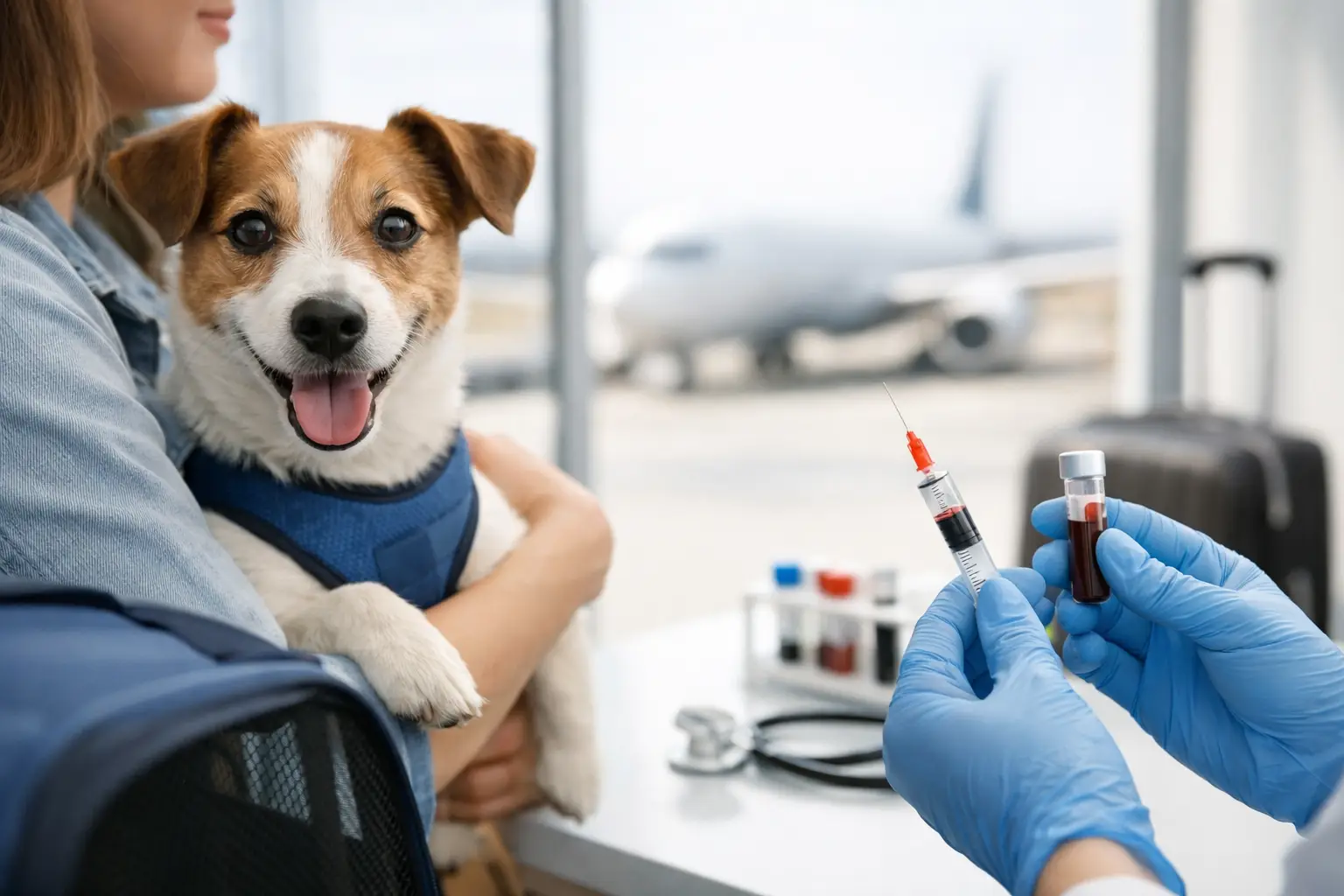
A flight can be booked, a crate can be ready, and every vaccination record can appear complete – yet one missing laboratory result can stop a pet’s move. A rabies titer test is one of the most commonly misunderstood requirements in international pet travel. It is not required for every destination, but when it is, the test must be planned early enough to satisfy strict rules on vaccination dates, blood collection, laboratory approval, and waiting periods.
For families relocating internationally, this is more than paperwork. A missed deadline can mean a delayed flight, an extended stay away from home, or an entry issue at the destination. Knowing whether your pet needs a titer test and how the timeline works is one of the most useful steps you can take before travel.
What Is a Rabies Titer Test?
A rabies titer test is a blood test that measures whether a pet has developed a sufficient level of rabies antibodies after vaccination. It does not diagnose rabies, and it does not replace your pet’s current rabies vaccination certificate. Instead, it provides laboratory evidence that the vaccine produced an acceptable immune response under the rules set by a particular destination.
For pet travel, you may hear the test called a rabies antibody test, RNATT, or FAVN test. The terminology can vary by country, veterinary clinic, and laboratory. What matters is whether the destination accepts the specific test method and laboratory used for your pet’s sample.
Many destinations set a minimum antibody level of 0.5 IU/mL. Reaching that level is often necessary, but it is not the only condition for travel. Authorities may also review the microchip number, vaccination history, date of blood draw, laboratory report, health certificate, import permit, and required waiting period.
Why Some Countries Require Titer Results
Countries that have strict rabies-control programs use titer testing to reduce the risk of importing rabies. Their rules are designed to confirm that an animal was vaccinated properly before travel and that enough time has passed after testing for the process to be meaningful.
The exact requirement depends entirely on the destination and, sometimes, the country from which the pet is traveling. A pet leaving Panama for one country may need only a valid rabies certificate and health documentation. That same pet traveling to another country may need a titer result from an approved laboratory, followed by a waiting period that can last several months.
This is why advice from a friend, a social media group, or even a prior move may not apply to your trip. Regulations can differ by destination, pet species, age, travel route, and the pet’s country of residence before departure. Rules can also change without much notice.
When to Start the Rabies Titer Test Process
The safest answer is: start as soon as your destination is known. Titer testing is often the longest lead-time item in a pet relocation plan, especially when a destination imposes a post-blood-draw waiting period.
In many cases, the correct sequence starts with a readable, ISO-compliant microchip. The microchip should be placed before the qualifying rabies vaccination, because officials need to connect the animal, vaccine record, blood sample, and laboratory result to the same identity. If a pet was vaccinated before being microchipped, the vaccination may not qualify for travel purposes, depending on the destination’s rules.
After the qualifying rabies vaccine, there may be a minimum period before blood can be collected. Thirty days is common in some programs, but it is not universal. The blood sample is then sent to an approved laboratory for testing. Once the laboratory report is issued, a separate waiting period may begin. Crucially, some destinations count that period from the date the blood was drawn, not from the date the result arrives.
That distinction matters. Waiting to schedule a test until close to a planned move can leave no room for a failed result, a delayed lab report, or an administrative correction. For destinations with long waiting periods, planning several months ahead is often necessary.
A simple timeline example
Imagine a destination requires a pet to be vaccinated, tested at least 30 days later, and then wait 90 days from the blood draw. If the family begins the process only eight weeks before departure, the pet may not be eligible to travel on the intended date even if the laboratory result is satisfactory.
The timeline can be shorter or longer depending on the destination. The point is not to assume a standard schedule. It is to build your travel plan around the rule that actually applies to your pet’s route.
What Happens If the Result Is Too Low?
A result below the destination’s required antibody level does not mean your pet is sick or unprotected in everyday life. It means the result does not meet the threshold required for that particular import process.
Your veterinarian may recommend a booster vaccination followed by a new waiting period and repeat blood draw. The appropriate next step depends on the pet’s vaccine history, health, destination rules, and the reason the test may have fallen short. Older pets, pets with incomplete vaccination records, and pets that received a rabies vaccine recently can all require closer planning.
A low result is exactly why relocation schedules should include a buffer. Treating the test as a last-minute document creates unnecessary pressure for both you and your pet.
Rabies Vaccination and Titer Testing Are Not the Same
This is a frequent source of confusion. A current rabies vaccination shows that a pet received a vaccine. A titer test shows that a laboratory measured antibodies after vaccination. Some countries require one, some require both, and some require neither for certain travel situations.
A valid titer result also does not automatically make every future trip easier. Its ongoing usefulness can depend on whether the pet receives every rabies booster before the prior vaccine expires. If there is a lapse in vaccination coverage, a country may require the process to begin again, including a new blood test and waiting period.
Keep original vaccination certificates, microchip records, laboratory reports, and health documents organized in one place. Small inconsistencies – such as a transposed microchip digit, an incorrect date, or a name that does not match the import paperwork – can create avoidable complications.
Common Mistakes That Cause Travel Delays
The most expensive mistakes are often administrative rather than medical. Testing before confirming whether the destination requires a specific approved lab can make a result unusable. Waiting until the laboratory certificate arrives before calculating the travel date can cause a missed waiting period. Allowing a rabies vaccine to expire can interrupt a previously valid sequence.
Another issue is assuming airline acceptance equals country entry approval. Airlines review their own transport requirements, while government authorities determine whether a pet may enter the country. Both must be satisfied, along with any transit-country rules if the itinerary includes an overnight stop or change of airport.
It is also wise to avoid scheduling a titer test based solely on a tentative departure date. Flight routes, permit processing, and veterinary appointment availability can shift. A thoughtful relocation plan builds in time for documentation review, laboratory processing, and changes outside the family’s control.
How Professional Coordination Helps
International pet travel involves several moving parts that must line up in the correct order: identification, vaccination, blood collection, laboratory submission, import requirements, airline booking, health certificates, and customs clearance. The titer test is just one part of that chain, but it can determine the earliest possible travel date.
A specialized pet relocation team can review the route before the process begins, coordinate with your veterinarian, confirm laboratory and document requirements, and keep the schedule aligned with the destination’s rules. This is particularly valuable for families moving from Panama, traveling through Central America, or combining a relocation with an onward international connection.
At Panama Pet Relocation, we help families plan around the real regulatory timeline, rather than discovering a requirement after flights and moving arrangements are already in place. The goal is not simply to collect documents. It is to protect your pet’s travel date and make the move feel more manageable.
Give Your Pet’s Travel Plan Enough Time
A rabies titer test is not difficult when it is handled early and in the right sequence. It becomes stressful when a family learns about it after a departure date is fixed. Before making final travel commitments, confirm your pet’s destination requirements and work backward from the earliest eligible travel date. That extra planning time gives your pet the best chance of arriving safely, compliantly, and ready to settle into the next chapter with you.