

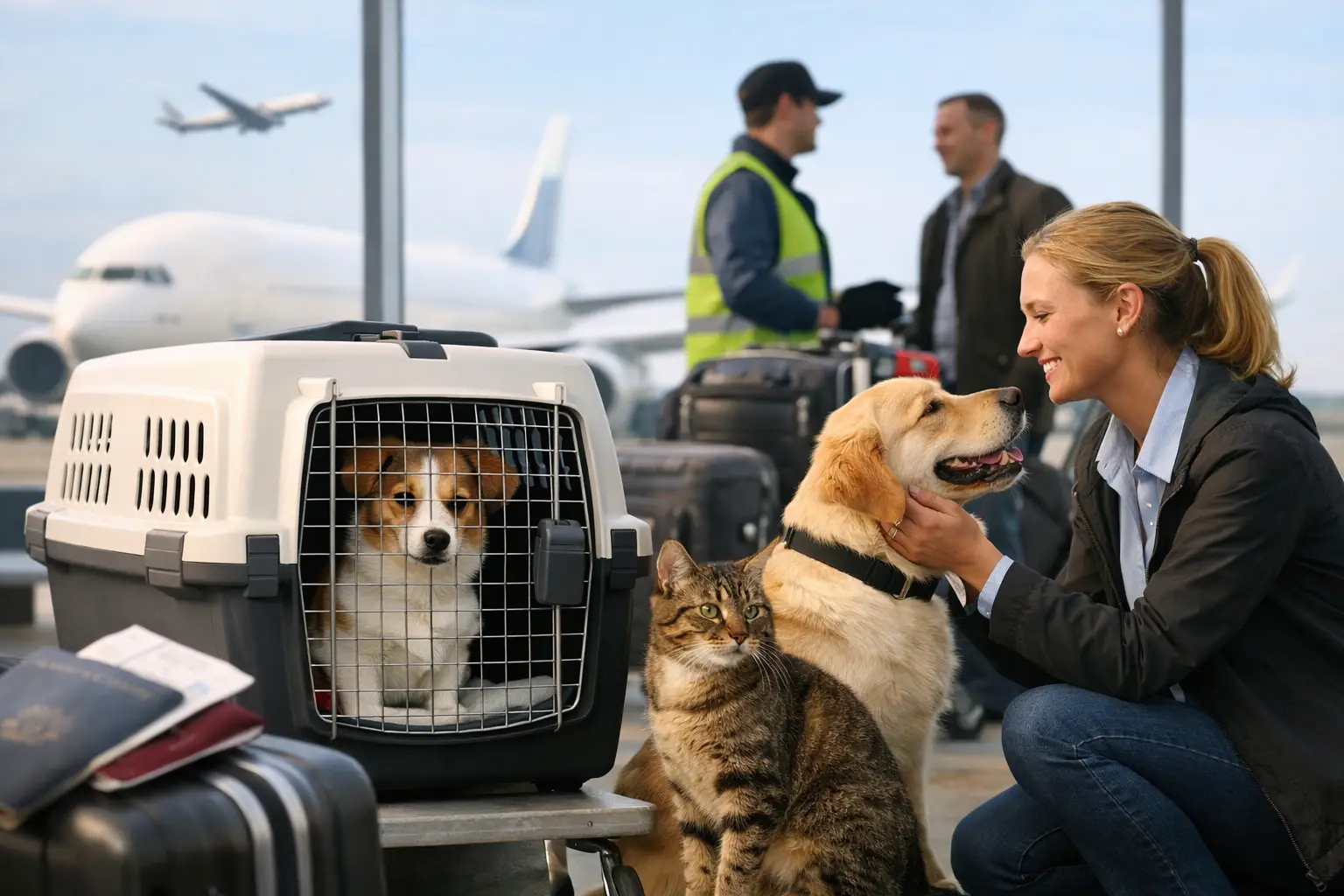

A missed vaccine window can delay a pet’s flight by weeks. One incorrect health certificate can turn an airport handoff into a customs problem. That is why international pet relocation services matter so much for families moving across borders. When your pet is part of the family, this is not just shipping. It is a tightly managed process where timing, paperwork, airline rules, and animal welfare all have to line up.
For many people, the stress starts the moment they realize pet travel is not handled like passenger travel. Every country sets its own import or export requirements. Airlines have their own breed, crate, routing, and temperature policies. Some pets need additional veterinary steps well before departure, while others need special handling on arrival. The result is a process that looks simple from far away and feels anything but simple once you are inside it.
What international pet relocation services actually do
At the practical level, international pet relocation services coordinate the full chain of movement from one home to another. That can include document review, vaccination scheduling, veterinary coordination, crate guidance, airline booking support, customs clearance, and final delivery. In more complex cases, it may also involve transit planning across multiple countries, in-cabin escort arrangements, or support for birds and other non-traditional pets.
The value is not just convenience. It is risk management. Professional relocation planning helps reduce the chances of preventable mistakes such as expired vaccine timing, incomplete import permits, routing that does not meet airline standards, or arrival dates that do not match customs processing windows. Families often come to a relocation company because they are already balancing home sales, school transitions, work deadlines, and international paperwork. Handing off the pet travel process gives them one less critical system to manage alone.
Why the process gets complicated fast
Pet owners are often surprised by how many moving parts sit behind one international trip. A dog traveling from the US to Central America may need a very different sequence of veterinary work and documentation than a cat traveling from Panama to Europe. The details change based on destination country, country of origin, species, breed, travel method, and timeline.
Even when the requirements look clear on paper, real-life logistics can still create trouble. Flights may have limited pet capacity. Weather restrictions can block travel during certain hours or on certain routes. Some countries require original documents with specific endorsements, while others may require advance approvals before departure. If a pet has a snub-nosed breed profile, medical history, or unusual travel needs, the planning has to be even more careful.
That is where experience makes a difference. A professional team is not only reading the regulations. They are also anticipating what happens when a document takes longer than expected, when a flight changes, or when a family needs to coordinate its own travel with a pet’s separate routing.
The stages of a well-managed relocation
A strong relocation plan usually starts with a case review. This is where the pet’s species, breed, size, age, medical background, destination, and target travel date are evaluated. It sounds basic, but this first step often determines whether a move is straightforward or whether it needs a longer compliance timeline.
Next comes document and veterinary planning. This may include vaccinations, parasite treatments, microchip verification, laboratory testing, health certificate preparation, and country-specific import or export paperwork. Timing matters here. Some requirements must be completed within a narrow window before travel, while others must be done months in advance.
After that, the travel plan itself is built. The right route is not always the shortest route. Sometimes the best option is the one with safer connection timing, better airline pet handling procedures, or a more suitable arrival point for customs clearance. Crate setup, check-in procedures, and pre-departure instructions are usually handled at this stage as well.
Arrival is its own phase, not just the end of the trip. Customs release, document presentation, airport pickup, and delivery arrangements need to be coordinated carefully. In some moves, that final segment is the part families worry about most, because it is where delays feel most personal. Good relocation support keeps that phase organized and visible, so clients know what happens when their pet lands.
When full-service support makes the most sense
Not every pet relocation requires the same level of help. Some owners have flexible schedules, simple routes, and enough time to manage every form themselves. Others are dealing with a multinational move, a short notice transfer, or a destination with stricter entry controls. The more variables involved, the more useful professional management becomes.
Full-service support is especially valuable when there are multiple pets, connecting flights, unusual species, or a move into or out of countries where customs and veterinary coordination need local expertise. It also matters when families want door-to-door handling instead of trying to piece together airport drop-off, airline communication, arrival clearance, and delivery on their own.
For example, moves involving Panama often require very specific coordination between veterinary preparation, travel timing, and arrival handling. In those cases, a team with direct regional experience can prevent common missteps and keep the process moving with less uncertainty.
What to look for in international pet relocation services
The right provider should give you clarity early. That means a realistic timeline, a clear explanation of what documents are needed, and honest communication about what depends on airline availability or government approval. If everything is presented as simple regardless of the route, that is usually a warning sign. Good providers understand that some moves are easy and some are not.
You should also look for operational depth. It helps when a company can support veterinary coordination, customs handling, flight planning, and final delivery instead of leaving major pieces for the owner to solve alone. International moves are where handoffs create risk. The fewer gaps in the process, the better.
Just as important is the human side. Families need updates, responsiveness, and confidence that their pet is being handled with care. This is especially true for older pets, anxious animals, and owners managing a major life change at the same time. A dependable relocation partner combines technical compliance with calm, clear communication.
The trade-offs pet owners should understand
There is no single best way for every pet to travel. Cargo transport, accompanied baggage, and in-cabin options each come with pros and limitations. Direct flights reduce transfers, but they are not always available. Faster timelines sound appealing, but some countries legally require advance testing or waiting periods that cannot be rushed.
This is one reason do-it-yourself planning can be harder than expected. Pet owners often assume the challenge is filling out forms. In reality, the hard part is coordinating every requirement in the right order while leaving room for the things you cannot fully control, like flight changes or document processing times.
Professional relocation support does not remove every variable. What it does is give those variables a plan. That distinction matters. When something shifts, experienced handlers can adjust without starting from zero.
A better experience for pets and people
The best relocations feel calm because so much work happened behind the scenes. The crate was selected properly. The flight was chosen carefully. The documents were checked more than once. The customs process was prepared before the plane even took off. When that level of planning is in place, pets move with less disruption and owners feel less like they are gambling with an important part of the family.
That is the real purpose of international pet relocation services. They bring structure to a process that is easy to underestimate and hard to fix once something goes wrong. For families moving across borders, that support can mean fewer surprises, fewer delays, and a safer path from one home to the next.
If your move is coming up, start early and ask detailed questions. The right plan should leave you feeling informed, supported, and confident that your pet’s journey is being managed with the same care you would want for any member of your family.