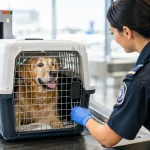



A microchip is tiny, but a mismatch in its number, format, or paperwork can disrupt an international pet move at the exact moment your family needs certainty. This pet microchip compliance guide explains what relocation authorities, veterinarians, and airlines may look for – and how to make sure your pet’s identification supports a smooth journey rather than becoming a last-minute obstacle.
For international travel, a microchip is not simply a way to reunite with a lost pet. It is often the number that connects your pet to rabies vaccinations, health certificates, import permits, laboratory results, and customs records. Every document needs to tell the same story.
Why Microchip Compliance Matters for Pet Travel
Many countries use the microchip number as the primary identity reference for an arriving animal. Officials may compare the number scanned from your dog or cat with the number printed on the health certificate, vaccination certificate, import permit, and other supporting documents. If one digit is missing, transposed, or recorded under an outdated owner name, the issue can require clarification at the airport or border.
The stakes vary by destination. A small clerical error may be corrected before travel if it is found early. In stricter cases, an inconsistent microchip record can delay clearance, require additional veterinary documentation, or affect whether a rabies vaccination is recognized. That is why the chip should be checked at the beginning of the relocation process, not the week before departure.
For pets traveling to or through Panama, Central America, the United States, Europe, or another international destination, the applicable requirements depend on the route, species, country of origin, and final destination. Airline rules and transit-country rules can add another layer. A compliant microchip is the foundation, but it must work alongside the complete travel file.
Pet Microchip Compliance Guide: The Essential Checks
Confirm the chip can be read
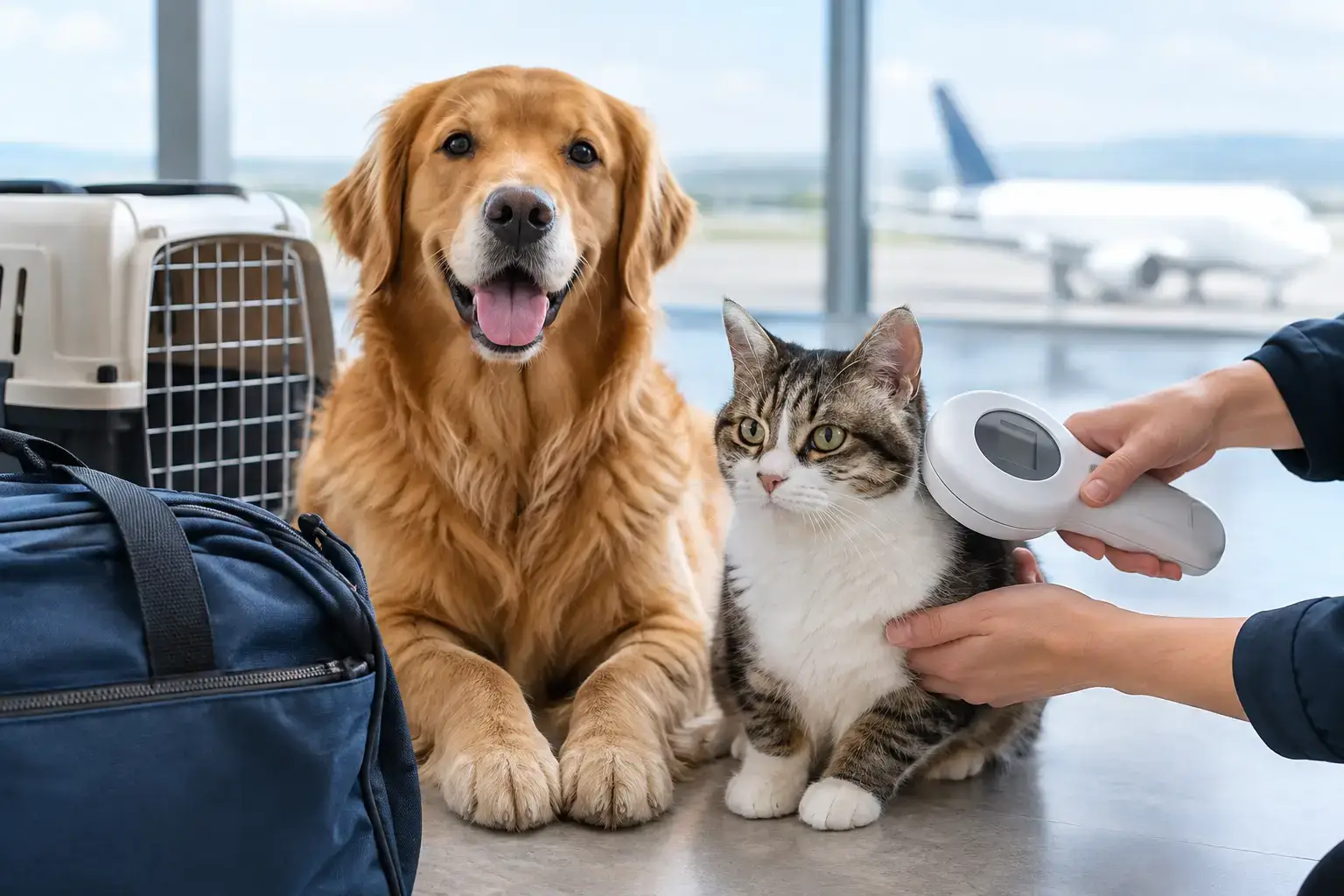
Ask your veterinarian to scan the microchip and confirm the full number. Do not rely only on an old adoption form, a previous vaccination record, or an owner’s memory. A scan confirms that the chip is still present and readable.
For most international moves, an ISO-compatible microchip is the preferred standard. These are commonly 15-digit chips that follow widely used international identification protocols. Many border authorities and veterinary clinics have universal scanners, but not every checkpoint has equipment that reliably reads every non-ISO chip type.
If your pet has a non-ISO chip, do not assume travel is impossible. Some destinations accept it, while others may require the owner to provide a compatible scanner or have a second, ISO-compatible chip implanted. The correct choice depends on the destination’s current rules and the veterinary advice for your pet. Implanting a second chip without planning can create record confusion, so both numbers must be documented clearly whenever two chips are present.
Match the number across every record
The microchip number should appear exactly the same on all travel documents. This includes vaccination certificates, veterinary health certificates, laboratory submissions, import permits, airline paperwork when applicable, and any declarations required for entry.
Check each digit carefully. A 15-digit number is easy to mistype, especially when it is copied between paper forms and online systems. Look for common problems such as a digit left off at the end, spaces inserted inconsistently, a number entered under the wrong pet’s name, or a number that differs from the one scanned by the veterinarian.
The pet description should also be consistent. Breed, sex, date of birth or approximate age, coat color, and species may seem secondary to the microchip number, but they help officials confirm that the records belong to the same animal. If an old record contains an error, address it early and keep written correction documentation where appropriate.
Get the timing right for rabies requirements
In many international travel programs, the pet must be microchipped before the rabies vaccination that will be used for travel. This sequence matters because the vaccination certificate needs to link the pet’s rabies status to a verifiable identity.
If a rabies vaccine was given before the pet was microchipped, some countries may not accept that vaccine for entry purposes. The pet may need to be microchipped, revaccinated, and then wait through the required validity period before travel. Where a rabies antibody titer test is required, the microchip number generally needs to be shown on the laboratory documentation as well.
There is no one schedule that fits every move. A direct trip, a transit through another country, a move from a rabies-controlled location, or a destination with a titer requirement can all change the timeline. Starting early gives your veterinary team and relocation coordinator room to sequence the chip, vaccines, testing, permits, and health certificate correctly.
Registration Is Helpful, but It Is Not Compliance
Microchip registration databases are valuable for recovery if a pet is lost. Registering current owner contact details is a smart protective step, particularly during a move when addresses and phone numbers may change. However, registration alone does not satisfy an import authority’s requirements.
Customs and animal health officials typically rely on the chip itself and the official travel documents attached to that number. A database listing cannot replace a valid health certificate, correct vaccination record, import authorization, or destination-specific veterinary requirement.
Before departure, update the registration profile with your reachable phone number and email address. If you are relocating permanently, add your new address once it is confirmed, or use a trusted contact who can be reached during the transition. Keep the registration confirmation with your household records, but prioritize the official veterinary paperwork for travel.
Build a Microchip Record Before the Move
A simple, organized record can prevent stressful calls from an airport check-in counter or a border inspection area. Keep a clear copy of the microchip implantation certificate or the veterinary record that identifies the chip number, along with all rabies and health documentation.
It is also wise to ask the veterinarian to scan the chip again during the pre-travel appointment. This final scan confirms that the number on the health certificate matches the animal in front of them. If your pet has two chips, the veterinarian should identify which chip is used as the official travel reference and note the second chip where destination rules require it.
Photos can be useful as a backup, but they should not replace original or officially issued documents. Store digital copies in an accessible folder and carry the required originals or certified documents according to the destination’s rules. Families often divide paperwork between checked luggage and carry-on bags; for pet travel records, carry-on access is usually the safer approach.
Common Compliance Mistakes to Avoid
The most frequent problem is waiting too long to scan the chip. A pet may have been chipped years ago, and the family assumes the number on an old certificate is accurate. A quick scan can reveal that the record contains a typo or that the chip is difficult to detect.
Another common issue is using a rabies certificate that does not show the microchip number, even though the destination requires it. The certificate may be medically valid but insufficient for international travel documentation. Similarly, a pet owner may receive a new chip after moving and forget to update future vaccination records with the new number.
Changes in ownership details can also create unnecessary questions. A marriage, divorce, relocation, or adoption transfer does not usually change the pet’s identity, but names and addresses across records should make sense together. When documents show different owner names, carry supporting documentation if needed and make sure the permit and health certificate reflect the correct traveler or importer.
Finally, do not treat airline acceptance as proof of destination compliance. Airlines confirm whether a pet can be carried under their policies. Government authorities decide whether the pet meets entry rules. Both sides of the journey must be coordinated.
When Professional Coordination Helps
A straightforward trip may only require a veterinarian, a valid chip, and well-prepared documentation. More complex moves benefit from coordinated oversight, especially when there are connecting flights, rabies titer testing, multiple pets, time-sensitive permits, or travel into Panama from a country with different animal health protocols.
Panama Pet Relocation helps families review the full chain of requirements so the microchip number is properly connected to the documentation, flight plan, and arrival process. That includes identifying issues early, when there is still time to correct a record or adjust a schedule without putting your pet’s travel date at risk.
Your pet’s microchip should be one of the quietest parts of the move: scanned, documented, matched, and ready. Confirming those details well before travel lets you focus on helping your pet arrive safely and settle into the next chapter with your family.