


A flight date can feel like the finish line of an international move. For your pet, it is only one piece of a carefully timed process. The choice between pet courier versus airline cargo affects how your animal travels, who is responsible at each handoff, and what is possible under airline and destination-country rules.
Neither option is automatically better. The right choice depends on your pet’s size, species, health, temperament, route, travel season, and the import requirements at your destination. A well-planned cargo journey can be calm and appropriate for one pet, while an in-cabin courier arrangement may be the best fit for another.
What a Pet Courier Usually Means
The term “pet courier” can describe several different services, so it is worth asking exactly what is included. In international pet relocation, it often means a trained professional accompanies a pet through part or all of the journey. This may include in-cabin travel when the pet and airline meet cabin eligibility rules, airport check-in support, handoffs between flights, arrival assistance, or door-to-door ground transport.
For smaller dogs and cats, an in-cabin courier can provide a reassuring level of supervision. The pet remains in an airline-approved carrier beneath the seat, subject to the airline’s size, weight, and route restrictions. The courier manages the travel-day details, watches for schedule changes, and helps keep the experience organized from departure to arrival.
A courier is not always physically seated beside the pet for every mile. Some services focus on collecting the pet from your home, coordinating airport procedures, and arranging delivery after arrival. Others provide an in-cabin travel companion. The distinction matters, particularly when comparing service options. Ask whether the professional will travel on the same flight, meet the pet at connections, manage customs release, or provide only ground transportation.
Courier travel is often appealing to families with a small, healthy pet that qualifies to fly in cabin. It can also work well for owners who cannot travel on the same dates as their pet but want a dedicated person managing the journey.
How Airline Cargo Works for Pets
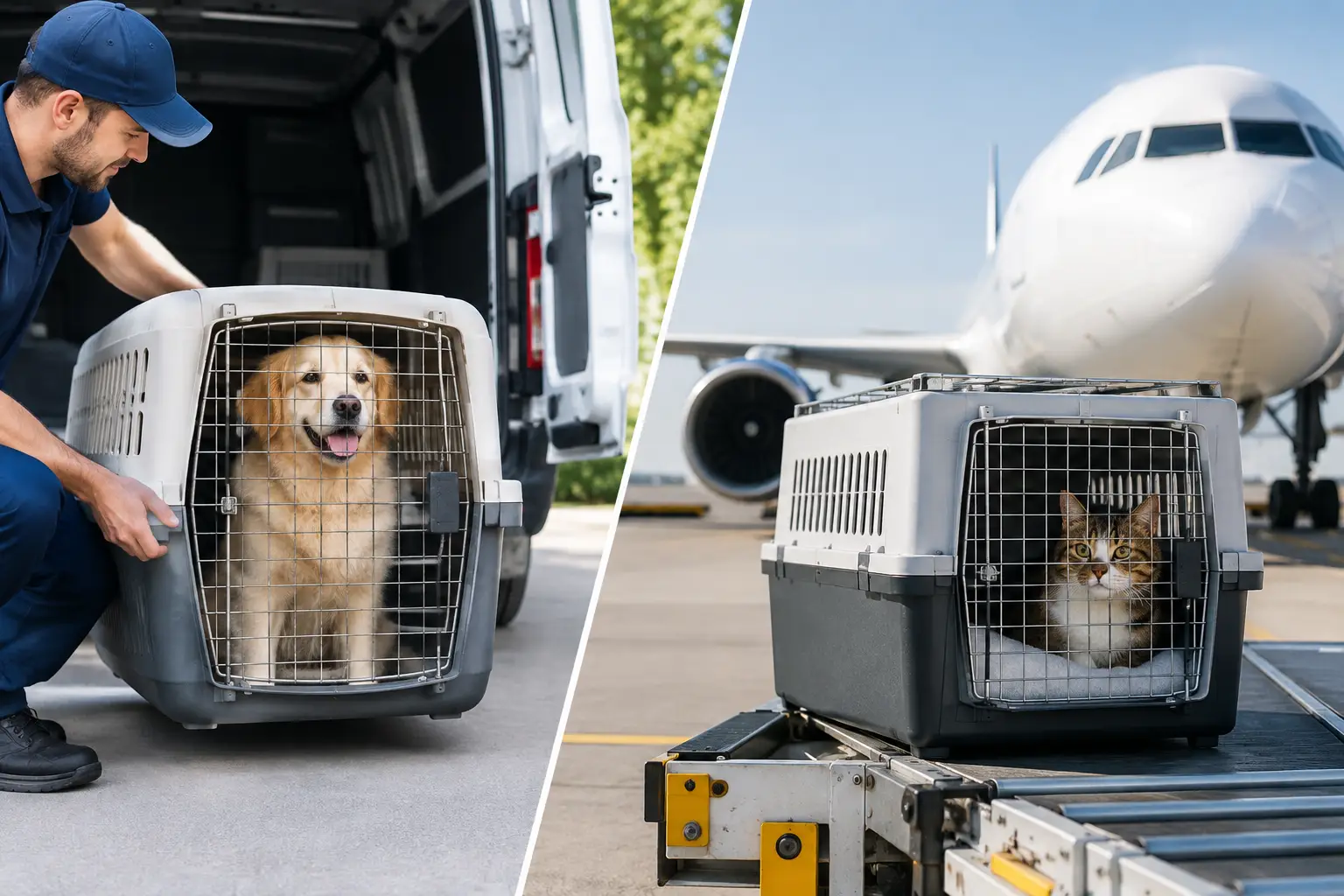
Airline cargo is a regulated method of transporting animals in a dedicated, climate-controlled area of the aircraft. Pets traveling as cargo are checked in through a cargo facility rather than at the passenger terminal. They are transported in an approved travel crate, handled by trained airline and ground personnel, and collected through the cargo and customs process at destination.
Cargo is not a lesser version of pet travel. For many international routes, it is the required or most practical option. Larger dogs generally cannot travel in cabin, and some airlines or countries only accept animals through cargo channels. Cargo may also be necessary when a pet is traveling without its owner, when an itinerary requires specific routing, or when the animal is a bird, exotic species, or other animal requiring specialized handling.
The process is more documentation-heavy because cargo shipments must align with airline acceptance rules, crate standards, veterinary records, export formalities, import permits, and customs procedures. That is where professional planning makes a meaningful difference. A missing endorsement, an incorrect microchip date, or a health certificate issued outside the accepted window can stop a pet’s journey before it begins.
Pet Courier Versus Airline Cargo: The Practical Differences
The biggest difference is not simply where your pet sits on the plane. It is the level and type of supervision, along with the operational structure of the trip.
With an in-cabin courier, the pet is near a person throughout the flight. This can be especially comforting for owners of small pets that are accustomed to close contact. However, cabin travel has strict limitations. Carrier dimensions, total pet-and-carrier weight, airline pet quotas, aircraft type, and connecting-country policies can all determine whether it is available.
With airline cargo, the pet has more space in an appropriately sized crate and travels under a formal cargo acceptance process. The animal may be separated from the passenger terminal, but the journey is managed through established airline procedures designed for live animals. Cargo is often the more realistic choice for medium and large dogs, multiple pets, and routes with limited in-cabin availability.
There are trade-offs. A courier arrangement may offer more personal oversight but fewer routing options. Cargo can provide access to more practical flight paths for larger pets, yet requires precise coordination before departure and at arrival. The best choice is the one that meets the rules without forcing an unsuitable itinerary or an uncomfortable travel setup.
Your Pet’s Needs Should Lead the Decision
A pet’s size is the most obvious factor, but it should not be the only one. Temperament matters. A calm cat that is comfortable in a soft carrier may do well in cabin, while a pet that becomes distressed by nearby strangers, movement, and unfamiliar sounds may need a different plan.
Age and health also deserve careful attention. Senior pets, very young animals, brachycephalic breeds, and animals with medical conditions may face additional airline restrictions or require veterinary review before travel. Sedation is generally not recommended for air travel unless specifically directed by a veterinarian, as it can create health risks at altitude and make it harder to assess how a pet is coping.
The travel crate is equally important for cargo shipments. It should be properly sized, well ventilated, secure, and compliant with the airline’s live-animal requirements. Your pet needs enough room to stand, turn around, and lie down naturally. A crate is not just a shipping container. It is your pet’s protected space throughout airport handling, flight, and release.
Routes and Regulations Can Decide for You
Many families start by asking which option feels kinder. A more useful first question is: what does the route legally and operationally allow?
Some airlines permit a limited number of in-cabin pets per flight. Others do not allow pets in cabin on particular international sectors. A connection can introduce new requirements, even if the departure and destination countries both allow the pet’s intended travel method. Seasonal temperature limits may also affect cargo acceptance at certain airports.
For moves into Panama, the pet’s transportation method must work alongside import documentation, vaccination requirements, health certification, customs clearance, and timing on arrival. If a pet arrives before a required document is valid or without the correct pre-approval, a seemingly simple flight decision can become a stressful border issue.
This is why route planning should happen before tickets are finalized whenever possible. The shortest itinerary is not always the safest or most compliant one. A slightly longer route with reliable connections, appropriate animal handling facilities, and realistic clearance timing may be the better plan.
When a Courier May Be the Better Fit
A courier option is often worth considering when your pet is small enough for in-cabin travel, the airline accepts pets on the full route, and dedicated accompaniment brings meaningful peace of mind. It can be particularly helpful for families traveling separately from their pet or for pets that benefit from familiar human presence during the journey.
It may also suit a move involving a straightforward route with minimal connections. Every handoff introduces another operational variable, so a direct or simple itinerary can make courier travel especially practical.
Still, personal accompaniment does not remove the need for correct paperwork. The pet must meet the same veterinary, airline, and entry requirements. A courier supports the journey, but compliance remains the foundation of safe international travel.
When Airline Cargo Is the Better Solution
Cargo is often the best choice when a pet is too large for the cabin, when multiple animals are traveling, or when airline rules make in-cabin accompaniment unavailable. It is also a strong option for international moves that require specialist handling, formal customs coordination, or carefully planned delivery after arrival.
A professionally managed cargo relocation can include crate guidance, airline booking, document review, veterinary coordination, export handling, customs clearance, and home delivery. This structure is particularly valuable when you are relocating an entire household and cannot personally manage every airport, government office, and airline deadline.
For birds, exotic animals, and wildlife cases, cargo procedures and permits may be essential. These moves require species-specific planning that goes beyond the usual dog or cat travel checklist.
Choose the Plan That Reduces Risk, Not Just Worry
The most reassuring plan is not always the one that looks simplest on a booking screen. It is the plan built around your pet’s welfare and the realities of the route. Panama Pet Relocation helps families evaluate those details before travel day, from airline suitability and documentation timing to customs release and final delivery.
Give your pet’s journey the same thoughtful planning you give your own move. When the route, paperwork, crate, and travel method all work together, your pet can arrive ready to settle into the next chapter with you.