


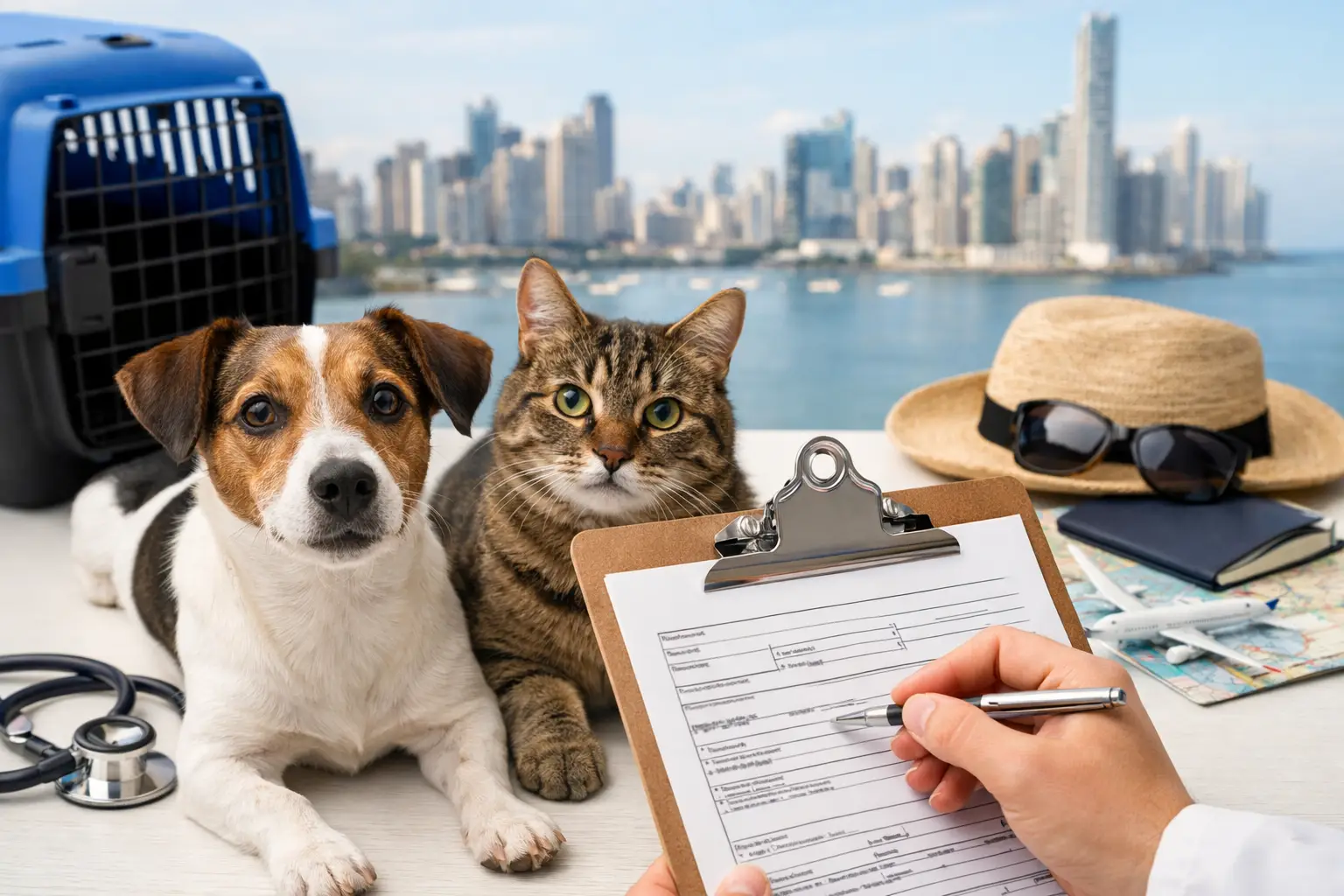

A missed date on a form can turn a well-planned pet move into an airport problem fast. If you are preparing for international travel with a dog, cat, or another companion animal, the panama pet health certificate is one of the documents that deserves careful attention early – not at the last minute.
For many families, this certificate sounds simple. In practice, it sits at the intersection of veterinary requirements, country-specific import rules, airline policies, and travel timing. That is why people often run into trouble even when they believe they have done everything right. The issue is usually not effort. It is timing, format, or a mismatch between what the vet issued and what the destination authorities expect.
What is a Panama pet health certificate?
A Panama pet health certificate is a veterinary document used to confirm that your pet has been examined, appears healthy for travel, and meets the applicable health requirements tied to the journey. Depending on the route, species, and whether the pet is entering or leaving the country, the certificate may need to reference vaccinations, parasite treatments, lab work, microchip details, and travel identification information.
This is not just a generic note from a veterinarian saying your pet looks fine. For international movement, the wording, supporting records, signatures, and dates all matter. In some cases, additional endorsements or government validation may also be required before travel.
What catches many owners off guard is that the certificate is only one part of a larger compliance package. Even a perfectly issued health certificate can fail to do its job if the rabies record is outdated, the pet details do not match the passport or microchip record, or the travel date falls outside the validity window.
Why timing causes so many problems
The most common issue with a panama pet health certificate is not whether a pet is healthy enough to fly. It is whether the document was issued within the correct timeframe. International pet travel paperwork often has narrow validity periods. If your exam happens too early, the certificate may expire before departure. If it happens too late, there may not be enough time for review, endorsement, or corrections.
That timing pressure gets tighter when flights change. A delayed itinerary, rescheduled airline booking, or customs hold can affect whether a document is still valid on arrival. This is one reason experienced coordination matters. The goal is not only to get the certificate done, but to line it up correctly with the rest of the move.
There is also a practical reality here. Veterinary clinics are busy, government processing can take time, and holiday schedules can interrupt a narrow travel window. Families who start planning early usually have more options and fewer emergency fixes.
What information is usually included
While requirements vary by route and animal type, a health certificate generally includes the pet owner’s name, the pet’s identifying details, species, breed, sex, age, color, and microchip number if applicable. It also typically confirms that a licensed veterinarian examined the animal and found no signs of contagious disease or conditions that would make travel unsafe.
Vaccination history is often central, especially rabies. For some moves, the certificate must also mention internal and external parasite treatments, supporting test results, and the date of the clinical exam. Accuracy matters down to small details. If the microchip number on the certificate differs from the vaccination record by even one digit, that can create a serious delay.
This is where document review becomes more than paperwork. It is a quality-control step. Families often focus on the appointment itself, but the real protection comes from checking every field before the pet reaches the airport.
Entering Panama versus leaving Panama
The required health documentation can look different depending on whether your pet is entering Panama, departing Panama, or connecting through another country. That distinction matters because owners often search for one answer when there are really several.
If your pet is entering Panama, authorities may require a specific health certificate format, current vaccination records, and supporting import documentation tied to the animal’s country of origin. If your pet is leaving Panama for the United States, Europe, or another destination, the export side may involve a different certificate, different approval channels, and different disease-control rules.
Transit can complicate things further. Some routes are straightforward on paper but become more document-heavy because of where the airline connects or where the pet clears customs. A certificate that works for one final destination may not be enough if there is an intermediate stop with its own conditions.
Why your regular vet may not handle the full process
Your veterinarian is essential, but not every clinic manages international travel documentation every day. Many general practice vets are excellent at the medical side of travel prep while having limited visibility into country-by-country form changes, endorsement requirements, airline acceptance standards, or customs handling procedures.
That does not mean your vet cannot help. It means the medical exam needs to be paired with current relocation guidance. In international pet transport, success depends on combining veterinary care with logistics. One without the other leaves room for preventable mistakes.
This is especially true for moves involving senior pets, snub-nosed breeds, birds, exotic animals, or families traveling on a tight schedule. In those situations, the certificate is still important, but it becomes part of a broader planning effort around crate readiness, route selection, temperature restrictions, and import clearance.
Common mistakes that delay travel
Most document problems are surprisingly ordinary. Owners use outdated forms, schedule the exam too soon, forget to confirm vaccine timing, or assume airline approval means government approval. Another frequent issue is inconsistency across records. A pet may be listed as “Bella” on one document and “Bella Marie” on another, or the breed may be described differently by different providers.
These seem minor until an inspector or airline desk agent has to decide whether the file is acceptable. International pet travel is not forgiving about ambiguity. If a detail invites doubt, the safest response from an official is often to stop the process until it is resolved.
The better approach is to build in review time. That includes checking names, dates, vaccine manufacturers, lot numbers when needed, microchip data, and the exact travel routing. It also helps to assume that every document will be scrutinized by someone who does not know your pet and only sees what is written on the page.
How to prepare for the health certificate appointment
The appointment itself goes more smoothly when the file is organized in advance. Your veterinarian should have your pet’s vaccine history, microchip details, prior travel records if relevant, and any destination-specific instructions before the exam. If a treatment or booster is required first, it is better to know that early than to discover it when the certificate window has already opened.
Owners should also confirm the full itinerary before paperwork is finalized. Even a change from one airline to another can affect handling expectations and timing. If your move includes customs clearance on arrival, ground transport, or a same-day connection, the certificate should support that actual plan, not an older version of it.
For households juggling children, work deadlines, and a relocation calendar, this is where professional management saves real stress. Instead of chasing updates across a vet clinic, airline, and import authority, you have one coordinated process built around your departure date.
When professional support makes the biggest difference
Some pet moves are fairly direct. Others are layered and time-sensitive. If your pet needs multiple documents, government endorsements, customs coordination, or species-specific handling, relying on general advice can become risky fast.
That is often when families turn to a relocation specialist. A company like Panama Pet Relocation helps connect the medical and logistical sides of the move so the health certificate is issued in the right format, within the right timeframe, and as part of a compliant travel file. The real value is not just producing paperwork. It is reducing the chance that your pet’s trip is disrupted by something avoidable.
For pet owners, that peace of mind matters. International moves already carry enough uncertainty. Your pet’s documents should not be one more source of it.
The safest way to think about a Panama pet health certificate
Think of the certificate as a timed legal-medical travel document, not a routine vet note. It needs to be correct, current, and coordinated with every other part of the journey. That is why the smartest planning starts with the travel date and works backward through the exam, supporting records, and any required approvals.
If you are early in the process, that is good news. The best pet relocations usually feel calm not because they are simple, but because the details were handled before they became urgent. When your paperwork is aligned, your pet can focus on what matters most – getting safely from one home to the next.