

A parrot, cockatiel, finch, or macaw is not simply a pet that can travel in a carrier with a few supplies. Bird transport to Panama involves species-specific planning, strict documentation, airline limitations, and careful attention to your bird’s health and stress level. A missed document or an unsuitable flight arrangement can lead to delays at departure, refusal by an airline, or complications on arrival.
For families relocating, the goal is not just to get a bird from one country to another. It is to make sure the journey is legal, humane, and planned around the needs of an animal that may be highly sensitive to changes in temperature, noise, handling, routine, and surroundings.
Why Bird Transport Is Different From Dog or Cat Travel
International bird travel has more variables than many owners expect. Airlines may have limited routes that accept live birds, and their requirements can differ by species, aircraft, season, and country. Some airlines do not accept birds at all, while others may accept them only in certain travel arrangements.
Documentation is also more complex. In addition to standard veterinary paperwork, some birds may require permits related to protected species or international wildlife trade. This often applies to parrots and other exotic birds, but the answer depends on the exact species, origin, and destination. Common names are not always enough. Accurate species identification, including the scientific name when required, is essential.
A bird’s individual temperament matters, too. A calm, crate-trained bird may tolerate travel very differently than a bird that panics when separated from its familiar person or enclosure. Good relocation planning accounts for both compliance and welfare rather than treating every bird shipment the same way.
Planning Bird Transport to Panama Starts Early
The safest relocation timeline begins well before the intended travel date. Veterinary appointments, export documents, government endorsements, airline bookings, and import coordination may need to happen in a specific order. Waiting until flights are booked can create unnecessary pressure, especially if a permit, lab result, or approved travel crate takes longer than expected.
The first step is confirming the bird’s species, country of origin, current location, and intended travel route. These details shape nearly every part of the plan. A direct flight may be preferable, but it is not always available or appropriate. In some cases, a well-managed itinerary with a carefully selected connection is more realistic than an inconvenient or poorly timed direct option.
It is also wise to confirm whether the bird will travel as accompanied baggage, in cabin where permitted, or through an airline cargo program. The right arrangement depends on the airline, bird size, route, documentation, and applicable regulations. Owners should not assume that a bird can travel in cabin because a small dog or cat can. Airline policies for birds are often more restrictive.
Veterinary Records and Health Preparation
A veterinarian experienced with avian medicine should assess your bird before international travel. The appointment is more than a quick health check. Your veterinarian may need to issue or support official health documentation, verify identification details, review the bird’s condition for travel, and complete tests or treatments required by the relevant authorities.
Requirements can change, and they may differ based on where the bird is coming from. The records should match the bird’s details exactly, including species, sex where known, identifying bands or microchips where applicable, and owner information. Small inconsistencies can create large problems during document review.
Do not make last-minute changes to a bird’s diet, medication routine, or daily schedule without veterinary guidance. Travel day is not the time to introduce unfamiliar foods or supplements. A stable routine before departure generally helps reduce stress.
Permits for Exotic and Protected Bird Species
Many commonly kept birds are considered exotic animals, and some species are subject to additional international controls. Birds that fall under protected-species rules may need permits before they can legally leave one country or enter another. The process can require evidence of lawful ownership, breeding records, prior permits, or other supporting documentation.
This is one area where assumptions are costly. A bird purchased legally years ago may still need specific documents to cross an international border. If a permit is required, the timing of that approval must be incorporated into the overall relocation schedule. Booking a flight before the permit path is clear is a risk that can leave families scrambling.
Choosing the Right Travel Crate
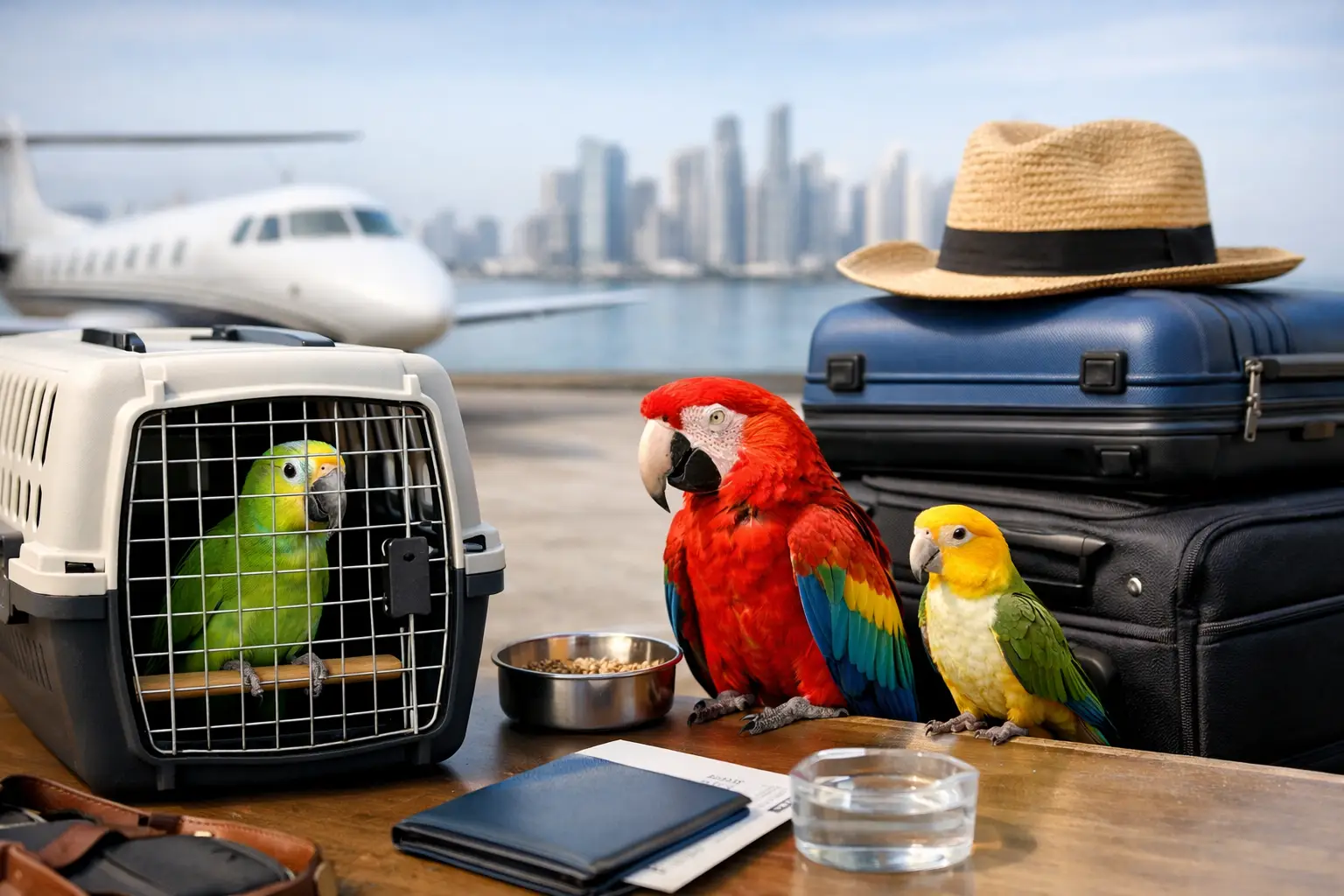
A travel crate is not the same as a home cage. It must meet airline standards, protect the bird during handling, allow appropriate ventilation, and prevent escape or injury. The bird should be able to stand and turn comfortably without having excessive room to be thrown around during movement.
For many birds, the interior setup needs thoughtful consideration. Perches, food dishes, water arrangements, absorbent lining, and secure closures must be suitable for the species and the flight. An inappropriate perch or unsecured accessory can become dangerous during transport.
Crate acclimation is one of the most valuable things an owner can do. Introduce the approved crate well before travel and allow the bird to explore it in a familiar, positive setting. Short, calm sessions help the crate become less alarming. For a bird that is particularly anxious or unaccustomed to confinement, extra time and avian veterinary guidance may be needed.
Sedation is generally not a simple answer to travel anxiety. It can affect a bird’s breathing, balance, and ability to regulate body temperature. Any medication decision should come directly from an avian veterinarian who understands the bird’s health history and the travel conditions.
Airline Routing and Arrival Coordination
The best flight plan minimizes avoidable stress, but the shortest route is not automatically the safest one. Weather, connection timing, aircraft type, airport facilities, carrier restrictions, and handoff procedures all deserve attention. A long airport layover, for example, may create more risk than a slightly longer travel day with a more reliable connection.
Arrival planning matters just as much as departure planning. Before the bird lands, import documents should be reviewed, required authorizations should be in place, and customs or agricultural procedures should be understood. The receiving party needs a clear plan for when and where the bird will be collected, how it will be transported onward, and how it will settle into its new environment.
A professional relocation service can coordinate these moving parts, including veterinary documentation, airline routing, permit support, customs clearance, and final delivery. For complex cases involving parrots, exotic species, wildlife regulations, or multi-country routes, experienced handling is particularly valuable. Panama Pet Relocation manages the full process with the understanding that a bird’s welfare and a family’s peace of mind are closely connected.
Helping Your Bird Settle After Arrival
The journey does not end when the crate door opens. Birds often need quiet time, familiar food, fresh water, and a calm environment after travel. Avoid placing the bird immediately in a busy room full of visitors, loud music, or other pets. Let your bird reestablish its routine gradually.
Watch for changes in eating, drinking, droppings, posture, vocalization, or breathing. Some adjustment is normal after a major move, but a bird that seems weak, remains fluffed for long periods, refuses food, or shows respiratory distress should be seen by an avian veterinarian promptly.
If you are moving a bonded pair or a bird that relies heavily on a particular companion, plan that transition with care. Familiar objects and predictable routines can help, but the new home should still be checked for hazards such as ceiling fans, open windows, toxic plants, and unsafe cookware fumes.
A successful international move gives your bird more than a valid flight and approved paperwork. It gives your family the reassurance that every decision, from the crate to the arrival plan, was made with your bird’s safety in mind.