


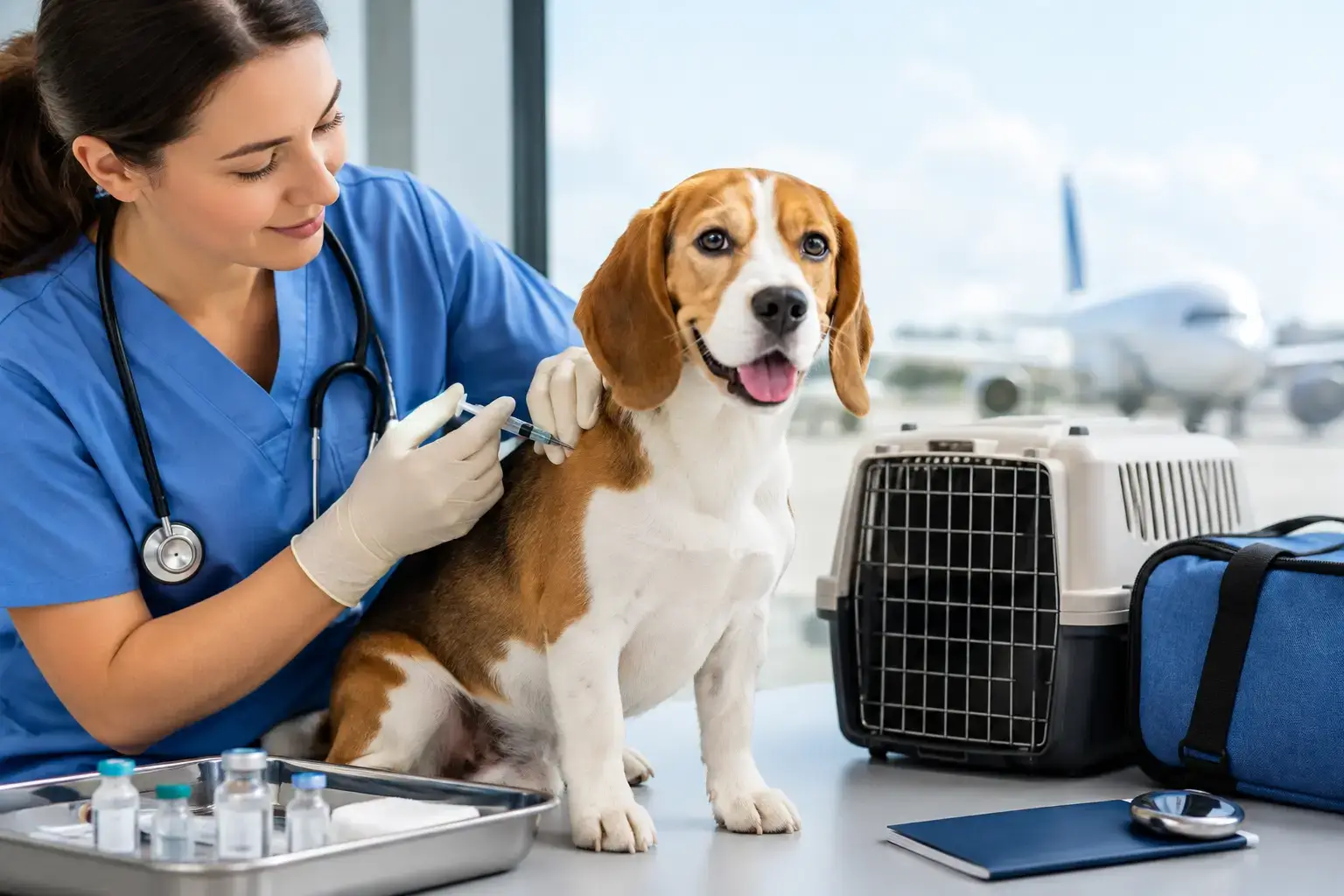

A pet can be healthy, current on routine care, and still be refused travel if one vaccine was given too late, recorded incorrectly, or does not meet the destination country’s rules. The best vaccines for pet export are not simply the most comprehensive set of shots. They are the vaccinations, dates, supporting records, and laboratory steps that satisfy the entry requirements for your specific route.
That distinction matters when a family is moving on a fixed schedule. International pet travel is governed by the destination country, the airline, transit locations, and sometimes the state or province of departure. A veterinarian can protect your pet’s health, but export compliance requires careful coordination between veterinary care and travel regulations.
Best Vaccines for Pet Export Depend on the Destination
There is no universal vaccine package for every pet traveling internationally. Rabies vaccination is the most common requirement for dogs and cats, but the required timing, validity period, and documentation format vary significantly by country.
Some destinations accept a current rabies vaccine administered after a certain minimum age. Others require the vaccine to be given a set number of days before arrival. Rabies-free or tightly controlled destinations may also require a rabies antibody titer test, often called a FAVN test, followed by a waiting period that can affect your moving timeline.
Routine vaccinations may also be required, recommended, or reviewed as part of a veterinary health certificate. For dogs, these commonly include distemper, parvovirus, adenovirus or hepatitis, parainfluenza, and leptospirosis. For cats, they commonly include feline rhinotracheitis, calicivirus, and panleukopenia. Requirements can differ for puppies, kittens, senior pets, and animals with medical exemptions.
The right question is not, What vaccines does my pet usually need? It is, What proof of vaccination does this destination require, and when must each step be completed?
Rabies Vaccination Is Usually the Travel-Critical Step
For most international relocations, rabies documentation receives the closest review. A valid record typically needs to identify the pet, the vaccine manufacturer, product name or lot number, date administered, expiration date or duration of validity, and the veterinarian who administered it.
The microchip must also be considered. Many countries require a pet to be microchipped before the rabies vaccination is given. If the vaccine was administered before the chip was implanted, a destination may treat the vaccine as invalid for import purposes, even if the pet has been vaccinated for years.
This is one of the most frustrating avoidable issues in pet export. A pet parent may have a complete rabies history, yet still need a new vaccination and a new waiting period because the microchip sequence or paperwork does not meet the importing country’s standard.
Do not assume a three-year rabies vaccine is accepted everywhere for three years. Some countries recognize the expiration date listed on the certificate, while others apply their own rules. A booster can be valid immediately in certain situations, but if the prior vaccine lapsed, it may be treated as a first vaccination and trigger a waiting period.
When a Rabies Titer Test Is Required
A rabies titer test measures the level of rabies antibodies in a blood sample. It is not a substitute for a rabies vaccination. Rather, it provides laboratory evidence that a properly vaccinated pet has developed the required immune response.
Countries with stricter rabies controls may require blood to be drawn after a specified period following vaccination. The sample must be processed by an approved laboratory, and the result must reach the required threshold. Some destinations then impose a waiting period from the blood draw date, not from the date the test result arrives.
That timeline can be several months. Families moving from Panama, the United States, or elsewhere in Central America to a destination with titer requirements should begin planning early. Waiting until airline tickets are booked can leave too little time to complete the sequence legally.
A titer test is also highly document-sensitive. The microchip number on the laboratory report, rabies certificate, health certificate, and travel paperwork must match exactly. A single transposed digit can create delays at the border or require clarification while a pet is already in transit.
Routine Vaccines Still Support a Safe Move
Even when a destination focuses primarily on rabies, routine vaccinations remain a practical part of preparing a pet for international travel. Airports, cargo facilities, veterinary inspections, boarding environments, and travel stress can expose pets to unfamiliar animals and pathogens.
For dogs, a veterinarian may recommend bringing core protection current before travel and discussing region-specific concerns such as leptospirosis. For cats, core feline vaccines are often especially relevant if a pet may encounter other cats during boarding, handling, or a temporary stay before the final move.
The appropriate plan depends on your pet’s age, health history, lifestyle, and destination. A veterinarian should guide the medical decision. Export planning ensures that the medical schedule also works with legal entry deadlines.
Avoid unnecessary last-minute vaccinations. A pet that is ill, under significant stress, or has a known vaccine sensitivity may need a tailored plan. Some countries allow limited medical exemptions, but those exemptions are not automatic and may not be accepted for travel. Your relocation timeline should leave room for veterinary judgment rather than forcing a rushed decision.
Timing Matters as Much as the Vaccine Itself
Pet export paperwork often has a narrow validity window. The final veterinary health certificate may need to be issued only days before departure, then endorsed by the appropriate government authority before the flight. That certificate relies on vaccination information that must already be valid.
A well-managed schedule works backward from the arrival date. It accounts for vaccine waiting periods, microchip timing, titer testing, laboratory processing, parasite treatments if required, health certificate appointments, government endorsements, airline deadlines, and customs procedures.
Before your export veterinary appointment, have these details ready:
- Your pet’s complete vaccination history, including older rabies certificates
- Microchip documentation and the exact chip number
- Your destination country, transit countries, and intended travel date
- Any previous titer reports, medical conditions, or vaccine reactions
Keep original certificates safe and request clear, legible copies. Handwritten entries that are incomplete, dates that conflict between documents, and certificates missing a veterinary signature or license information can all create problems later.
Special Considerations for Puppies, Kittens, and Exotic Pets
Young pets are often the most challenging to schedule because countries may set a minimum age for rabies vaccination and require a waiting period afterward. A puppy or kitten may be old enough to fly under an airline’s policy but still too young to meet import rules. These are separate requirements, and the stricter one controls the travel plan.
Birds, reptiles, and other exotic animals follow a different path. Their export requirements may involve species identification, disease testing, permits, quarantine rules, wildlife regulations, or inspections rather than the standard dog and cat vaccine schedule. These cases should be reviewed individually well before travel.
Coordinate Veterinary Care With the Whole Journey
A compliant vaccine record is only one part of international pet travel. The airline may have crate, temperature, breed, and booking rules. A transit country may impose its own conditions even when the pet never leaves the airport. Customs officials will review the final import documents, not just the vaccination card.
This is why experienced coordination is valuable for a cross-border move. Panama Pet Relocation helps families align veterinary steps, import and export documents, laboratory testing, airline routing, and arrival procedures so that each part supports the next. For relocations involving Panama, Central America, or more complex global routes, early planning gives your pet the widest range of safe travel options.
Your pet does not need every vaccine available to travel well. They need a veterinary plan that protects their health and meets the rules of the place they are going. Start with the destination requirements, verify every date and microchip number, and give the process enough time to work in your pet’s favor.