


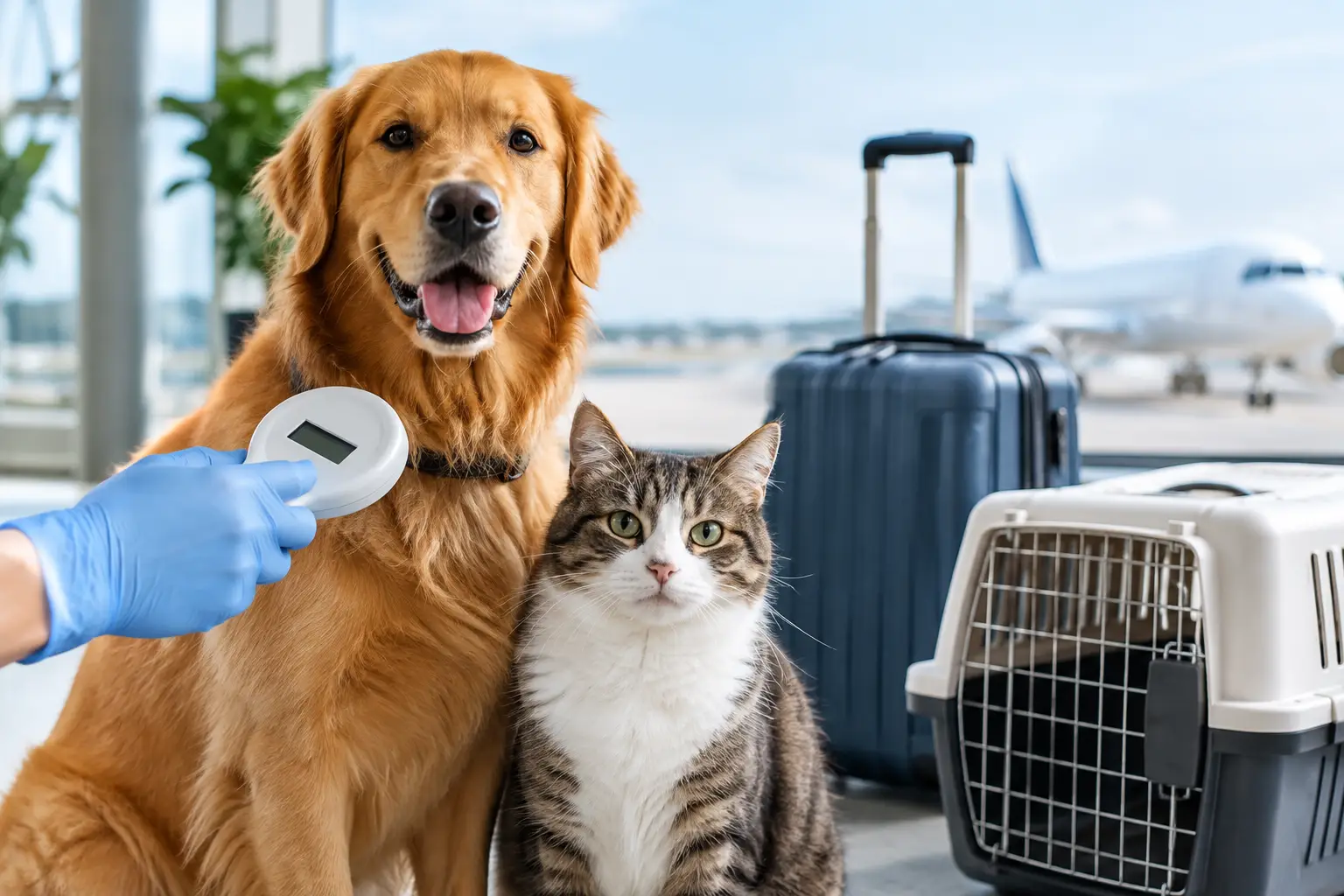

A current rabies vaccine, a clean health certificate, and a confirmed flight can still fail to move a pet across a border if the microchip number is missing, unreadable, or recorded incorrectly. Pet microchip requirements are often a small line in an import rule, but they can control the order of every veterinary step that follows.
For families relocating internationally, a microchip is more than permanent identification. It connects your pet to vaccination records, laboratory testing, import permits, airline paperwork, and customs clearance. Getting this one detail right early can prevent stressful last-minute changes to an otherwise well-planned move.
What a Pet Microchip Does for International Travel
A pet microchip is a tiny implanted identification device, usually placed beneath the skin between the shoulder blades. It carries a unique number that can be read with a scanner. It is not a GPS tracker and does not show your pet’s location in real time.
In international relocation, that number is the link between your animal and every official record used to establish identity. Authorities need confidence that the pet examined by the veterinarian, vaccinated against rabies, and presented at arrival is the same pet named on the import documents.
A microchip does not replace an ID tag, collar, travel crate label, or a current photograph. Those remain useful safeguards during travel. The chip is different because it is permanent and is recognized as the formal identifier in many government processes.
Why Pet Microchip Requirements Affect Your Timeline
The most common issue is timing. Many destinations require the microchip to be implanted before a rabies vaccination that will be used for travel. If the rabies vaccine was administered first, then the chip was placed later, officials may treat the rabies vaccine as invalid for import purposes, even if it has not expired.
That can mean revaccination after the chip is implanted. Depending on the destination, it may also restart a waiting period before travel is allowed. Where a rabies antibody titer test is required, the sequence matters even more: microchip first, then qualifying rabies vaccination, then blood collection at the proper time.
This is why a family should not treat microchipping as a task to complete during the final veterinary appointment. Ask about destination, transit-country, and airline rules as soon as an international move becomes likely. Requirements can vary based on where the pet is coming from, where it is going, and whether it will connect through another country.
The usual order of travel preparation
While each route has its own rules, the practical sequence often looks like this:
- Confirm the destination’s accepted microchip standard and any transit requirements.
- Implant and scan the microchip, then record the full number accurately.
- Complete rabies vaccination and other required veterinary treatments in the correct order.
- Allow for any mandated waiting periods, blood testing, permits, and health certificate timing.
- Match the microchip number across every travel document before departure.
A relocation professional can help verify the correct order for your specific route. That is particularly valuable when a move involves Panama, Central America, the United States, Europe, or a destination with strict rabies controls.
The Microchip Standard to Ask Your Veterinarian About
Many countries prefer or require an ISO-compliant microchip, generally a 15-digit chip that follows ISO 11784 and ISO 11785 standards. This format is widely used internationally and can be read by universal scanners commonly available at veterinary clinics, airports, and border inspection points.
Not every pet already has an ISO chip. Some pets, especially those chipped years ago in the United States, may have a different type of chip. That does not automatically mean travel is impossible. Depending on the destination, you may be able to travel with a compatible scanner, obtain confirmation that officials can read the chip, or have an ISO chip implanted in addition to the existing one.
The right solution depends on the importing country’s rules. Do not assume that a microchip registered with a U.S. database is automatically accepted abroad. Registration helps a lost pet be reunited with its family, but it is separate from the import authority’s identification requirements.
If a second chip is needed, careful documentation is essential. Your veterinarian should record both numbers, identify which chip is being used for travel records, and scan the correct chip at each relevant appointment. Confusion between two chip numbers is avoidable, but only when the paperwork is handled with precision.
Documentation Errors That Cause Avoidable Delays
The number on the microchip itself is only half the job. The same number must appear exactly the same way on the rabies certificate, health certificate, laboratory forms, import permit, and any supporting vaccination record. A single transposed digit can create a mismatch that requires correction or further review.
Before signing any document, compare the printed microchip number against a fresh scan performed by the veterinary clinic. Do not rely only on an old vaccination certificate, a pet passport, or an owner-maintained record. A current scan provides the best confirmation that the chip can be read and that the number is correct.
It also helps to check the number’s formatting. Some forms use spaces or hyphens for readability, while others show a continuous 15-digit number. Formatting may differ, but the digits must be identical. If a form contains a barcode, verify that the human-readable number on the document matches it as well.
Names and dates deserve the same attention. Your pet’s name, species, breed, sex, color, date of birth or age, owner name, and rabies dates should align across the file. Border officials understand that breeds and colors can be described differently, but conflicting identification details can slow clearance when the pet is already in transit.
When to Microchip a Pet Before Moving
The safest answer is: as early as possible, before the travel vaccination sequence begins. Even if your move is several months away, an early chip gives you time to resolve a failed scan, update records, repeat a vaccine if necessary, or complete additional country-specific steps without pressure.
For a puppy or kitten, minimum age requirements for rabies vaccination and travel may determine the earliest possible departure date. Implanting a chip early does not override those age rules, but it ensures the pet is properly identified before the qualifying vaccine is given.
For an adult pet with an existing chip, schedule a scan well before booking nonrefundable travel arrangements. Confirm whether the chip is ISO-compliant, whether it can be read reliably, and whether the historical rabies record shows the microchip number. If the number is absent from an older vaccine certificate, your veterinarian may need to advise on whether revaccination or updated documentation is appropriate for the route.
A Calm, Practical Pre-Travel Check
A few weeks before travel, ask your veterinarian to scan the microchip again and compare the result with every document in your relocation file. Keep a clear copy of the chip record with your travel paperwork, but do not make independent changes to official forms after they have been endorsed.
Bring your pet’s original documents as instructed, and make sure the person traveling with the pet understands where the microchip number appears. If your pet is moving separately by cargo or with a professional escort, provide clear contact details and ensure the responsible team has the complete, current record set.
Microchip rules can feel technical, especially when your family is also coordinating housing, flights, and a major international transition. Panama Pet Relocation helps families confirm the identification sequence and documentation details for their specific route, so a tiny chip does not become a major travel obstacle.
Your pet cannot explain that a document contains one wrong digit. Giving the microchip the same careful attention as the flight plan is one of the kindest ways to protect their journey.