


A family’s flight may take a few hours, but international pet travel often begins months before departure. One missing endorsement, an expired vaccine, or an airline change can turn a carefully planned move into a painful delay for the animal everyone is trying to protect. The good news is that most problems are preventable when the journey is planned around the destination’s rules, your pet’s needs, and a realistic timeline.
For families moving to, from, or through Panama and Central America, the safest approach is to treat the pet’s relocation as its own project. Flight reservations are only one piece. Veterinary records, government paperwork, carrier requirements, customs procedures, airport handling, and final delivery all need to work together.
Why International Pet Travel Requires More Planning
A domestic trip can sometimes be arranged quickly. International travel is different because each country controls animal entry to protect public health, agriculture, and local wildlife. Requirements can vary by destination, species, age, routing, and even the country where the pet has lived recently.
For dogs and cats, the process commonly involves current vaccination records, a health certificate issued within a specific window, parasite treatment when required, import permits, and government endorsement of veterinary documents. Some destinations also require rabies antibody testing, known as a FAVN titer test, with a waiting period after the sample is processed. Birds, exotic pets, and wildlife cases may require additional permits and much more specialized planning.
Airline requirements create another layer. Airlines set their own rules for cabin travel, checked pets, cargo bookings, kennel dimensions, temperature restrictions, breed policies, and connecting flights. A route that works well for a traveler may not be suitable for a pet. The best itinerary is often the one with fewer connections, reliable animal handling facilities, and enough time to clear formalities without rushing.
Start With the Destination, Not the Flight
The first practical decision in pet travel is confirming what the destination requires and when each item must be completed. Buying tickets before checking the import timeline can create unnecessary pressure, especially when permits or laboratory testing are involved.
A good plan begins by reviewing your pet’s travel history and current medical records. Where has your pet lived over the past several months? Is the rabies vaccination current and documented clearly? Does the destination require a microchip, and if so, must it be implanted before the rabies vaccine? These details can affect whether existing paperwork is accepted.
It also helps to work backward from your desired arrival date. Build in time for veterinary appointments, laboratory processing, permit approvals, airline confirmation, and possible document corrections. Government offices, airlines, and laboratories do not always operate on the same schedule, particularly around holidays or during periods of high travel demand.
A health certificate is not just a vet visit
Many owners assume a routine veterinary exam is all they need. In reality, international health certificates often have precise wording, timing, and signature requirements. They may need to be issued by an accredited veterinarian and endorsed by a government authority before departure.
The validity window can be short. If the certificate is prepared too early, it may expire before arrival. If it is prepared too late, there may not be enough time for endorsement. Coordinating this sequence carefully helps avoid the worst kind of surprise: arriving at the airport with a healthy pet but invalid paperwork.
Choose the Right Travel Arrangement for Your Pet
There is no single best way for every pet to fly. The right arrangement depends on the animal’s size, temperament, health, route, and airline availability.
Some small pets may be eligible to travel in the cabin in an approved carrier that fits beneath the seat. This can be comforting for owners, but space is limited and airline cabin pet policies vary widely. Cabin travel may not be possible on every segment of an international itinerary.
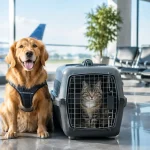
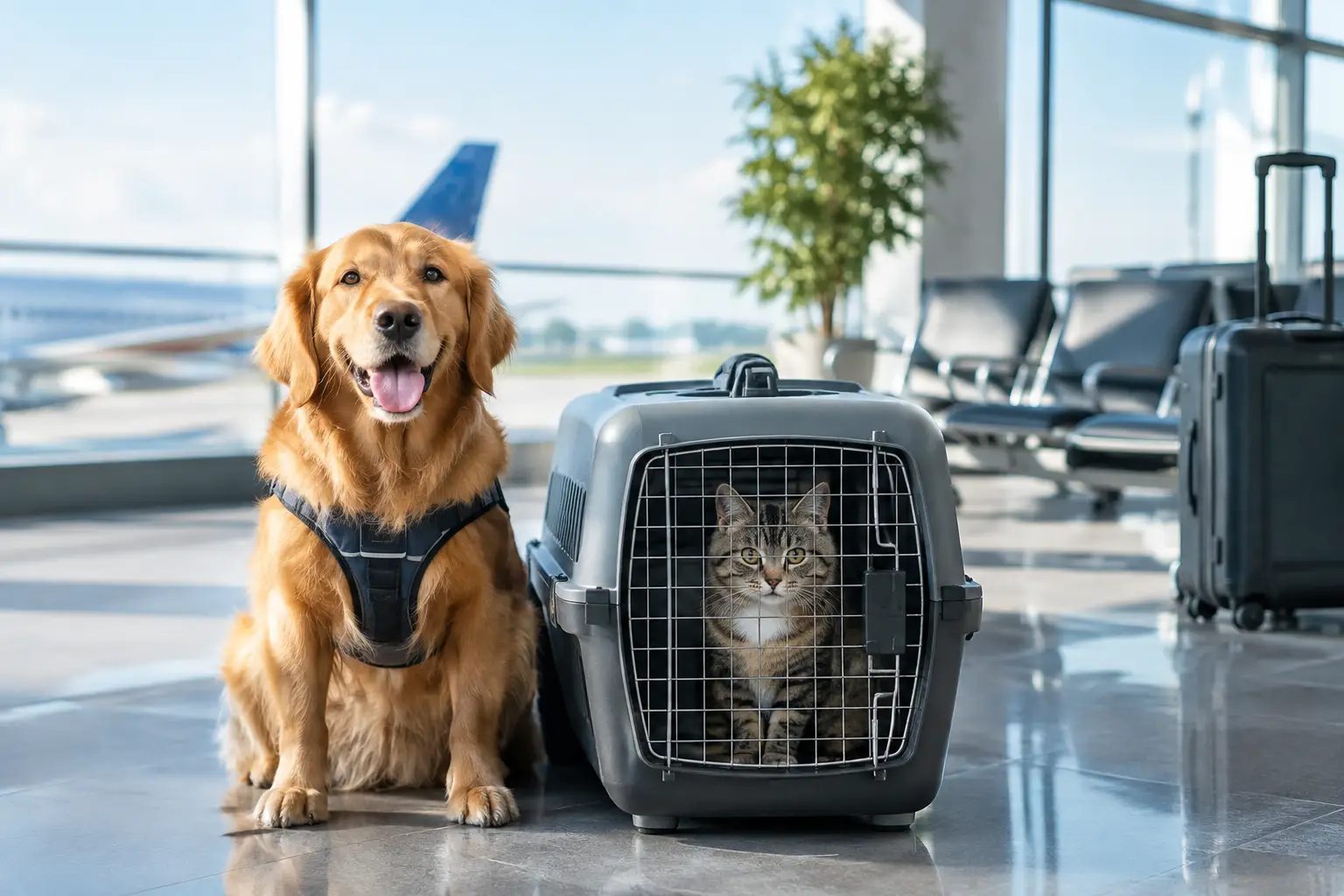
Larger pets commonly travel in an airline-approved travel kennel in a temperature-controlled area of the aircraft. When arranged correctly, this is a regulated and established option, but it demands careful attention to kennel sizing, routing, weather conditions, and handling procedures. A kennel should allow the pet to stand naturally, turn around, and lie down comfortably. It should also be secure, well ventilated, and labeled according to airline requirements.
For some moves, a professional in-cabin escort or VIP door-to-door service may be the right choice. This can be especially valuable for owners with complex schedules, pets needing closer oversight, or journeys involving multiple countries. It depends on the animal and route, not simply on convenience.
Do not sedate without veterinary direction
Sedation is a common concern, particularly for nervous pets. Most airlines and veterinary professionals discourage routine sedation for air travel because it can affect balance, breathing, and temperature regulation at altitude. If your pet has anxiety or a medical concern, speak with your veterinarian well before travel day. The goal is to create a calm, familiar routine, not to medicate away the stress of an unfamiliar journey.
Make the Kennel a Familiar, Safe Place
The travel kennel should never be introduced for the first time at the airport. Begin crate training well before the move by leaving the kennel open in a familiar area, adding comfortable bedding if permitted, and rewarding your pet for entering voluntarily. Short practice sessions with the door closed can gradually build confidence.
On travel day, keep routines simple. Provide exercise appropriate for your pet’s age and health, allow time for bathroom breaks, and follow the airline’s feeding instructions. Overfeeding immediately before a flight can cause discomfort, while withholding water unnecessarily can create another problem. Your veterinarian and travel coordinator can help you create a sensible plan based on the trip length and your pet’s needs.
Attach identification to both the pet and the kennel. Keep copies of essential documents with you, not only on the outside of the carrier. A recent photo of your pet and an accessible copy of the microchip number can also be useful if questions arise during handling or customs clearance.
Plan for Arrival, Customs, and the First Night
The flight is not the end of the process. On arrival, your pet may need to be presented to veterinary or customs officials before release. Depending on the destination, this can involve document review, a visual inspection, payment of applicable government fees, or coordination with an airport cargo facility.
This is where local expertise matters. Requirements at the destination airport may be different from the general import rules published for the country. Knowing where the pet will be released, which office reviews the documents, and how onward transportation will be arranged removes uncertainty after a long journey.
For an arrival in Panama, advance coordination can make the difference between a controlled handoff and a stressful wait. Panama Pet Relocation helps families organize the documentation, airport procedures, customs clearance, and onward delivery so that pets can move from the airport toward home with the right support in place.
The first night should be quiet and predictable. Offer water, a small meal if appropriate, and a familiar place to rest. Some pets bounce back quickly; others need a few days to adjust to new sounds, smells, temperatures, and routines. Watch for signs of distress or illness, and keep your local veterinarian’s information available.
When Professional Coordination Is Worth It
Handling a straightforward trip yourself can be possible when the route is simple, rules are clear, and you have ample time. But the risk changes when an itinerary includes several airlines, cargo travel, strict import rules, a FAVN requirement, a short timeline, or a pet that needs special handling. The same is true for birds, exotic animals, and wildlife cases, where regulations are often more specialized.
A qualified pet relocation partner does more than book a flight. They verify the sequence of requirements, coordinate with veterinarians and authorities, confirm airline acceptance, prepare for changes, and remain accountable for the operational details. That support gives owners a clearer picture of what is happening at every stage while keeping the pet’s welfare at the center of the plan.
Your pet does not understand permits, routing rules, or customs procedures. They understand familiar voices, careful handling, and arriving safely with their family. Give the journey the preparation it deserves, and the move can begin with reassurance rather than a last-minute scramble.