


A valid rabies vaccine may get your pet started on the path to international travel, but it does not always get them cleared to enter their destination. That distinction is at the center of the rabies antibody test versus vaccination question – and misunderstanding it can lead to canceled flights, missed move dates, or an unexpected delay at the border.
For families relocating with a dog or cat, the reassuring news is that these are not competing choices. In many international moves, vaccination and antibody testing work together. The key is understanding what each document proves, when each is required, and how far ahead the process needs to begin.
Rabies Antibody Test Versus Vaccination: The Core Difference
A rabies vaccination is preventive care. It is the vaccine your veterinarian administers to help protect your pet from rabies and to meet baseline entry requirements for many countries. The vaccination record usually identifies the product used, date given, expiration date, veterinarian, and pet details.
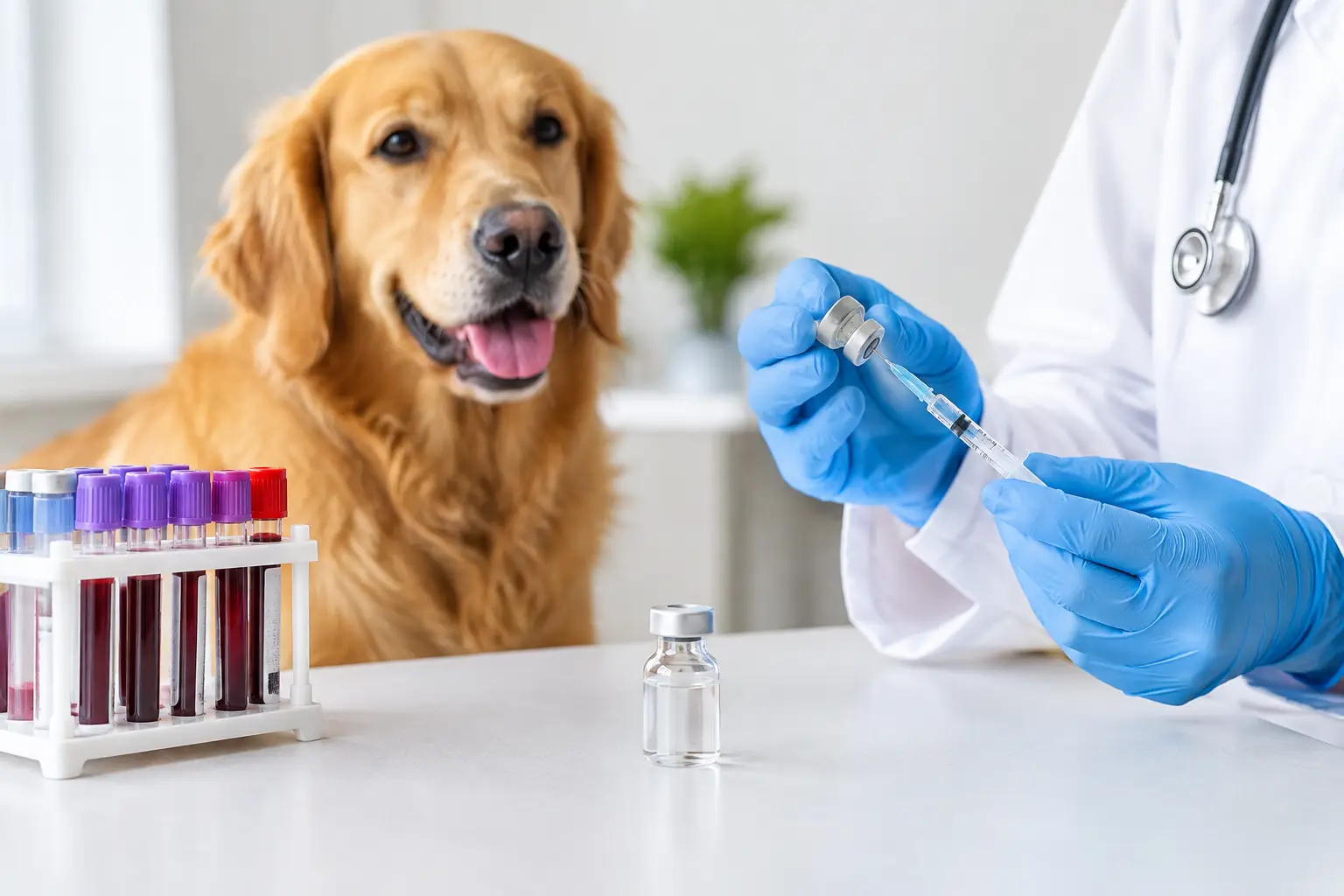
A rabies antibody test, often called a rabies titer test or FAVN test, is laboratory evidence that your pet developed an adequate immune response after vaccination. A blood sample is sent to an approved laboratory, where it is tested for rabies-neutralizing antibodies. The result does not replace the vaccine. Instead, it confirms that the vaccination produced the antibody level required by a particular destination.
Think of the vaccine as the protection and the titer result as the proof some border authorities ask to see. A current vaccine can be sufficient for one country, while another country may require both a current vaccine and a passing antibody test before travel.
Why a Current Rabies Vaccine May Not Be Enough
Every destination sets its own animal-import rules based on its rabies-control status and public-health policy. Some countries accept a properly documented current rabies vaccination. Others require a rabies antibody test for pets arriving from certain countries, pets that have traveled through specified regions, or pets that do not meet an uninterrupted vaccination history.
The rules may also change based on your route. A pet moving from the United States to one country could face different requirements than a pet leaving Panama, transiting through another country, and continuing to a final destination. Airline schedules, layovers, and cargo routing can all matter when planning an international move.
This is why copying a friend’s pet travel timeline can be risky. Their pet may have traveled under different rules, from a different origin, or before a regulation changed. The applicable requirements are those for your pet’s specific origin, destination, species, travel date, and sometimes transit points.
What Happens During a Rabies Titer Test?
The process begins with a valid rabies vaccination. After the appropriate waiting period, a licensed veterinarian collects a blood sample and prepares the paperwork needed by the testing laboratory. The sample must be correctly identified and shipped according to laboratory instructions. Administrative errors can be just as disruptive as an insufficient result.
For many destinations, the laboratory must report an antibody level of at least 0.5 IU/mL. However, passing the test is only one part of compliance. Some countries require the blood draw to occur a minimum number of days after vaccination. Others impose a waiting period after the blood is drawn or after the result is issued before the pet can enter.
That waiting period is where many relocation plans become tight. A family may receive a passing result and assume the pet is ready to fly immediately, only to learn that entry is not permitted until a required waiting period has passed. The test result may remain valid for a long time if rabies boosters are kept continuous, but a lapse in vaccination can change that status.
Timing Is the Most Important Part of the Process
Rabies paperwork has a calendar, not just a checklist. Vaccinating too close to departure, drawing blood too early, or overlooking a destination’s waiting period can make an otherwise healthy, well-prepared pet ineligible to travel on schedule.
A first-time rabies vaccination is often treated differently from a booster. If there has been any gap in a pet’s documented rabies coverage, authorities may consider the next vaccination a new primary vaccination rather than a continuation. That can restart waiting periods and may affect when a titer sample can be collected.
It is also worth checking the expiration date on the existing rabies certificate before making any changes. Giving a booster before the prior vaccine expires can preserve an uninterrupted history in many cases. Waiting until after it expires can create a more complicated timeline, even if the delay is only a few days.
For a move involving a titer requirement, early planning is the safest approach. Starting several months ahead creates room for veterinary appointments, laboratory processing, required waits, health certificate timing, airline booking, and any unexpected need to repeat a step.
When Is a Rabies Antibody Test Commonly Required?
A rabies antibody test is most often requested for entry into countries with strict rabies-prevention programs. It may also be required when a pet is returning to a country after living abroad, entering from a country classified as higher risk, or traveling under conditions that require additional proof of immunity.
A titer may not be needed for every move to or from Panama, but it can become essential when a pet is continuing onward to another destination. This is particularly relevant for globally mobile families who expect to relocate again, divide time between countries, or plan a future return trip.
Even when a titer is not mandatory, keeping complete rabies records is still valuable. Clear records support smoother veterinary certification, help establish continuous vaccination history, and reduce uncertainty if destination rules change. Your pet’s microchip information should also match the vaccination certificate, laboratory paperwork, and travel documents exactly.
Common Mistakes That Cause Avoidable Delays
The most common issue is treating the rabies vaccine and titer test as interchangeable. They are not. A passing titer does not excuse an expired rabies vaccine, and a current vaccine does not automatically satisfy a country that requires antibody testing.
Another frequent problem is scheduling around a flight instead of the legal entry date. Flight availability matters, but the destination’s required intervals must come first. Book too early, and you may need to change the itinerary. Book too late, and a compliant pet may still miss the family’s preferred travel window.
Paperwork inconsistencies are equally serious. A misspelled name, incorrect microchip number, missing vaccine lot information, or date format that does not match other documents can trigger questions from airlines or authorities. Keep original records organized and provide your veterinarian with your pet’s exact identification details before certificates and lab forms are prepared.
Finally, avoid assuming that a veterinarian can confirm every international import requirement. Veterinarians are essential partners in your pet’s health and documentation, but airline rules, import permits, customs procedures, laboratory submissions, and destination regulations are separate operational pieces that must align.
Building a Safer Travel Plan for Your Pet
Start by confirming your pet’s microchip and reviewing the complete rabies vaccination history. Then identify the entry rules for the final destination and every relevant transit point. If an antibody test is required, work backward from the earliest possible travel date, allowing time for vaccination intervals, sample collection, laboratory processing, mandatory waits, and final health documentation.
This is especially helpful when a move has a fixed deadline, such as a job start, lease date, school term, or home closing. A professional pet relocation plan can coordinate the veterinary timeline with airline routing and border requirements so the documents support the trip rather than becoming a last-minute obstacle.
At Panama Pet Relocation, we help families organize rabies FAVN titer testing and the wider documentation process as part of a carefully managed international move. The goal is not simply to collect forms. It is to make sure each step is completed in the right order, for the right destination, with your pet’s safety and comfort at the center.
If your move is still months away, this is an ideal time to review your pet’s rabies records. A few minutes of planning now can protect the travel timeline later and help your pet arrive ready to settle into their new home with the family they trust.