

A pet can be healthy, calm, and fully loved at home, yet still be turned away at the airport because a crate is the wrong size or a health certificate was issued one day too early. When a family is relocating, learning how to prepare pets for flying is not just about the flight itself. It is about making sure your pet, paperwork, airline booking, and destination rules all align on the same travel day.
International pet travel has little room for assumptions. Requirements vary by destination, airline, species, breed, routing, and even time of year. A thoughtful plan protects your pet’s welfare and helps prevent the delays that can separate pets from their families during a move.
Start Planning Before You Book the Flight
The first step is to confirm that your pet can travel on the route you want. Airlines set their own rules for pets in cabin and in cargo, including limits on carrier dimensions, combined pet-and-carrier weight, breed restrictions, age minimums, and the number of animals accepted on a flight. A reservation for a person does not automatically reserve space for a pet.
For international travel, the destination country’s import requirements come first. These may include an import permit, microchip, current rabies vaccination, parasite treatments, government-endorsed health certificate, and specific timing between each step. Some destinations also require rabies titer testing, which can add months to the preparation timeline.
Do not rely on a previous trip, a friend’s experience, or a general airline webpage. Rules can change, and requirements that apply to a direct flight may be different if you transit through another country. This is especially relevant for travel to or through Central America, where entry procedures and document formats differ from one border to the next.
Build a Travel Calendar Around Deadlines
Work backward from your intended arrival date. Begin with the requirements that take the longest, such as microchipping, rabies vaccination, titer testing, permits, and veterinary appointments. Then add airline booking deadlines, certificate issuance windows, government endorsements, and airport delivery times.
The health certificate timing deserves close attention. Many countries require the certificate to be issued within a narrow number of days before arrival, and some airlines require it to remain valid through the entire journey. If your flight changes, a document that was correct when issued may no longer meet the required window.
Keep digital copies of every record, but travel with original documents when required. Place them in a waterproof folder that is easy to access at check-in, during transit, and on arrival.
Choose the Right Flight and Travel Method
The best flight for a pet is not always the lowest-cost or shortest-looking option. A nonstop itinerary generally reduces handling, transfers, and opportunities for disruption. However, the right choice depends on the destination, airline policies, weather, pet size, and whether your animal is eligible to travel in cabin.
Small pets that meet the airline’s size and weight requirements may be able to travel beneath the seat in front of you. This can provide reassurance for owners, but it still requires a pet that can rest quietly in a soft-sided carrier for the full journey. Larger dogs usually travel in an airline-approved hard kennel in a climate-controlled section of the aircraft.
Avoid overly tight connections. Pets need time to be transferred safely, and international journeys often involve document checks that passengers do not see. A longer, well-managed connection can be safer than a rushed itinerary with little margin for delays.
Temperature is another key factor. Airlines may restrict pet travel during extreme heat or cold, particularly when pets must be moved between terminals and aircraft. Flat-faced breeds can face additional restrictions because their airway structure may increase the risk of breathing difficulties. A veterinarian can advise on your individual pet’s fitness to fly, but airline acceptance rules still apply.
Select and Introduce the Travel Crate Early
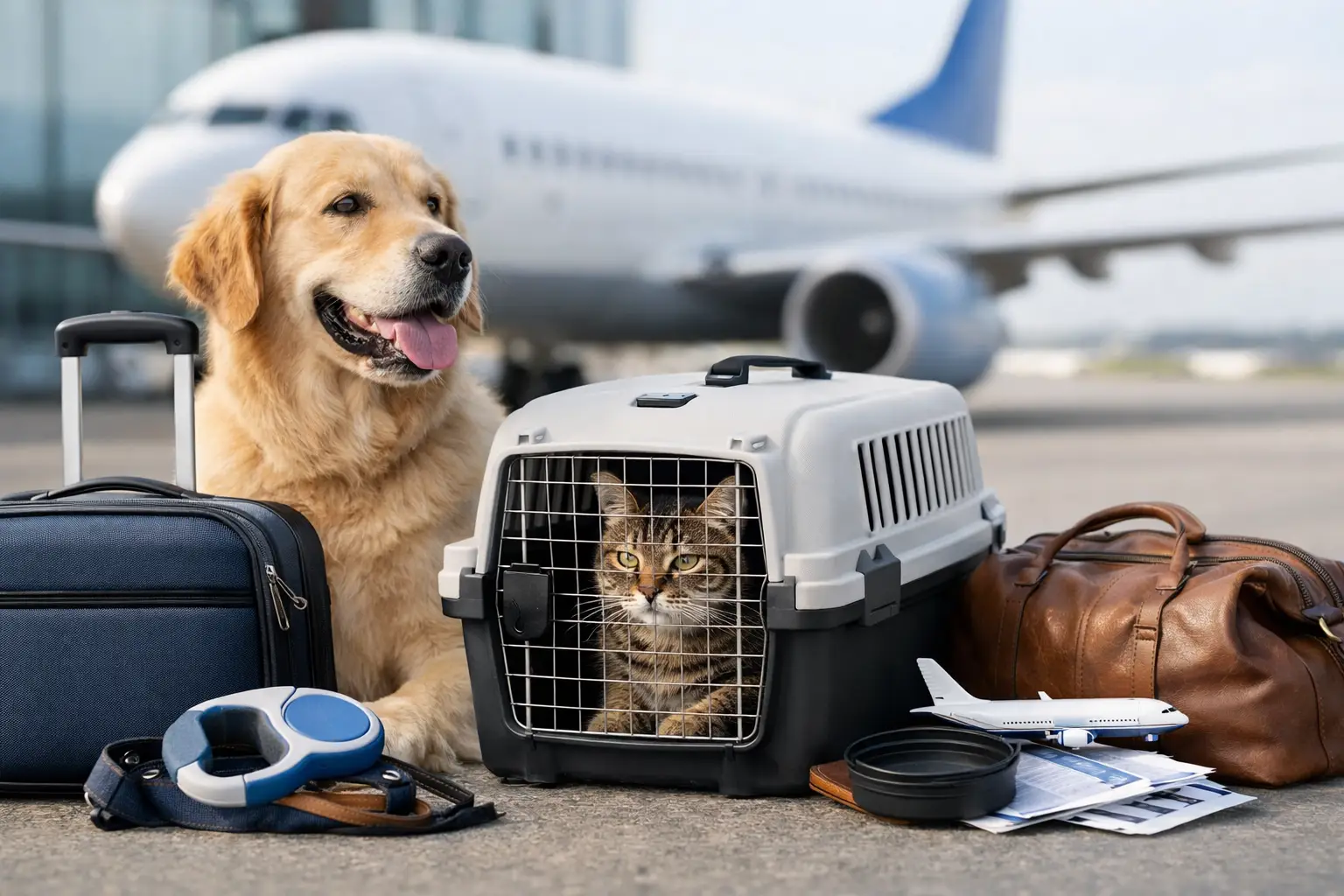
The travel crate is your pet’s protected space for the journey. For pets traveling in the aircraft hold, it must meet the airline’s requirements and generally needs to be strong, secure, ventilated on multiple sides, and large enough for the animal to stand without crouching, turn around, and lie down naturally.
Measure your pet carefully rather than estimating. A crate that is too small may be refused at check-in. One that is much too large can allow excessive movement during handling. The correct fit supports both safety and comfort.
Bring the crate into your home several weeks before travel whenever possible. Leave the door open, add familiar bedding if permitted, and let your pet investigate at their own pace. Offer meals or treats near, then inside, the crate. Gradually close the door for short periods while you remain nearby, building duration only when your pet appears settled.
For international flights, label the crate clearly with your pet’s name, your contact details, destination contact information, and flight information. Attach required documents as instructed by the airline. Provide an accessible water container, but avoid packing loose objects that could shift or become a hazard during transport.
Prepare Your Pet’s Health Records and Veterinary Care
Schedule a travel-focused veterinary appointment rather than treating paperwork as an afterthought. Your veterinarian should review your pet’s overall health, vaccination status, microchip information, and destination-specific requirements. Confirm that the microchip can be read and that its number matches every document exactly.
A simple transposed digit can create a serious problem at inspection. Compare the microchip number, pet name, species, breed, sex, date of birth, vaccination dates, and owner details across all records before the travel date.
Avoid making last-minute changes to food, medication, or routines. If your pet takes prescribed medication, ask your veterinarian how the travel schedule could affect dosing. Sedation is generally not recommended for air travel unless specifically directed by a veterinarian for a compelling medical reason. Sedated animals can have difficulty maintaining balance and regulating breathing, particularly at altitude.
Make sure your pet is protected against parasites if the destination requires treatment. Some countries specify approved products and exact treatment windows. A receipt alone may not be enough. The veterinarian may need to record the product, dosage, date, and time on an official certificate.
Make the Week Before Travel Predictable
Pets notice moving boxes, disrupted routines, and their family’s stress. The week before departure should be as familiar and calm as possible. Continue normal walks, feeding times, play, and rest. Use crate practice in short, positive sessions rather than suddenly confining your pet for hours.
Confirm the flight, pet reservation, terminal, check-in location, and required arrival time directly with the airline. Recheck any weather alerts at the departure, connection, and arrival airports. If a route requires a transit permit or special handling, verify that it is arranged before leaving for the airport.
Prepare a small travel kit for after arrival. Include food for the first day, a leash or harness, waste bags, cleaning supplies, any medications, a familiar toy if allowed, and copies of records. Keep the most essential items with you, not in checked luggage.
On travel day, offer a normal but lighter meal several hours before departure unless your veterinarian advises otherwise. Give your pet a chance to relieve themselves and take a calm walk before heading to the airport. Arrive early, but do not arrive so far ahead that your pet spends unnecessary time in an unfamiliar, busy terminal.
What Happens After Landing Matters Too
Arrival procedures can be quick or can take several hours, depending on the airport, customs process, document review, and inspection requirements. Your pet may need to remain in an approved area while officials review the paperwork. Stay calm and keep documents organized so you can respond quickly to questions.
Once your pet is released, offer water, a bathroom break, and a quiet transition to the new home. Do not expect normal behavior immediately. Some pets are tired, thirsty, clingy, or temporarily less interested in food after flying. Give them time, maintain familiar routines, and contact a veterinarian if you see signs of illness or distress.
For families managing a move into or out of Panama, professional coordination can remove much of the uncertainty. Panama Pet Relocation can manage routing, documents, veterinary coordination, customs clearance, and careful handoffs so each step is planned around your pet’s specific journey.
A well-prepared flight does more than get your pet to a new country. It gives them the safest possible start to the life you are building together there.