

A family move can feel unfinished until your pet is safely settled at the new home. That is why door to door pet relocation is more than booking a flight for a dog, cat, bird, or other animal. It is a coordinated service that manages the many handoffs between your current address and your destination, with your pet’s welfare and travel eligibility at the center of every decision.
For international moves, the details matter. A health certificate issued on the wrong date, a missing import authorization, an airline crate that does not meet requirements, or an unprepared arrival plan can lead to delays that are stressful for both pets and their families. Professional support brings those moving pieces into one carefully managed plan.
What Door to Door Pet Relocation Includes
Door-to-door service begins well before travel day and continues after the flight has landed. The exact scope depends on the origin country, destination, species, airline route, and your pet’s individual needs, but the goal remains the same: provide one accountable point of coordination from pickup through delivery.
At the origin, this may include reviewing vaccination records, building a compliance timeline, arranging required veterinary appointments, confirming crate specifications, and preparing export paperwork. International moves often require several documents to align, including government endorsements, airline approvals, import permits, and destination-specific health certificates.
Travel arrangements are then built around practical factors rather than simply selecting the shortest flight. A direct route may be best for one pet, while another itinerary may require a carefully planned connection because of airline schedules, weather restrictions, seasonal heat rules, or available animal handling facilities. For pets that can travel in cabin, an in-cabin concierge option may be appropriate. Larger animals generally travel in an airline-approved travel crate as checked baggage or air cargo, depending on the routing and airline requirements.
At destination, door-to-door support can include arrival monitoring, customs and agricultural clearance, coordination with airport personnel, and ground transport to the final residence. For a move into Panama, this local coordination can be especially valuable because the pet’s documents, arrival timing, and clearance process must be aligned before the animal arrives.
The Difference Between Flight Booking and Full-Service Care
Booking a pet onto a flight is one task. Managing an international pet movement is a process.
Airlines operate according to their own policies, and those policies can change by route, aircraft type, season, and airport. Meanwhile, government entry rules are separate from airline rules. A pet may have an airline reservation but still be unable to enter a country if its supporting documents are incomplete or its vaccinations do not meet the destination’s timing requirements.
A full-service relocation plan accounts for both sides of the journey. It considers whether the pet is eligible to travel on the intended date, what paperwork must be completed first, how the crate should be prepared, who will meet the pet after landing, and what happens if a flight schedule changes. This level of planning reduces avoidable surprises, but it does not mean anyone can responsibly promise that travel will never encounter a delay. Weather, airline operations, and government inspections can affect any international shipment. The difference is having an experienced team ready to respond and keep you informed.
How the Planning Process Protects Your Pet
The best relocation plans are built around the pet, not just the calendar. A young, healthy dog on a straightforward route may need a very different plan than a senior cat, a brachycephalic breed, a family of birds, or an exotic animal requiring specialized permits.
The planning conversation should cover your pet’s age, breed, medical history, temperament, size, feeding routine, and travel experience. These details influence routing, crate selection, veterinary preparation, and the type of assistance that may be appropriate. Pets with medical concerns may require guidance from their treating veterinarian before travel. Sedation is generally not a routine solution for air travel and should only be considered under direct veterinary advice, since it can introduce additional risks at altitude.
Crate preparation deserves particular attention. An airline-compliant crate must provide enough room for the pet to stand, turn around, and lie down naturally. It also needs secure construction, adequate ventilation, proper labeling, and water access as required for the journey. Introducing the crate gradually before travel day can make a meaningful difference. A pet who recognizes the crate as a calm, familiar space is usually better prepared than one encountering it for the first time at the airport.
Owners can also support a smoother move by keeping routines steady in the weeks before departure. Avoid dramatic diet changes, allow time for crate familiarization, and share accurate health and behavior information with the relocation team. Honest details help professionals make safer recommendations.
Why Documentation Timelines Matter
International pet travel is often governed by dates. Vaccinations may need to be administered within a particular window. A rabies FAVN titer test, when required, can involve laboratory processing and waiting periods. Health certificates are typically valid for only a limited time, while import permits may need approval before the certificate can be issued.
This is why last-minute planning creates risk. Even when a pet is healthy and fully vaccinated, the sequence of required actions may not support an immediate travel date. Starting early gives families room to address a missing record, repeat a test if needed, choose a better route, or adjust plans around an embassy, veterinary, airline, or government schedule.
For relocation into, out of, or through Central America, local knowledge is especially useful. Requirements can differ significantly between neighboring countries, and transit rules can matter as much as final-entry rules. A route through one airport may add a document requirement that would not apply on another route.
What Happens on Departure and Arrival Days
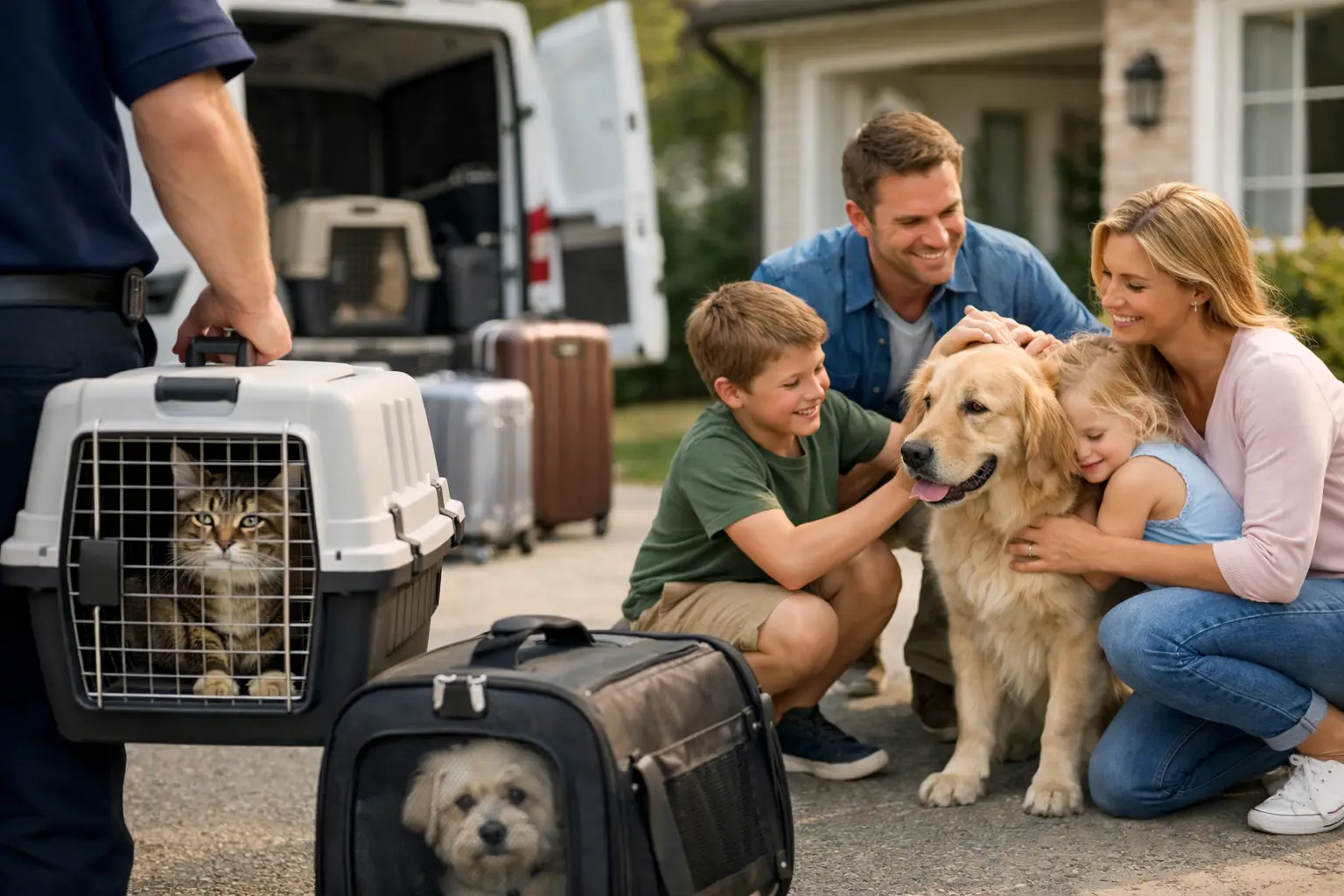
On departure day, a trained transport team may collect your pet from home, complete a final document review, and bring the animal to the airport at the proper check-in time. This helps prevent the common problem of arriving too early or too late for airline acceptance. Your pet is checked in according to the carrier’s procedures, and the family receives updates based on the service plan and available airline information.
After landing, the focus shifts quickly to safe release and clearance. Depending on the destination, pets may be collected from a baggage area, cargo terminal, animal handling facility, or government inspection point. Customs and agricultural officials may review original documents and confirm that entry conditions have been met. Once released, the pet can be transported to the residence, where familiar voices, water, a quiet room, and time to decompress are often the best welcome.
Arrival day is not the moment to schedule a crowded gathering or introduce a pet to every part of a new home. Give your animal a calm space, maintain familiar feeding routines, and allow for extra rest. Some pets rebound quickly; others need a few days to regain their usual confidence. Both responses can be normal.
Choosing the Right Level of Relocation Support
Not every move requires the same service. A family with a single cat traveling on a simple route may only need documentation guidance and arrival assistance. A household moving multiple pets internationally, coordinating a home sale, handling children, and starting a new job may benefit from complete door-to-door management.
The right provider should ask detailed questions before offering a plan. They should be clear about what is included, explain the responsibilities that remain with the pet owner, and communicate candidly when a timeline or route presents limitations. Look for experience with your destination, established airline and ground-handling coordination, and a process for keeping families informed.
Panama Pet Relocation approaches each journey as a personal move, not a standard shipment. That means coordinating the technical requirements while remembering that the animal arriving at the destination is a valued member of your family.
A well-planned relocation gives your pet the best possible start in a new place. When the paperwork, routing, clearance, and home delivery are handled with care, you are free to focus on the moment that matters most: opening the door and welcoming your companion home.