


A missed signature, an outdated vaccine record, or a health certificate issued one day too early can stop a pet’s journey before it begins. Pet travel documentation is not simply paperwork to gather at the end of a move. It is a time-sensitive chain of records, approvals, veterinary requirements, and airline rules that must align with your destination and travel date.
For families moving internationally, the stakes feel personal because they are. Your pet depends on the adults planning the move to get every detail right. A clear documentation plan protects your pet from unnecessary delays, denied boarding, extended customs processing, or unexpected quarantine requirements.
What Pet Travel Documentation Usually Includes
The documents required for international travel vary by country, species, route, and airline. Still, most dogs and cats need a combination of identification records, vaccination evidence, an international health certificate, and destination-specific import authorization.
A current rabies vaccination certificate is often central to the process. The record should clearly show the pet’s identification details, vaccine manufacturer, lot number, vaccination date, and validity period. Some destinations also require the rabies vaccine to be administered a certain number of days before arrival. A vaccine that is medically current may still fail to meet a country’s travel timing rule.
Your pet’s microchip record is equally important. Many countries require an ISO-compatible microchip, and the chip number must match every other document exactly. Even a small discrepancy – such as one transposed digit or a different spelling of the owner’s name – can create questions at check-in or on arrival.
A licensed veterinarian issues the health certificate after examining your pet and confirming that required treatments, vaccinations, and statements have been completed. Depending on the destination, that certificate may need endorsement by a government veterinary authority. It is not a document to prepare weeks in advance and set aside. Health certificates generally have narrow validity windows, so their timing must be coordinated carefully with the flight.
Other requirements may include an import permit, parasite treatment record, export certificate, airline fit-to-fly documentation, proof of ownership, or a declaration for customs. Birds, exotic animals, and wildlife can involve additional permits and species-specific rules, including conservation and trade controls. These cases require early planning because permits may take longer than standard companion-animal paperwork.
Why Timing Matters More Than Most Pet Owners Expect
International pet travel is governed by dates, not just documents. Your pet can have every required record and still be unable to travel if the sequence is wrong.
For example, a destination may require a rabies vaccine to be given after microchip implantation. Another may require a waiting period following the vaccine. Some countries require a rabies FAVN titer test, followed by a months-long wait before entry is permitted. The health certificate may then need to be issued within a short period before departure, while government endorsement can add another processing step.
This is why a move planned around only the airline booking is risky. Flight availability matters, but the regulatory timeline should lead the plan. If a required titer test, permit, or endorsement is still pending, changing a flight may be less stressful than trying to force the paperwork into an unrealistic window.
Panama-bound relocations also require attention to current import rules, veterinary documentation, and customs procedures. Requirements can change, and they may differ depending on whether a pet arrives as accompanied baggage, air cargo, or through a transit route. A document package should be reviewed against the exact journey, not a general online checklist.
Start With the Destination, Then Map the Route
The destination country sets the baseline requirements, but it is not the only authority involved. The country of departure, transit countries, airline, and arrival airport can each affect what your pet needs.
A direct flight may have a different documentation path than an itinerary with a connection. A pet traveling in cabin may be subject to different carrier policies than one traveling as checked baggage or air cargo. Certain airports have restricted animal handling hours, approved inspection procedures, or advance notification requirements.
This is especially relevant for moves through Central America and worldwide routes that involve multiple borders. A transit stop that seems minor on a passenger itinerary can create a significant issue for an animal if entry or transfer rules are not confirmed in advance. Routing decisions should balance travel duration, connection time, climate considerations, airline capability, and paperwork requirements.
It depends on the pet, too. A young puppy may not yet meet a destination’s rabies-vaccination age requirement. A senior pet may need a route with fewer transfers and more carefully managed ground handling. Brachycephalic breeds may face airline restrictions due to respiratory risk. The right documentation strategy is always connected to the pet’s individual travel plan.
A Practical Documentation Timeline
The most reliable approach is to begin with a full compliance review as soon as an international move becomes likely. For straightforward destinations, several weeks may be enough. For countries requiring titer testing, permits, or lengthy waiting periods, planning may need to begin months ahead.
First, confirm your pet’s microchip status and scan it to verify that it reads correctly. Review vaccination history next, paying close attention to dates and the order in which vaccines and microchip implantation occurred. If a rabies titer test is required, arrange it early because laboratory processing and mandated waiting periods cannot be rushed.
As departure approaches, finalize the airline routing and crate requirements. The travel crate is not documentation, but it affects whether the airline will accept the pet, so it belongs in the same planning conversation. Then schedule the veterinary examination within the required health-certificate window and allow time for any official endorsement before departure.
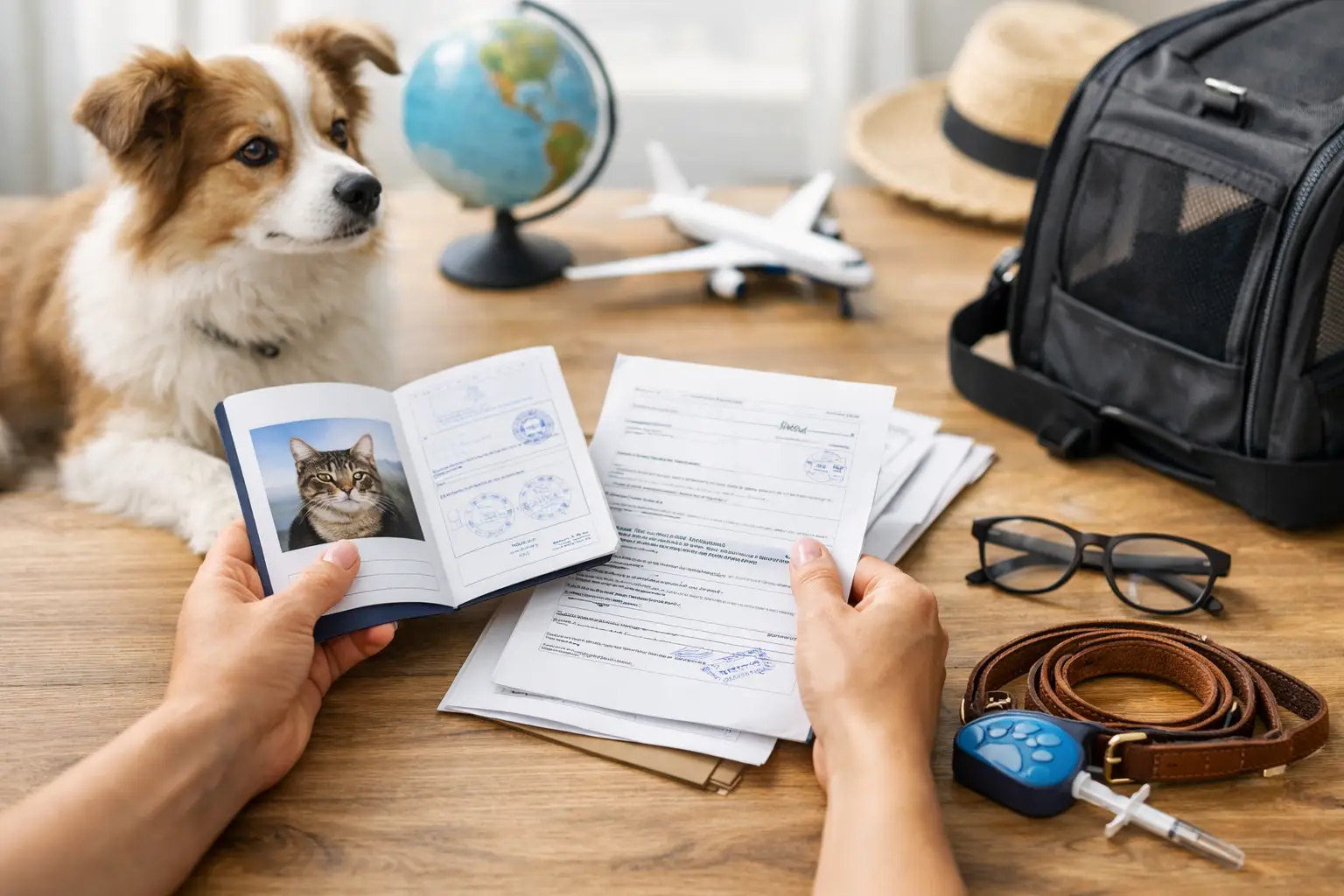
Keep both original documents and organized copies. Carry the originals with you when possible, and place copies in a clearly labeled travel folder. Digital scans are helpful for review and backup, but they do not replace original certificates when an authority requires physical documents.
Common Documentation Mistakes That Cause Delays
The most frustrating problems are often avoidable. Pet owners may rely on an old checklist, assume a domestic health certificate is valid internationally, or schedule a vet visit without checking the destination’s required certificate language. Others book flights before confirming that the airline accepts the pet’s breed, crate size, or travel method.
Name mismatches are another common concern. If your passport, airline booking, microchip registration, and veterinary records use different versions of an owner or pet name, resolve those differences before travel. The same care applies to addresses, dates of birth, and microchip numbers.
Do not treat a vaccination record as interchangeable with a health certificate. They serve different purposes, and both may be required. Likewise, an import permit does not automatically replace customs clearance or airline acceptance. Each part of the journey has its own checkpoint.
When Professional Coordination Makes Sense
Some pet parents prefer to manage the process themselves, particularly for a simple route with familiar requirements. That can work when there is ample time, a healthy pet, a cooperative airline, and a destination with straightforward entry rules.
Professional support becomes particularly valuable when the move involves Panama, multiple countries, cargo travel, a tight timeline, specialty species, a titer test, or complicated airline routing. The benefit is not just document preparation. It is having someone coordinate the sequence, review records for inconsistencies, communicate with veterinarians and authorities, and adjust the plan if a flight or rule changes.
At Panama Pet Relocation, that hands-on approach means looking at the complete journey rather than treating paperwork as a separate task. Documentation, airline arrangements, customs handling, and safe ground transport need to work together for a pet to arrive calmly and compliantly.
Before you commit to a travel date, gather your pet’s current records and have the journey reviewed from departure door to arrival door. A few careful decisions early in the process can give your pet the calmer, safer start they deserve in their new home.