


A pet can be fully vaccinated, comfortable in a carrier, and ready to travel, yet still be delayed at the airport because one document uses the wrong date, endorsement, or destination address. Pet transit requirements are not a single checklist. They are a coordinated set of rules involving the country of origin, destination, transit points, airline, species, and the timing of each veterinary step.
For families moving internationally, the goal is not simply to get a pet on a flight. It is to make sure your companion arrives safely, is accepted for transport, and can be cleared without an avoidable quarantine, hold, or change of plans. That takes early preparation and careful attention to the details that apply to your exact route.
What Pet Transit Requirements Usually Include
Most international pet moves involve four connected areas: identification and health records, destination permits and entry conditions, airline acceptance rules, and arrival clearance. A requirement in one area can affect another. For example, a destination may require a specific health certificate format, while an airline may have separate restrictions on kennel dimensions, temperatures, or the aircraft used for the route.
The essentials often begin with permanent identification. Many countries require an ISO-compatible microchip, and the chip may need to be implanted before the rabies vaccination used for entry. If the sequence is wrong, a vaccine that is otherwise valid may not satisfy the destination’s rules.
Rabies vaccination is one of the most common requirements, but it is rarely the only one. Depending on the country and species, pets may need additional vaccinations, parasite treatments, laboratory testing, import permits, export documents, or a veterinarian-issued health certificate completed within a narrow pre-travel window. Some destinations also require an official government endorsement after the veterinary appointment.
A paper that is correct on the day it is issued can become invalid if a flight is moved. This is why timelines matter as much as the documents themselves.
Start With the Route, Not the Airline Ticket
International travel rules apply to the journey as a whole. Before reserving flights, identify the country where your pet will start, the final destination, and every connection or overnight stop. A transit country may impose rules even if your pet never leaves the airport cargo facility. In some cases, a direct route is worth prioritizing because it reduces both handling and regulatory exposure.
Traveling to or from Panama adds another layer of planning because import procedures, local veterinary documentation, customs clearance, and airport coordination must align. Families relocating through Central America should also confirm each country’s current requirements rather than assuming regional rules are identical. Guatemala, El Salvador, Honduras, Nicaragua, Colombia, and Panama may each have different entry conditions and processing practices.
Airline routing should be selected around the pet, not just the traveler’s preferred departure time. Not every airline carries pets on every route, and a carrier’s policy can vary by season, airport, aircraft type, breed, and whether the pet travels in cabin, as checked baggage where available, or as manifested cargo. A short layover may look efficient on paper but leave too little time for a secure transfer between facilities.
Veterinary Records Need More Than a Quick Appointment
A pre-travel veterinary visit is a critical checkpoint, but it should not be the first time the relocation plan is reviewed. By that appointment, you should already know which vaccinations, tests, treatments, certificate language, and official forms are needed. Some processes take weeks or months, particularly when a rabies antibody test, often called a FAVN titer test, is required.
Bring prior medical records to your veterinarian and check that the pet’s name, microchip number, breed, sex, date of birth, and owner information match across every document. Small inconsistencies can trigger questions during airline acceptance or border inspection. If your pet has a long formal name on one record and a shortened name on another, resolve it before documents are submitted.
Health certificates also have expiration windows. The veterinarian may need to examine your pet within a specific number of days before departure, then the certificate may need government endorsement before travel. This makes last-minute changes difficult. A flight delayed by several days can affect the validity of documents and may require a new examination.
For senior pets, pets with chronic health conditions, or brachycephalic breeds, veterinary planning should also include an honest discussion about fitness to fly. Air travel is not appropriate for every animal or every itinerary. Weather, cargo handling conditions, travel duration, and medication considerations all deserve careful review. Sedation is generally not a simple answer and can introduce health and safety concerns during flight.
Carrier, Crate, and Comfort Requirements
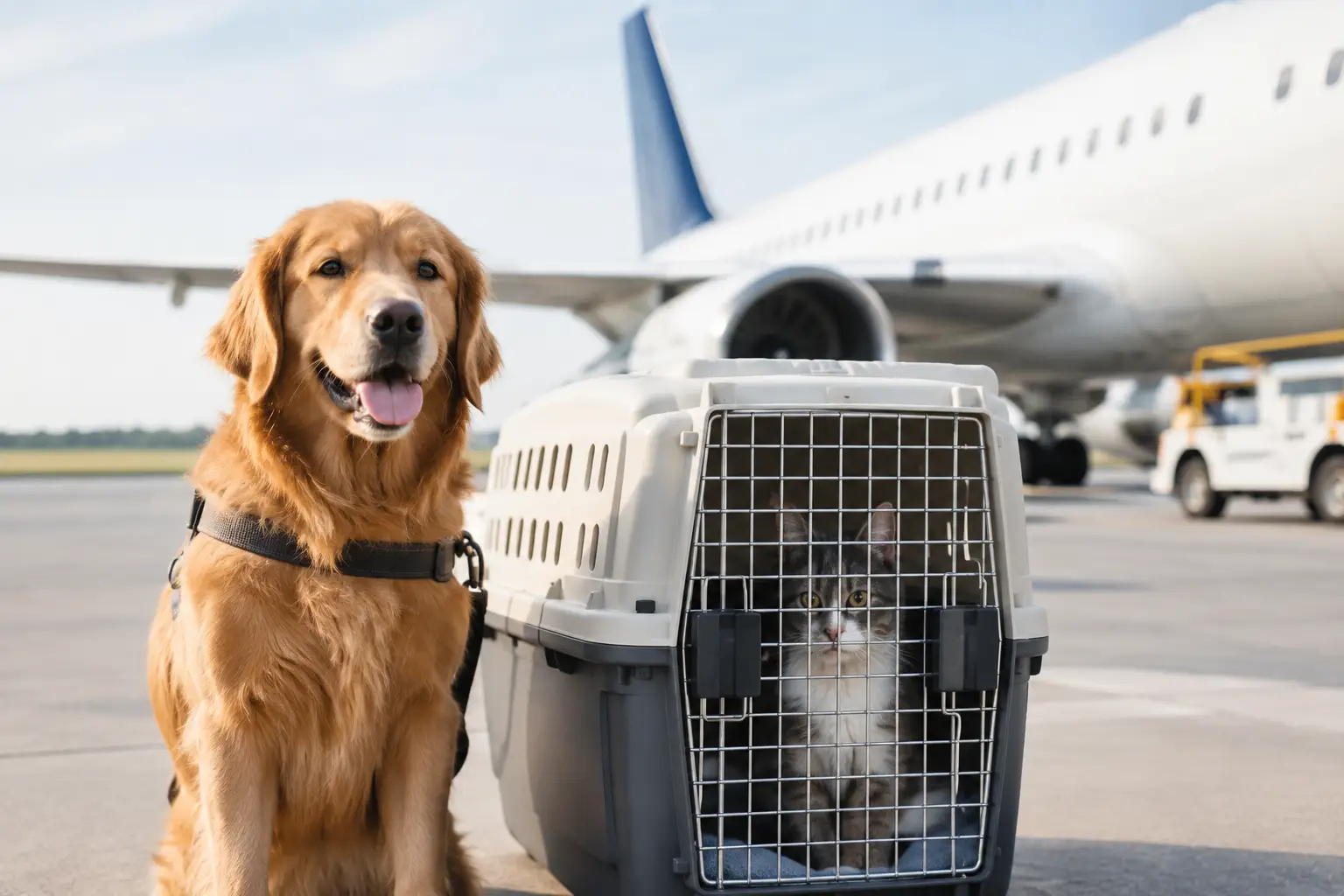
The travel kennel is both a safety item and an airline compliance requirement. For pets traveling outside the cabin, airlines commonly require an IATA-compliant crate that is sturdy, properly ventilated, secure, and large enough for the animal to stand, turn around, and lie down naturally. The right crate is not merely the smallest one an airline will accept.
Introduce the crate well before travel. Leave it open at home, offer meals or treats inside it, and gradually build positive familiarity. A pet that recognizes the crate as a resting place is often better prepared for the travel day than one placed inside it for the first time at the airport.
Avoid adding items that an airline or destination authority may prohibit. Absorbent bedding, attached water containers, labeling, and live-animal markings should be prepared according to the airline’s instructions. Door hardware and crate condition should be inspected before departure. A damaged or noncompliant kennel can stop a journey before check-in.
Arrival Clearance Is Part of the Journey
Many owners focus heavily on departure, then underestimate the work waiting at arrival. International clearance can involve document review, veterinary inspection, customs procedures, and coordination with airport cargo personnel. The process differs depending on whether the pet arrives in cabin, as baggage, or as cargo.
Keep original documents organized and available, not packed away in checked luggage. This typically includes identification and vaccination records, health certificates, permits, laboratory results when applicable, and owner identification. Digital backups are useful, but border officials may require originals.
Timing also matters on arrival. If a flight lands outside normal operating hours, the availability of inspection staff, cargo handlers, or customs personnel can affect release. For pets arriving as cargo, the consignee details and clearance arrangements must be correct before the aircraft lands. A pet should never be left waiting because the receiving party does not know where to go or what paperwork is required.
Common Mistakes That Create Delays
The most stressful problems are often preventable. Owners may rely on outdated online guidance, book non-pet-friendly flight connections, wait too long to begin a titer test, or assume a veterinarian’s general health certificate is sufficient for international entry. Another frequent issue is treating airline rules and government rules as interchangeable. They are separate, and both must be met.
It also helps to plan for normal travel disruptions. Flights can be rebooked, weather restrictions can affect animal transport, and paperwork can require correction. Build reasonable time into the plan rather than scheduling every appointment and flight connection at the last possible moment.
Professional coordination can be especially valuable for complex itineraries, multi-pet households, cargo travel, exotic animals, birds, wildlife cases, or families relocating on a fixed employment or housing schedule. Panama Pet Relocation coordinates the documentation, veterinary timing, airline routing, clearance, and delivery details so owners have one experienced point of contact throughout the move.
A Better Way to Prepare for Pet Travel
Begin planning as soon as an international move becomes likely, even if the departure date is not final. Confirm the destination rules, map the route, review your pet’s current records, and identify any long-lead requirements before making irreversible travel arrangements. Then schedule veterinary care around the required timeline instead of fitting it in at the end.
The right preparation gives your pet something valuable: fewer surprises, fewer unnecessary handoffs, and a calmer path from one home to the next. When the paperwork, flight plan, and arrival clearance are handled with the same care you give your companion every day, international travel becomes a manageable part of the move rather than the part you fear most.