


A pet’s flight plan is not a simple choice between “with me” and “without me.” In pet cargo versus cabin travel, the right option depends on your pet’s size, temperament, medical needs, airline routing, the aircraft itself, and the entry requirements at your destination. For a family relocating internationally, the safest choice is usually the one that fits the full journey, not simply the option that sounds most comforting at first.
A small dog or cat may be eligible to travel under the seat in front of you. A larger pet may need to travel in the aircraft’s live-animal hold in an airline-approved kennel. Both options can be appropriate when properly planned. The key is understanding what each arrangement involves and avoiding assumptions based on domestic travel experiences or outdated airline policies.
Pet cargo versus cabin: the practical difference
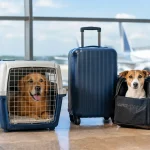
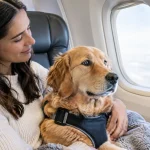
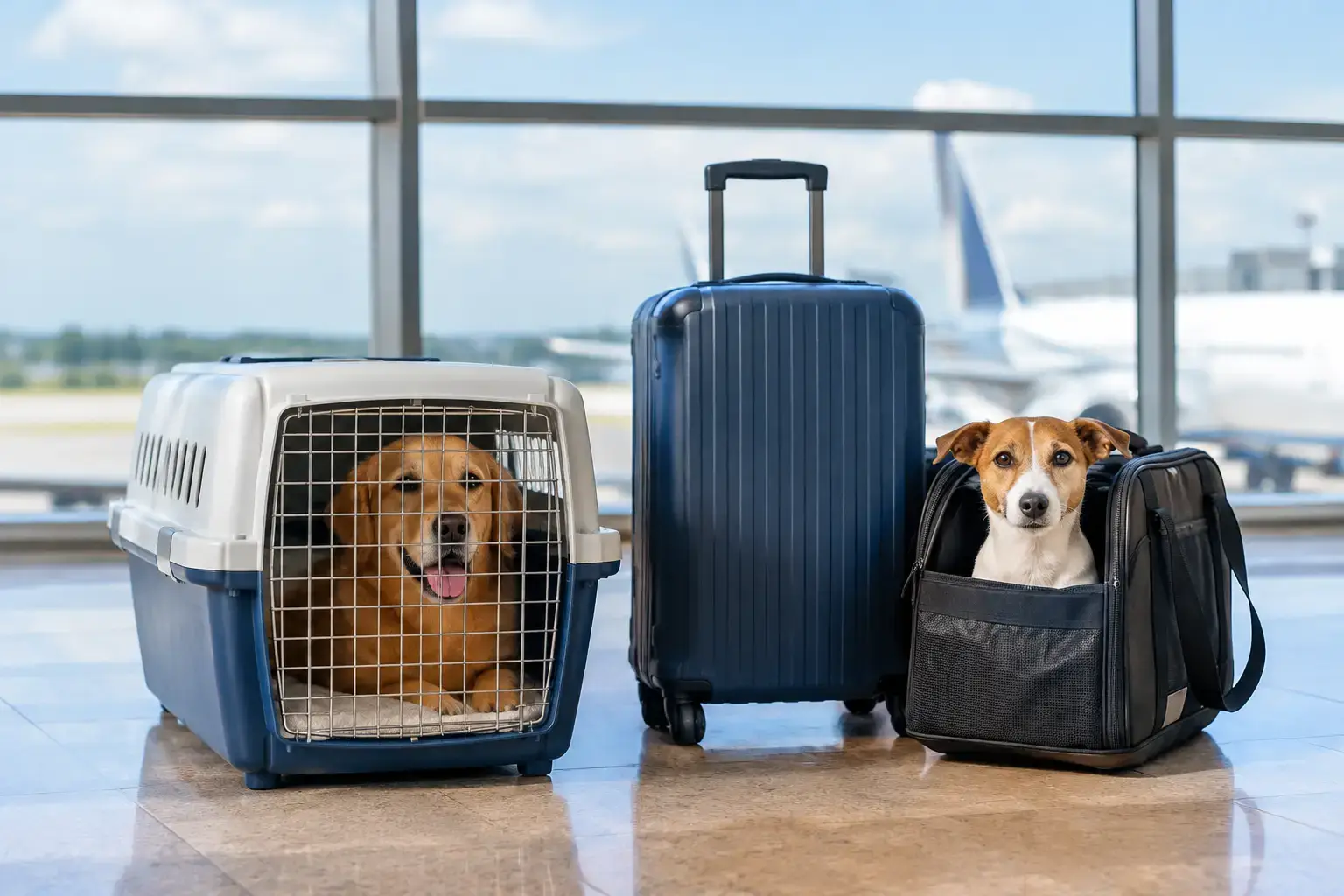
In-cabin travel means your pet remains in a soft-sided or hard-sided carrier that fits beneath the seat in front of you. You are on the same flight, and your pet stays with you throughout the airport process until arrival, subject to airline and security rules. This can be a good fit for calm, healthy cats and small dogs whose carrier dimensions and combined weight meet the airline’s limits.
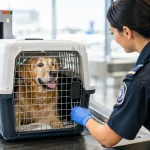
Cargo travel generally means your pet flies in a secure travel kennel in a designated, pressurized, and temperature-managed compartment of the aircraft. The term can sound alarming, but professionally handled live-animal cargo is a standard part of international pet transportation. Your pet is checked in through a specialized process, loaded separately, and released through the destination’s cargo and customs procedures.
Cargo does not mean a pet is treated as ordinary luggage. Live animals have handling protocols, kennel specifications, documentation requirements, and airline acceptance rules that differ from a suitcase checked at the counter. Still, standards and procedures vary by airline, airport, season, and aircraft, which is why the itinerary matters so much.
When cabin travel may be the better fit
Cabin travel can reduce separation time for a pet that is small enough to fit comfortably in an approved carrier. For some pets, particularly those who settle well in enclosed spaces and are used to their owner’s presence, it can be the least disruptive way to fly.
It is not automatically low-stress, however. A pet must remain inside the carrier for the full journey. That includes check-in, security screening, boarding, taxiing, flight time, connections, and deplaning. On a long itinerary, a pet may spend many hours confined in a compact space with unfamiliar sounds, smells, and movement.
Cabin availability is also limited. Airlines often allow only a small number of pets in the cabin, and restrictions can apply by route, aircraft type, travel class, and destination. A reservation for a person does not guarantee an approved cabin-pet space. Some international routes do not permit in-cabin pets at all, even when the same airline allows them on other flights.
Cabin travel may be a sensible option when the pet is small, healthy, and relaxed in a carrier, the route is direct or has manageable connections, and the airline confirms acceptance well in advance. It also requires a pet parent who can manage the carrier, personal luggage, airport procedures, and any required documents without compromising the pet’s comfort.
When cargo travel may be the safer choice
For medium and large dogs, cargo is often the only airline-compliant option. It can also be the more practical option for families traveling with multiple pets, pets that do not fit under a seat, or itineraries where a cabin arrangement is unavailable.
A properly sized kennel gives a pet more room to stand, turn around, and lie down naturally than an under-seat carrier. That extra space matters on a long international journey. The kennel must meet airline and international live-animal standards, with secure ventilation, an absorbent floor, water provisions, and enough interior height for the animal to stand without crouching.
Cargo may also offer a more suitable process for certain complex relocations. If your pet is moving on a different flight from you, traveling with a professional handler, or entering a country that requires formal cargo clearance, the cargo route can align better with the destination’s import procedures. This is common in international moves involving document review, veterinary certificates, customs clearance, and scheduled delivery after arrival.
The right cargo itinerary needs careful planning. Airlines may limit animal travel during periods of extreme heat or cold, impose breed-specific restrictions, or use aircraft that cannot accept certain kennel sizes. A connection that looks efficient for a passenger may be unsuitable for a live animal because of ground temperatures, transfer timing, or station handling capability.
Your pet’s needs matter more than the label
The best decision starts with an honest assessment of the individual pet. A confident small dog may do very well in a cabin carrier. Another dog of the same size may become distressed by confinement and airport stimulation. A large, calm dog may be more comfortable resting in a correctly sized kennel than trying to fit into a travel arrangement that does not meet airline rules.
Age and health deserve special attention. Very young pets, senior pets, animals with heart or respiratory conditions, and pets with a history of anxiety should be evaluated with the guidance of a veterinarian familiar with travel. Flat-faced breeds, including some bulldogs, pugs, Persian cats, and similar breeds, may face additional airline restrictions because of respiratory risk. Approval is never something to assume.
Medication is another area where owners should be cautious. Sedation is generally not recommended for air travel unless a veterinarian determines it is necessary for a specific medical reason. Sedatives can affect balance, breathing, and temperature regulation at altitude. The goal is not to make a pet unconscious for the journey. It is to prepare a pet to travel safely and as calmly as possible.
The route can decide the answer
A direct flight is often preferable, but direct service alone does not settle the cabin-versus-cargo question. The airline must accept your pet on that particular route, the aircraft must have the right capacity, and the arrival airport must be able to process the pet in the required manner.
For travel into Panama and throughout Central America, import documentation and health timing can be just as important as the flight arrangement. A pet arriving in the cabin may still need inspection and clearance. A pet arriving as cargo may require coordinated collection, customs handling, and transportation after release. Missing a certificate, using an incorrect form, or scheduling veterinary treatment outside the permitted window can create delays regardless of where the pet flew.
This is especially relevant when a route includes more than one country. Transit rules, airline interline agreements, and documentation requirements can change the travel options. One airline may accept a pet in cabin on the first segment but not on the connecting international segment. Another route may require cargo handling from the beginning to keep the process compliant and consistent.
Preparing for either travel option
The most helpful preparation begins weeks, not days, before departure. Start by confirming the destination’s import requirements and your airline’s current pet policy. Then choose the route and travel method based on what is permitted and appropriate for your pet.
Carrier or kennel acclimation should be gradual. Leave the travel enclosure open at home, place familiar bedding inside if permitted, and reward calm voluntary entry. Short practice periods can help your pet see the carrier as a safe resting place rather than a sudden source of stress on travel day.
Travel documents require the same care. Depending on the destination, your pet may need a current health certificate, vaccination records, parasite treatment records, import permits, endorsements, or laboratory testing. Requirements can be time-sensitive, so the sequence of veterinary appointments matters.
On departure day, provide a normal, calm routine and follow your veterinarian’s feeding and hydration guidance. Allow enough time for airport check-in, especially for cargo departures, where kennel inspection and document review may take longer. Keep communication clear with every party involved in the move so there is no uncertainty about handoff, arrival, or pickup procedures.
A decision that should be planned, not guessed
There is no universal winner in pet cargo versus cabin travel. Cabin may be ideal for a small, carrier-trained pet on a straightforward route. Cargo may be the most comfortable and compliant choice for a larger pet or a complex international relocation. What matters is matching the travel method to the animal, the airline, the route, and the destination rules.
For families coordinating a move to, from, or through Panama, professional planning can remove the pressure of trying to solve every airline and import detail alone. Panama Pet Relocation can coordinate the route, documentation, airline handling, and arrival process around your pet’s specific needs, so the journey is planned with care from the first kennel measurement to the final home delivery.