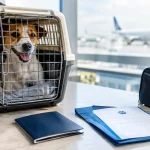


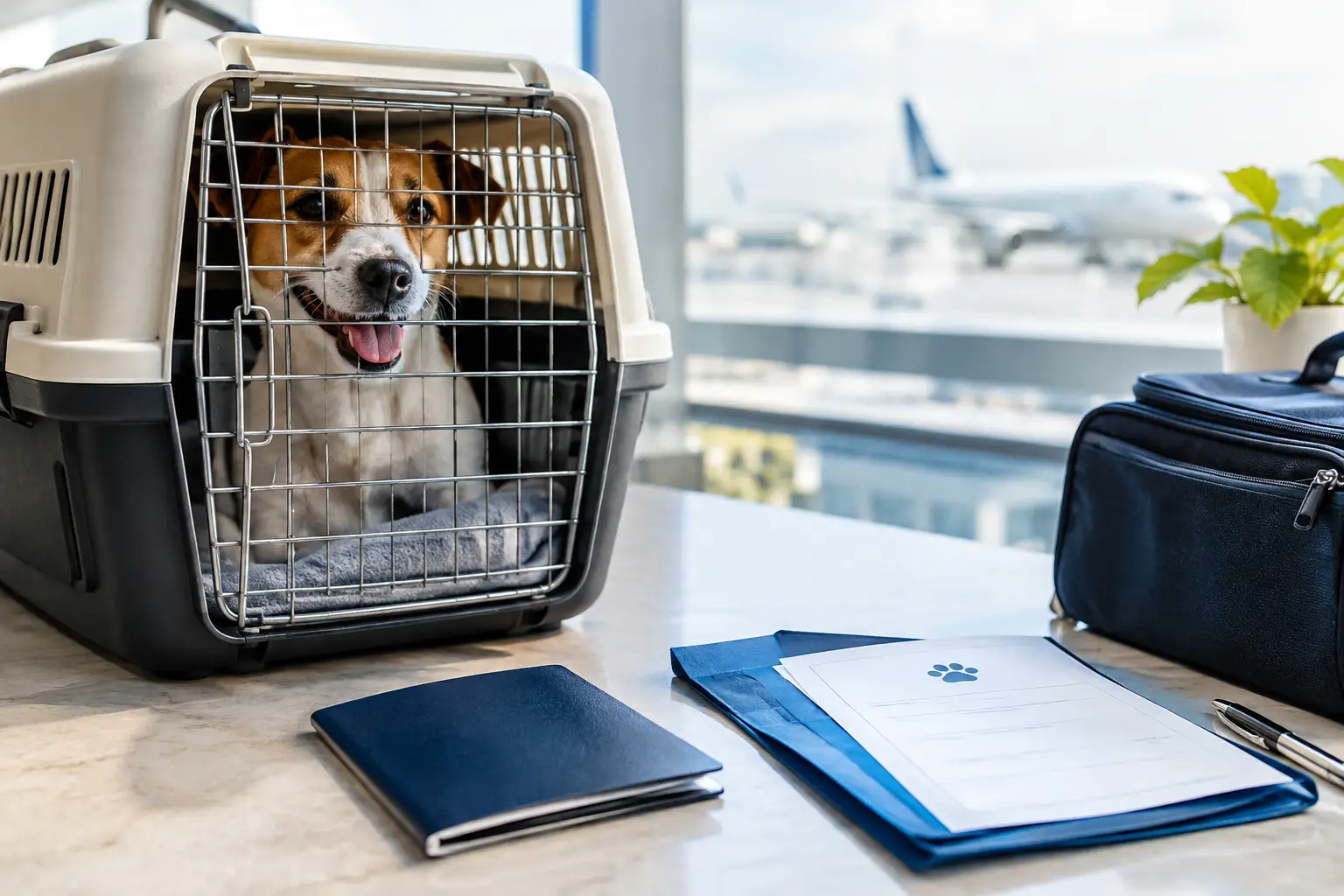

A pet can be cleared to fly, safely settled in an airline-approved crate, and still be stopped at the border because one certificate is incomplete or issued on the wrong date. The top documents for animal import are not simply paperwork to collect at the end of planning. They are the timeline that determines whether your pet can travel when your family does.
For families moving internationally, the challenge is that documents interact with one another. A vaccine record may need to be current before a health certificate can be issued. An import permit may need to be approved before the airline will accept a booking. A lab test may have a waiting period that cannot be shortened by a last-minute appointment.
The exact requirements depend on the destination country, species, breed, travel route, and method of transport. Still, most international moves begin with the same core file. Preparing it early gives your veterinarian, airline, customs broker, and relocation team the information they need to protect your pet’s journey.
Top Documents for Animal Import: The Core File
1. Microchip record
For many destinations, a readable ISO-compatible microchip is the starting point for identification. The number on the microchip must match the number shown on every other document, including vaccination certificates, laboratory reports, import permits, and the final health certificate.
This sounds straightforward, but mismatched numbers, transposed digits, or a microchip scanned only after vaccination can create a serious problem. Some countries require the microchip to be implanted before a rabies vaccination is given for that vaccine to count toward entry requirements. Your veterinarian should scan the chip and record the full number at each relevant appointment.
Keep the original implantation record when available, along with a clear copy. If your pet has more than one chip, make sure the active chip used for travel is clearly identified throughout the file.
2. Rabies vaccination certificate
A valid rabies vaccination certificate is among the most commonly requested animal import documents. It should identify the pet, list the microchip number where required, show the vaccine manufacturer and product, state the vaccination and expiration dates, and be signed by the veterinarian.
The timing matters as much as the document itself. A first rabies vaccine often needs time to become valid before travel, while boosters may be accepted differently depending on whether there was any lapse in coverage. Puppies and kittens may also be subject to minimum-age rules that affect when they can legally enter a country.
Do not assume a rabies tag or a brief note in a clinic record will be enough. Request a formal certificate and review every field before leaving the clinic. If records are missing from a prior veterinarian, begin retrieving them as soon as a move becomes possible.
3. Veterinary health certificate
The international veterinary health certificate is the document that confirms your pet was examined and found healthy enough to travel. It commonly includes the animal’s species, breed, sex, age, color, identifying marks, microchip number, vaccination history, and the owner’s travel details.
This certificate usually has a short validity window. Depending on the destination, it may need to be issued only a few days before departure and then endorsed by the appropriate government veterinary authority. That creates a narrow, carefully managed sequence: complete prerequisite treatments, visit the accredited veterinarian, obtain endorsement if required, and present the original paperwork to the airline and border officials.
A health certificate cannot fix an earlier documentation gap. It confirms the pet’s current condition, but it must be supported by compliant vaccination records, treatments, test results, and permits.
4. Import permit or prior authorization
Some countries require an import permit before an animal arrives. This authorization may specify the pet’s details, point of entry, airline, arrival date, and the documents that must accompany the shipment. In certain cases, a permit applies to dogs and cats; in others, it is particularly relevant for birds, reptiles, wildlife, or other exotic animals.
Permits can take time to process, and approvals may have expiration dates. They may also be tied to a specific arrival airport or port. If flight routing changes, the permit may need to be amended before travel.
For a move to Panama, the import process should be planned around the current entry requirements and the scheduled arrival. It is wise to confirm who will receive the pet, how customs clearance will be handled, and whether the documentation needs to be presented in original form. A correct permit is only useful if the supporting records match it exactly.
5. Parasite treatment records
Many destinations require proof of internal and external parasite treatments. The certificate should state the product used, active ingredient when required, dosage, date and time of administration, and the veterinarian’s signature or clinic details.
These treatments are often date-sensitive. Giving them too early may fall outside the destination’s permitted window; giving them too late may leave too little time for the final certificate and government endorsement. Travelers should not substitute an over-the-counter treatment or rely on a verbal confirmation from the clinic when official proof is required.
Treatment rules vary widely. Some destinations specify products or treatment intervals, while others request general evidence that the pet is free of parasites. This is one of the areas where a destination-specific checklist matters most.
6. Rabies titer test, when required
A rabies antibody titer test, often called a FAVN test, measures the level of rabies antibodies in a blood sample. It is not required for every destination, but where it is required, it can be one of the longest-lead documents in the process.
The sample must generally be collected after a valid rabies vaccination, sent to an approved laboratory, and followed by a waiting period before entry. A passing result alone does not guarantee immediate travel. The collection date, laboratory report, pet identification, and required waiting time all need to align.
If your future plans may include a country with titer requirements, discuss timing early with a relocation professional and your veterinarian. Starting this step after flights are booked can force an avoidable change of plans.
The Documents Airlines and Customs May Also Request
Government entry documents are central, but airlines have their own acceptance rules. They may ask for a completed live-animal declaration, booking confirmation, crate measurements, feeding and watering instructions, and a signed shipper’s certificate for pets traveling as cargo. For an in-cabin pet, the paperwork may be simpler, yet the carrier can still require health and vaccination records.
Carry original documents in a protected folder, with clear copies stored separately. Digital copies are useful for review and emergency reference, but they may not replace original certificates at check-in or customs. Label the file with your name, your pet’s name, destination, flight number, and a local contact number.
If someone else will collect your pet after arrival, include any authorization letter, power of attorney, or customs representation paperwork required for that arrangement. This is especially useful for VIP door-to-door moves and relocations where the owner arrives on a different flight.
Why Timing Causes More Trouble Than Missing Paperwork
Most document problems are not caused by a family forgetting that a rabies certificate exists. They happen because every document was obtained, but not in the required order. A health certificate may be issued before a final parasite treatment. A permit may list a date that changed after an airline cancellation. A vaccine may be technically current but outside the destination’s accepted timeline.
Begin planning several months before an international move whenever possible. This is particularly valuable for young pets, animals with incomplete vaccine histories, breeds needing special airline planning, and birds or exotic animals that may need additional permits. If travel is urgent, a professional review can quickly identify what is possible, what is risky, and what needs more time.
Panama Pet Relocation helps families organize the documentation sequence alongside airline routing, veterinary coordination, customs clearance, and arrival planning. That coordination matters because paperwork is not a separate task from the move. It is what allows each part of the move to proceed safely.
Before booking a final flight, ask for a current, destination-specific document review. A calm arrival begins long before the airport, with records that are accurate, timely, and ready to travel with the animal you love.