



How to Fly Dogs in Cabin With Less Stress
July 23rd, 2026 | Uncategorized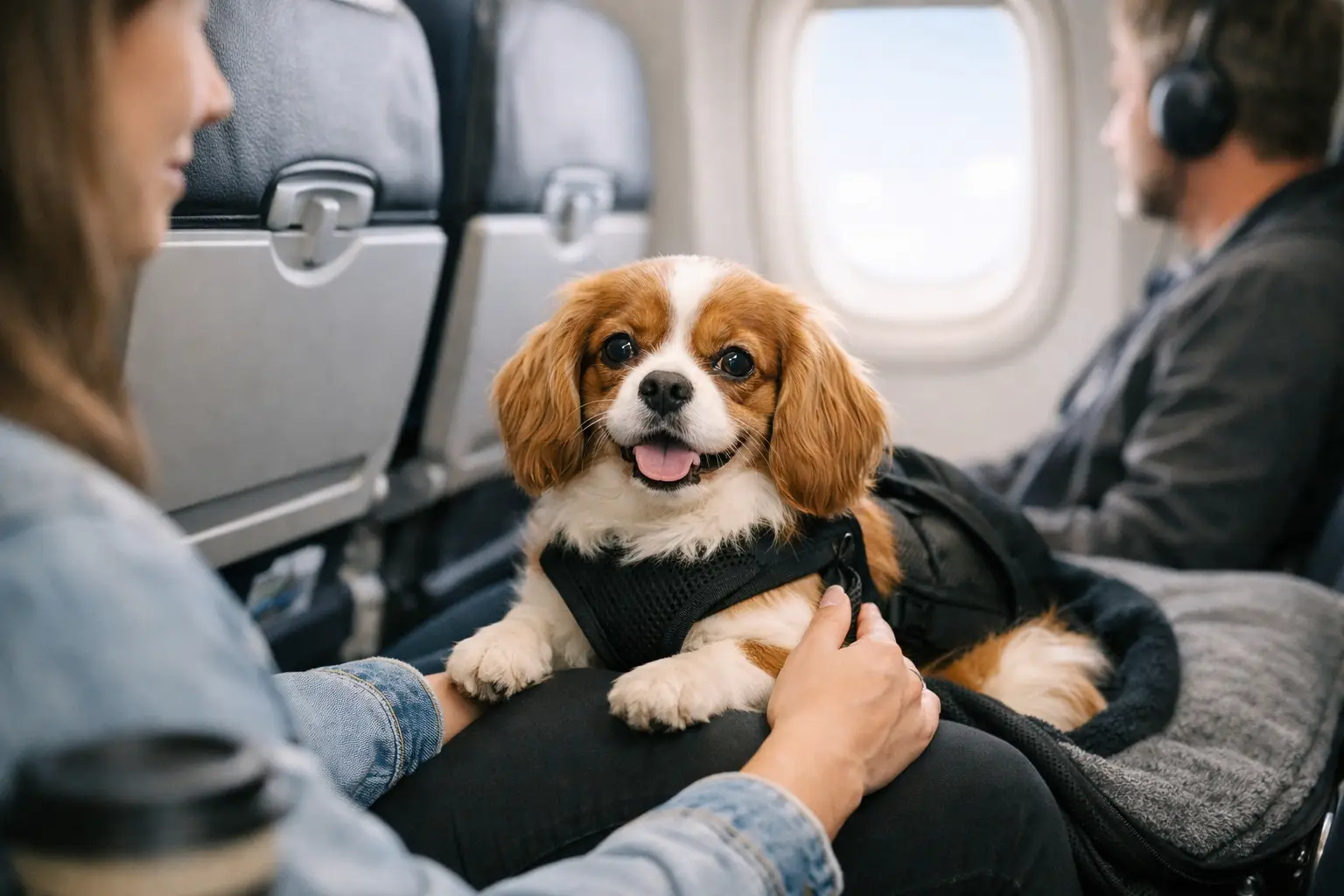
A dog resting beneath the seat in front of you can make a major move feel far more manageable. But learning how to fly dogs in cabin is not simply a matter of buying an airline-approved carrier. Your dog, your route, the airline, and the destination country must all agree before travel day. One overlooked rule can turn a carefully planned flight into a denied boarding or entry problem.
For many small dogs, in-cabin travel is the most comfortable option because they remain close to their person throughout the journey. It is not always the right option, however. Airline space limits, a dog’s size and temperament, long connections, and international import requirements all affect whether it is practical. The safest plan starts early and treats the flight as one part of a complete relocation process.
Start With Your Dog’s Fit for Cabin Travel
In-cabin travel generally works for dogs that can stand, turn around, and lie down comfortably inside a soft-sided carrier that fits beneath the seat. Airlines set their own dimensions, total weight limits, breed restrictions, and limits on the number of pets permitted in the cabin. A carrier that is accepted by one airline may be too tall or too wide for another aircraft.
Do not assume a small dog automatically qualifies. Measure your dog while standing and lying down, then compare those measurements with the airline’s current under-seat requirements for every flight segment. If your itinerary includes a regional flight after an international arrival, the smaller aircraft may have tighter space restrictions than the long-haul flight.
Your dog’s emotional comfort matters just as much as physical size. A dog that becomes distressed in confined spaces, reacts strongly to strangers, or cannot settle in a carrier may have a difficult journey in the cabin. Discuss travel readiness with your veterinarian well before departure. Sedation is generally discouraged for air travel because it can affect balance, breathing, and the ability to respond to stress.
How to Fly Dogs in Cabin: Confirm the Airline First
Choose the airline before you finalize the rest of the trip. Pet policies can vary by route, aircraft, class of service, season, and destination. Some airlines permit in-cabin pets on domestic sectors but not on international flights. Others restrict pets traveling to or through certain countries, even when the dog otherwise meets the size requirements.
Call the airline directly and ask them to reserve your dog’s in-cabin space as soon as your own ticket is issued. Cabin pet spaces are limited, and a flight can reach its pet limit even when seats remain available. Request written confirmation or make sure the pet reservation appears clearly in your booking record.
Confirm these details for each segment: the carrier dimensions, combined pet and carrier weight allowance, required check-in time, pet fee payment process, and whether a particular seat location is required. Exit rows and some bulkhead seats are commonly unavailable because there is no under-seat space. If you are connecting, verify that the same reservation covers the entire itinerary rather than assuming the first airline will transfer the approval.
For international moves, routing is more than a convenience decision. A shorter itinerary may be preferable, but only if the layover country permits your dog to transit as planned and the connection leaves sufficient time for airport procedures. A route that looks efficient on a booking screen can create unnecessary risk if it requires a terminal change, an overnight stay, or a customs process that was not considered.
Choose and Prepare the Right Carrier
The carrier is your dog’s travel space, so it should be secure, well ventilated, leak-resistant, and comfortable without being oversized. Soft-sided carriers are often the best fit for cabin travel because they can flex slightly beneath the seat, but the carrier must still retain its shape and protect your dog.
Add an absorbent liner and a familiar-smelling blanket or shirt, as long as it does not take up valuable room. Attach identification to the outside and place a second copy of your contact information inside. A small pouch for required paperwork can be useful, but do not hang items that block ventilation or create a snagging hazard.
Carrier training should begin weeks ahead, not at the airport. Leave the carrier open at home, reward your dog for entering voluntarily, and gradually build up calm periods with the door closed. Practice carrying the bag, taking short car rides, and settling in places with normal household noise. The goal is not to make the carrier exciting. It is to make it familiar and safe.
Build the Health and Document Plan Early
Airline approval does not replace a destination country’s entry requirements. International travel may require a current rabies vaccination, a government-endorsed health certificate, parasite treatment, import authorization, microchip verification, or other records. The required timing can be strict. A certificate issued one day too early or too late may not be accepted.
Panama and other countries in Central America have their own import procedures, and requirements can change based on origin country, vaccination history, and the dog’s travel route. If you are moving from Panama, returning to Panama, or connecting through another country, review the full journey rather than focusing only on the final destination.
Keep original documents organized in a waterproof folder in your personal item. Carry paper copies even if the airline or government portal has accepted digital uploads. At check-in, customs, or veterinary inspection, having the correct original record available can prevent a stressful delay.
This is where professional planning can be especially valuable. Panama Pet Relocation coordinates airline routing, veterinary timing, documentation, and arrival procedures so families do not have to piece together a cross-border plan from separate rules and deadlines.
Plan the Airport Experience Around Your Dog
Arrive earlier than you would for a standard flight, particularly for international travel. Airline staff may need to inspect the carrier, review documents, collect the pet travel charge, and confirm that the cabin pet reservation is active. Rushing through this process adds pressure for both you and your dog.
Security procedures vary, but you will usually need to remove your dog from the carrier while the empty carrier goes through screening. Use a secure harness and leash, and ask for a private screening room if your dog could panic or slip away in a busy checkpoint. Never open a carrier in a crowded airport unless instructed to do so and you are certain your dog is securely restrained.
Before boarding, offer a calm bathroom break and a small amount of water. Avoid a large meal immediately before the flight, especially for dogs prone to motion sickness. Your veterinarian can advise on feeding, hydration, and any health considerations based on your dog’s age, breed, and medical history.
Keep the Flight Quiet and Comfortable
Once onboard, place the carrier fully under the seat in front of you as instructed by the cabin crew. Most airlines require pets to remain in the carrier for the entire flight, including boarding, taxi, takeoff, landing, and deplaning. Do not plan on holding your dog in your lap, even if the cabin seems quiet.
Your own calm behavior helps. Speak softly if your dog becomes alert, but avoid repeatedly opening the carrier or drawing attention to it. A familiar scent, a secure carrier, and a prepared routine are usually more reassuring than constant interaction.
For longer itineraries, prioritize a connection that gives you enough time to find an approved pet relief area, offer water, and regroup without risking the next flight. Some airports have pet relief stations after security; others may require more planning. Build the schedule around your dog’s needs, not only the shortest possible connection.
A successful cabin flight is rarely about luck. It comes from matching the dog to the right carrier and route, confirming every airline rule, and preparing travel documents before the deadline. When the logistical details are handled carefully, you can focus on what matters most: arriving together and helping your dog settle into the next chapter safely.