



Requirements to Export a Dog From Panama
July 20th, 2026 | Uncategorized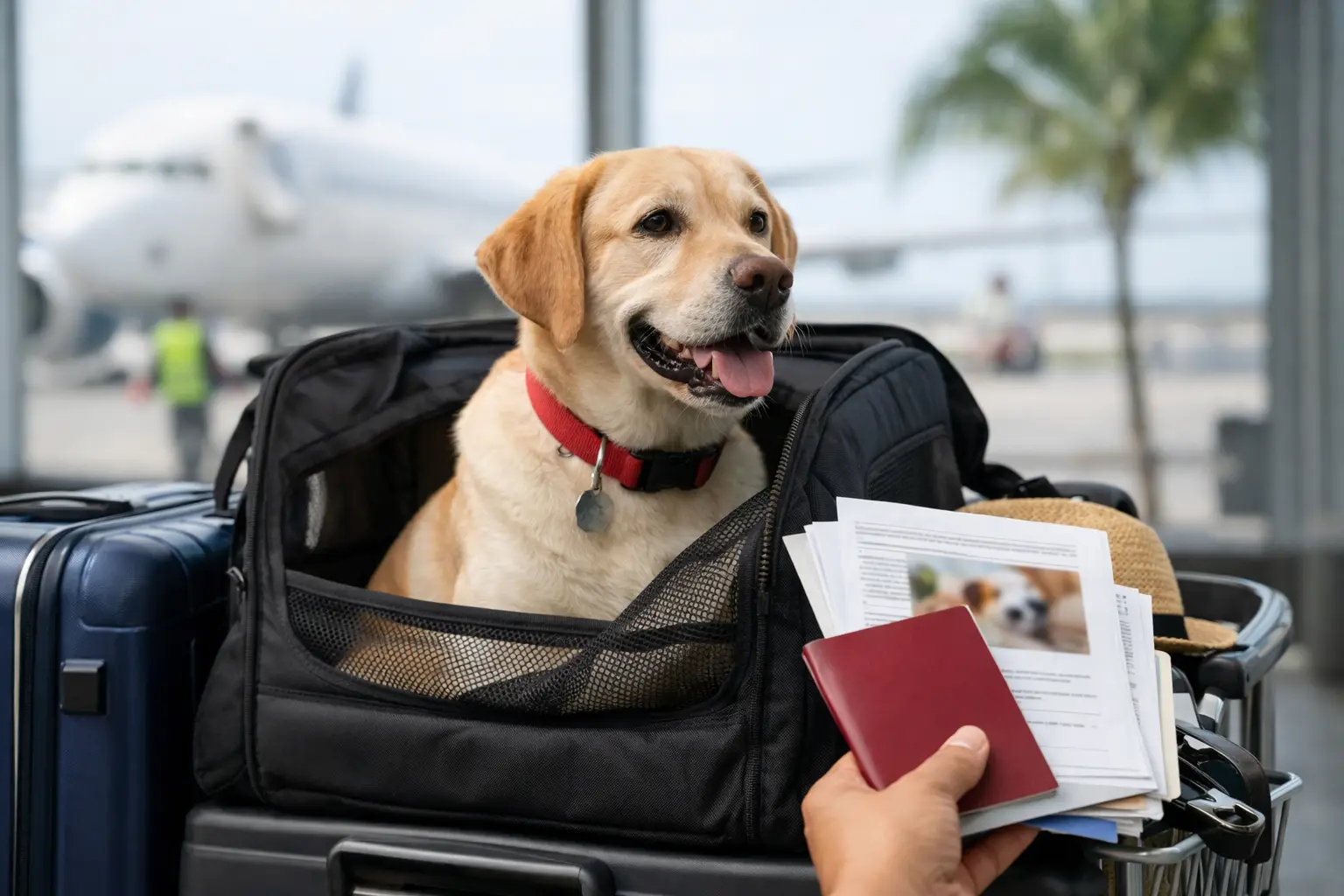
A confirmed flight date is not the finish line when your dog is leaving Panama. It is the point when timing becomes critical. The requirements to export a dog from Panama involve more than a veterinary appointment: your pet must meet Panama’s exit procedures, the destination country’s entry rules, and the airline’s live-animal standards at the same time.
A document that is valid for one part of the trip may not satisfy another. A health certificate can expire before departure, an import permit may need approval before the airline will accept a booking, and a required laboratory test can take weeks or months to complete. Careful planning protects your dog from avoidable delays, denied boarding, or arrival quarantine.
What determines the export requirements?
There is no single document package that works for every dog departing Panama. The destination country is the main factor. A dog traveling to the United States may face a very different process from a dog traveling to Europe, Canada, the United Kingdom, Colombia, or another Central American country.
The travel route matters too. A direct flight and an itinerary with a connection can have different airline rules. Some transit countries require advance permission or limit the time an animal may remain in the airport. Cabin travel, checked pet travel, and cargo transport also have separate operational requirements, even when the health documents are identical.
Your dog’s age, breed, vaccination history, microchip status, and country of origin can also affect the plan. For example, certain destinations require an ISO-compatible microchip before rabies vaccination records can be accepted. Others require a rabies antibody titer test, sometimes called a FAVN test, completed far enough ahead of travel to meet a waiting period.
Core requirements to export a dog from Panama
Most international moves begin with a review of the destination country’s current import conditions. From there, the export file is built around your dog’s individual records and the planned flight date.
Identification and vaccination records
A readable microchip is commonly required for international travel and is strongly recommended even where it is not mandatory. The microchip number should match every supporting document, including vaccine certificates, laboratory results, health certificates, permits, and airline paperwork.
Rabies vaccination is central to most export processes. The vaccine must be current on departure and, in many cases, administered after microchip implantation. Some countries accept a valid booster without a new waiting period; others apply strict timing based on the date of vaccination. Do not assume a rabies certificate from a prior move will meet the next country’s rules.
Depending on the destination, your veterinarian may also need to document other vaccinations, internal and external parasite treatment, or a general preventive care history. These treatments are not universal, but when required, the date, product, dosage, and veterinarian’s signature must be recorded precisely.
Destination import permit or advance approval
Many countries require an import permit before the dog departs Panama. The permit may be issued by an agricultural, veterinary, or quarantine authority in the destination country. It can specify the approved port of entry, the number of animals allowed, the health conditions the dog must meet, and the period during which travel is permitted.
This step is easy to underestimate. Permit processing times vary, and some authorities will not issue a permit until they have reviewed vaccination records or test results. If the approved arrival airport changes after the permit is issued, an amendment may be needed. Confirm the route before finalizing documents whenever possible.
International health certificate and Panama export authorization
Dogs leaving Panama generally need an official veterinary health certificate prepared close to departure. The certificate confirms that the dog was examined, is clinically healthy, and meets the veterinary conditions required by the destination.
The certificate may then need review, endorsement, or issuance by the appropriate Panamanian animal-health authority. Exact procedures, appointment availability, office hours, and required supporting records can change, so this stage should be scheduled well before the final certificate window opens.
Timing matters because health certificates are typically valid for a limited number of days. Issuing one too early can make it invalid at check-in or on arrival. Issuing it too late can leave no room to correct a name, microchip number, or flight detail. The best schedule works backward from the destination’s validity period, not simply from the flight date.
Tests and treatments for higher-regulation destinations
Some destinations require additional veterinary work beyond a standard exam and rabies vaccination. The most common example is a rabies antibody titer test. Blood must be collected after the required rabies vaccine interval, sent to an approved laboratory, and followed by any mandatory waiting period before entry.
This is one area where last-minute planning can change an entire relocation timeline. A titer test result may be valid for years if rabies boosters remain continuous, but a lapse in vaccination can reset the process. Countries may also require specific deworming treatment, tapeworm treatment, parasite control, or blood testing shortly before arrival.
Airline booking and travel crate
Airlines do not treat pet transport as an ordinary baggage request. A dog must be booked into an available live-animal space, and capacity may be limited by aircraft type, season, route, temperature restrictions, or the number of animals already confirmed.
The travel crate must meet the airline’s current requirements. In practical terms, your dog should be able to stand without crouching, turn around, and lie down comfortably. The crate needs proper ventilation, secure fasteners, absorbent bedding, water provisions, and clear identification. Some airlines restrict certain crate materials or require additional hardware.
A crate that looks large enough at home may still be rejected if it does not meet airline specifications. It is also wise to help your dog become comfortable resting inside the crate before travel day. Familiarity reduces stress and makes the journey easier for your pet and the transport team.
Build the timeline before you book the flight
For a straightforward destination with current vaccinations, planning should still begin several weeks ahead. For destinations with titer testing, permits, seasonal airline restrictions, or quarantine rules, start months earlier.
First, confirm the destination requirements and whether your dog can enter on the proposed date. Next, verify microchip and vaccination records, then arrange any needed tests or treatments. Once the travel window is realistic, secure the airline routing and crate plan. The final veterinary examination and official endorsement should be coordinated within the exact certificate validity period.
Keep original documents organized and carry copies in your hand luggage. Your dog’s microchip number, owner name, destination address, flight details, and certificate dates should be consistent across the file. Small discrepancies can create large problems at airline check-in or inspection.
Common mistakes that cause delays
The most common issue is treating the destination requirement as the only requirement. A family may have the country’s import permit but miss the Panama-side export endorsement or schedule the health certificate outside its valid travel window.
Another frequent problem is a vaccination record that does not clearly show the microchip number, vaccine manufacturer, lot number, date given, and expiration date. Handwritten records are not automatically unacceptable, but incomplete or hard-to-read records can lead to questions that are difficult to resolve on departure day.
Travelers also run into trouble when they book a flight before checking animal restrictions. Heat embargoes, breed policies, aircraft limitations, and connection rules can make an otherwise convenient itinerary unsuitable for a dog. A longer route with an experienced animal-handling airport may be the safer choice.
Finally, do not sedate a dog for air travel unless a veterinarian and the airline have specifically advised it. Sedation can affect balance, breathing, and temperature regulation at altitude. Calm crate training, appropriate routing, and a well-managed airport process are usually safer ways to support a nervous pet.
When professional coordination makes a difference
International pet relocation is a chain of time-sensitive steps, and the chain is only as strong as its least prepared document. Professional coordination is particularly valuable for complex destinations, cargo travel, multi-country routing, short-notice relocations, families traveling separately from their pets, and cases involving titer tests or special permits.
Panama Pet Relocation can coordinate the veterinary schedule, document review, airline arrangements, export handling, and destination-side planning so owners are not left trying to interpret multiple agencies’ rules under a departure deadline. The goal is not merely to get a dog onto a flight. It is to make sure the full journey is compliant, safe, and as calm as possible for the animal at the center of the move.
Before committing to a travel date, gather your dog’s microchip and vaccination records, confirm the destination, and allow more time than you think you will need. A well-planned export gives your dog the best chance to arrive ready for the next chapter with your family.