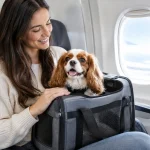


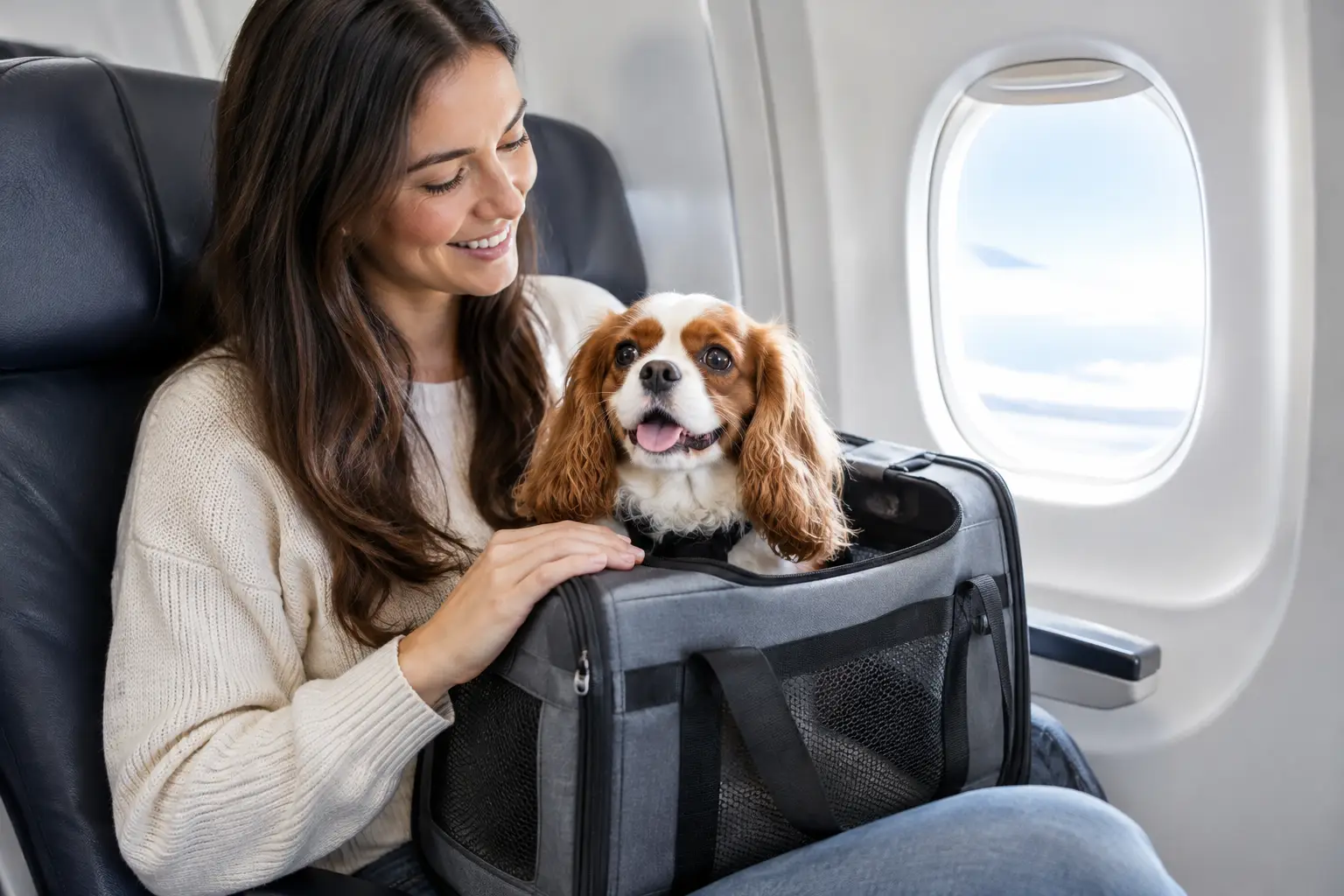

A pet tucked quietly beneath the seat in front of you may seem like the simplest way to relocate. But to arrange in-cabin pet travel successfully, the flight itself is only one part of the plan. Airline pet-space limits, carrier dimensions, veterinary timing, transit-country rules, and entry paperwork can all determine whether your pet is allowed to board and arrive without delays.
For families moving internationally, in-cabin travel can be a comforting option when it is available and appropriate. Your pet remains close, you can monitor their comfort, and the journey may feel less intimidating than travel in the cargo hold. Still, cabin travel is not automatically the best or available choice for every pet, route, airline, or destination. The right plan starts with a realistic assessment of the animal, the itinerary, and the regulations at both ends of the journey.
Start by Confirming In-Cabin Eligibility
Each airline sets its own in-cabin pet policy. Most limit cabin travel to small dogs and cats that can remain comfortably inside an approved carrier under the seat for the entire flight. The combined weight of the pet and carrier may matter, but the carrier’s external dimensions often become the deciding factor because aircraft seat layouts vary.
Do not assume a pet accepted on one flight will be accepted on every segment. A domestic connection, an international leg, and a partner-operated flight may each follow different rules. Some airlines do not accept pets in cabin on certain aircraft, in premium cabins, on longer routes, or during particular periods. Others restrict the number of pets permitted in the cabin, which means space can disappear well before a flight sells out.
Breed, age, health, and behavior also deserve careful attention. A pet must be able to stay contained, quiet, and comfortable in a confined space for the full journey, including check-in, security, boarding, connections, and possible delays. Pets with respiratory concerns, significant anxiety, or medical needs may require a different travel plan developed with their veterinarian and relocation specialist.
Cabin travel is not the same as emotional support access
Airlines generally treat pets traveling in cabin as pets, not as emotional support animals. Policies for service animals are separate and may require specific documentation and advance approvals. Travelers should never rely on a prior experience, a verbal assurance, or an online post as proof that a pet can fly in cabin. Obtain confirmation directly through the airline reservation and keep the details with your travel records.
Reserve Your Pet’s Place Before Finalizing the Trip
A pet reservation is separate from your own ticket. After selecting a workable itinerary, contact the airline promptly to request in-cabin pet space and receive written confirmation where possible. Ask for the pet reservation to be reflected in the booking record, then verify it again before departure.
This is especially important for international travel involving Panama, Central America, or multiple transit points. An itinerary that looks efficient on a map can become impractical if one airline does not permit cabin pets, a connection is too short for required checks, or a transit country has its own animal-health conditions. A slightly longer routing may offer a more reliable and less stressful journey.
Before committing, confirm the carrier size, pet and carrier weight limits, applicable fees, check-in procedures, and whether your chosen flight is operated by the airline that accepted the pet reservation. Also ask what happens if an aircraft change creates less under-seat space. Clear answers before ticketing help prevent difficult decisions at the airport.
Choose a Carrier Your Pet Can Tolerate
The carrier is your pet’s travel space, not simply a bag for getting through the terminal. It must meet airline specifications while allowing your pet to stand, turn around, and lie down naturally. Soft-sided carriers are frequently accepted because they can fit beneath a seat more easily, but acceptance still depends on the airline and the aircraft.
Measure the carrier after it is packed as it will be for travel. A carrier that fits an online measurement guide but bulges when a pet settles inside can cause a problem at check-in. The carrier should close securely, provide ventilation, have a leak-resistant base, and contain an absorbent liner. Place identification on the outside and keep a current photo of your pet with your documents.
Carrier conditioning should begin weeks before travel whenever possible. Leave it open at home, offer meals or treats near it, and gradually build up short periods with the door closed. The goal is not merely getting your pet inside. The goal is helping them see the carrier as a familiar, safe resting place when the airport becomes noisy and unfamiliar.
Avoid introducing a new carrier the night before departure. And do not use sedation unless a veterinarian specifically recommends it after considering the pet’s health and the travel conditions. Sedatives can affect balance, breathing, and temperature regulation, particularly at altitude.
Coordinate Health Documents With the Travel Date
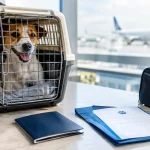
International pet travel is governed by destination-country requirements, not just airline rules. Depending on where you are traveling from and where you are going, your pet may need an import permit, microchip verification, current rabies vaccination, parasite treatments, a veterinary health certificate, government endorsement, laboratory testing, or other records.
The timing matters as much as the documents themselves. Some certificates are valid for only a short period before arrival. A vaccination may need to be administered a certain number of days before entry. Rabies FAVN titer testing can require substantially more lead time for destinations that use it. If paperwork is completed too early, too late, or in the wrong format, the pet may face refusal of boarding, delays at entry, or quarantine requirements.
Your airline may inspect documents at departure, but that does not replace border compliance. Arrival authorities make the final decision about entry. For that reason, documentation should be reviewed against the current rules for the destination and every relevant transit point, rather than copied from a previous trip.
Build extra time into the departure day
Traveling with a pet usually requires an earlier airport arrival. Check-in agents may need to inspect the carrier, confirm the pet booking, and review documents. Security procedures can require you to remove your pet from the carrier while the carrier goes through screening, so a secure harness and leash are essential for dogs. For cats and small pets, ask whether a private screening room is available if that would be safer.
Plan a calm final walk or bathroom break before entering the terminal. Offer water, but avoid changing your pet’s routine dramatically or feeding an unusually large meal right before travel. Bring a small supply of approved food, wipes, spare absorbent pads, medications, and copies of all records in your carry-on.
Prepare for the Parts You Cannot Control
Even a carefully arranged trip can encounter a weather delay, gate change, missed connection, or aircraft substitution. A practical travel plan accounts for those possibilities. Choose connections with enough time to move between gates without rushing, especially when terminals are large or immigration procedures are involved.
Keep your pet’s essential paperwork accessible, not packed in checked luggage. Carry the contact information for the receiving party, your veterinarian, and any relocation professional supporting the move. If you are arriving in a new country without local transportation arranged, confirm in advance that the vehicle can safely accommodate your pet and carrier.
For more complicated relocations, professional coordination can reduce the number of details an owner must manage alone. Panama Pet Relocation helps families align airline routing, veterinary documentation, entry procedures, and arrival support so that the plan works as one connected process rather than a series of last-minute tasks.
When In-Cabin Travel Is Not the Best Option
It is understandable to prefer having a pet nearby, but an in-cabin arrangement should serve the pet’s welfare, not only the owner’s preference. A larger animal may be more comfortable in an appropriately sized travel kennel through a carefully managed cargo process. Some destinations or airlines may not permit in-cabin travel, while a direct flight with another approved transport option may be safer than a multi-stop cabin itinerary.
Consider the full journey from door to door. A small pet on a short direct flight may be an excellent cabin candidate. A pet facing a long itinerary, extreme temperatures, restrictive route rules, or a history of travel anxiety needs a more individualized assessment. The best solution is the one that is compliant, humane, and realistically manageable from departure through arrival.
A well-prepared cabin trip gives your pet something invaluable during a major move: a familiar person close by, a secure space, and fewer surprises. Begin early, verify every requirement in writing, and let your pet’s comfort guide the decisions that matter most.