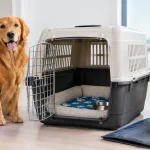



A travel crate is more than a container for your dog on flight day. It is their protected space through check-in, security handling, loading, flying, customs clearance, and the final trip home. When you prepare a dog travel crate properly, you give your pet a familiar, secure place to rest while also meeting airline and international transport requirements.
For families moving internationally, crate preparation deserves attention well before departure. A crate that is too small, poorly ventilated, or unfamiliar to your dog can create avoidable stress at the exact moment you need the journey to go smoothly. The goal is not simply to get your dog into the crate. It is to help them travel safely, calmly, and in compliance with the rules for their specific route.
Start With an Airline-Approved Crate
The right crate depends on your dog’s measurements, the airline, the aircraft type, and whether your dog will travel in the cabin or as checked or manifested cargo. For most larger dogs traveling internationally, airlines require a hard-sided kennel designed for air transport. Not every crate sold as a “travel crate” will meet the required standards.
Your dog must be able to stand without their head or ears touching the top, turn around comfortably, and lie down in a natural position. Measure your dog while standing, including their height to the top of the head or ear tips, then confirm the carrier’s internal dimensions rather than relying on a size label.
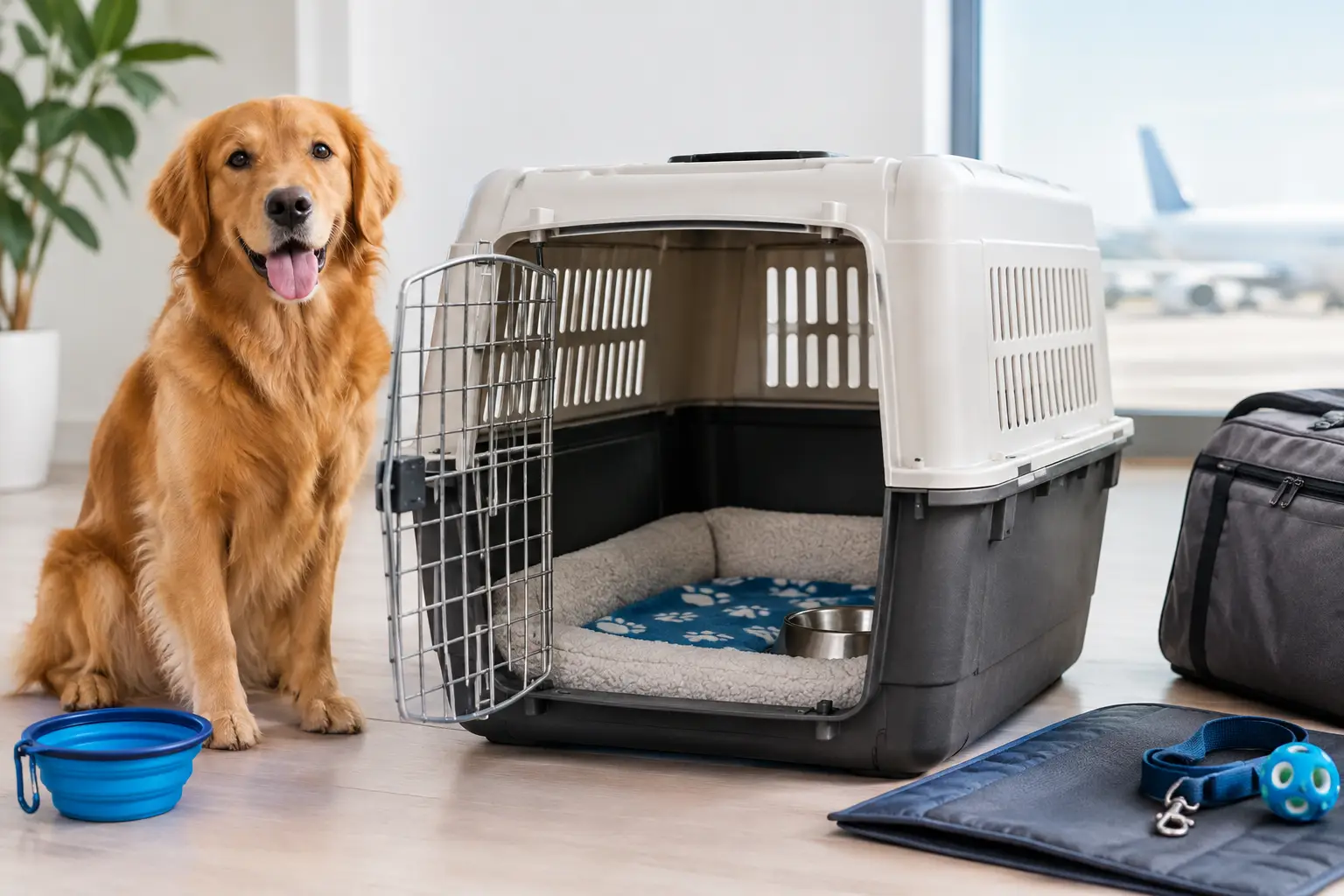
A suitable crate typically has solid construction, ventilation openings on multiple sides, a secure door, and hardware that keeps the two halves firmly connected. Some airlines have additional rules about door materials, wheel removal, fasteners, or crate styles. Those details can vary by carrier and route, so it is wise to confirm them before purchasing or modifying a kennel.
Do Not Assume One Airline’s Rules Apply to Another
Airline policies change, and connecting flights can introduce different requirements. A crate accepted on the first leg of a trip may be questioned at a transfer point if it does not meet the operating carrier’s standards. This is particularly relevant for international moves involving multiple airlines, warm-weather destinations, or remote connecting airports.
A professional pet relocation plan accounts for the crate, flight routing, pet size, seasonal conditions, and destination entry procedures together. Crate selection should never be treated as a last-minute purchase after flights are booked.
Help Your Dog See the Crate as a Safe Place
The best time to introduce a travel crate is weeks before departure. Place it in a quiet area of your home with the door open. Add a familiar-smelling blanket or bedding that is safe for travel, and let your dog explore without pressure. You can offer meals, treats, or calm praise near and inside the crate so it becomes associated with positive experiences.
Once your dog enters willingly, practice short periods with the door closed while you remain nearby. Gradually build the duration. Brief crate rides in the car can also help your dog adjust to movement and unfamiliar sounds. Keep these sessions calm and predictable rather than turning them into a test of endurance.
Some dogs settle quickly, while others need more time, especially senior pets, rescue dogs, or animals that have had little crate experience. Forcing a fearful dog into a new crate on departure day can increase anxiety and make handling harder. If your dog is struggling, speak with your veterinarian and relocation coordinator early enough to adjust the preparation plan.
Set Up the Inside for Safe, Practical Comfort
The interior should be comfortable without creating hazards. Use an absorbent crate pad, towel, or other airline-appropriate bedding that lies flat and cannot bunch up around your dog’s legs. Avoid thick beds, loose stuffing, or items your dog may chew and swallow when stressed.
Attach food and water dishes securely to the inside of the crate door, where handlers can access them without opening the kennel. Water should be available for the journey, but arrangements vary by airline. A spill-resistant bowl or a dish that can be filled from outside the crate is often the most practical choice. Your pet’s transport team can advise on the correct setup for the airline involved.
Familiar scent can be reassuring, but keep belongings simple. A lightly used blanket or a small, safe comfort item may help if the airline allows it. Do not pack toys, leashes, medication, loose treats, or sentimental items inside the crate unless specifically approved. Loose objects can shift during handling, create a choking risk, or be removed by airline staff.
Prepare the Outside of the Dog Travel Crate
The exterior needs clear identification and handling information. Attach a durable label with your dog’s name, your name, reliable phone numbers, flight information when appropriate, and destination contact details. Use a waterproof document pouch for copies of relevant travel paperwork if your airline or relocation coordinator instructs you to do so.
Air transport crates may also require live-animal labels, directional arrows, feeding or watering instructions, and emergency contact details. Make sure labels are secure, readable, and not blocking ventilation openings. It is also useful to attach a current photo of your dog to the crate in case identification is ever needed during a transfer.
Before travel day, inspect every latch, bolt, and ventilation panel. If the crate has wheels, verify whether they must be removed or locked. Check for sharp edges, cracked plastic, weakened hardware, or gaps large enough for a paw or nose to become caught. A crate can look fine from a distance while still failing a hands-on inspection at check-in.
Plan Food, Water, and Bathroom Breaks Carefully
Your dog’s feeding schedule should be based on the departure time, expected journey length, veterinary guidance, and airline instructions. In many cases, a light meal several hours before travel is more comfortable than a full meal immediately before check-in. Fresh water and a final bathroom break shortly before crate acceptance are equally important.
Avoid introducing new foods, treats, supplements, or routines in the days before departure. Travel is not the right time to test whether a new snack agrees with your dog. If your pet takes prescription medication, confirm the plan with your veterinarian and the travel coordinator. Never place medication loose inside the crate.
Sedation is usually not recommended for air travel unless a veterinarian specifically determines it is necessary and the airline permits it. Sedatives can affect balance, breathing, and temperature regulation, particularly at altitude. A dog that is properly crate-trained and managed with a thoughtful travel plan is generally better positioned to cope with the journey.
Complete This Check Before Leaving for the Airport
Before you leave, confirm these five essentials:
- Your dog can stand, turn, and lie down comfortably in the crate.
- The crate meets the requirements of every airline on the itinerary.
- Food and water containers are attached securely and set up as instructed.
- Labels, contact details, and required handling notices are clearly visible.
- Your dog has had a calm walk, a bathroom break, and enough time to settle.
Keep the mood at home steady. Dogs often respond to their family’s tension, so give yourself extra time and avoid a rushed departure. A familiar routine, calm voice, and prepared crate can make a meaningful difference.
Crate Preparation Is Part of the Relocation Plan
For an international move, crate readiness connects directly to veterinary timing, airline reservations, weather restrictions, customs documentation, and arrival arrangements. A beautiful crate alone cannot resolve an incorrect airline booking or a missing health document, but a properly prepared crate is one of the most visible signs that the travel plan has been handled with care.
Panama Pet Relocation helps families coordinate these moving parts so their pets are not left facing avoidable surprises at the airport. The right preparation allows you to focus on reassuring your dog, knowing their journey has been planned around safety, comfort, and the requirements of the route ahead.